TLDR
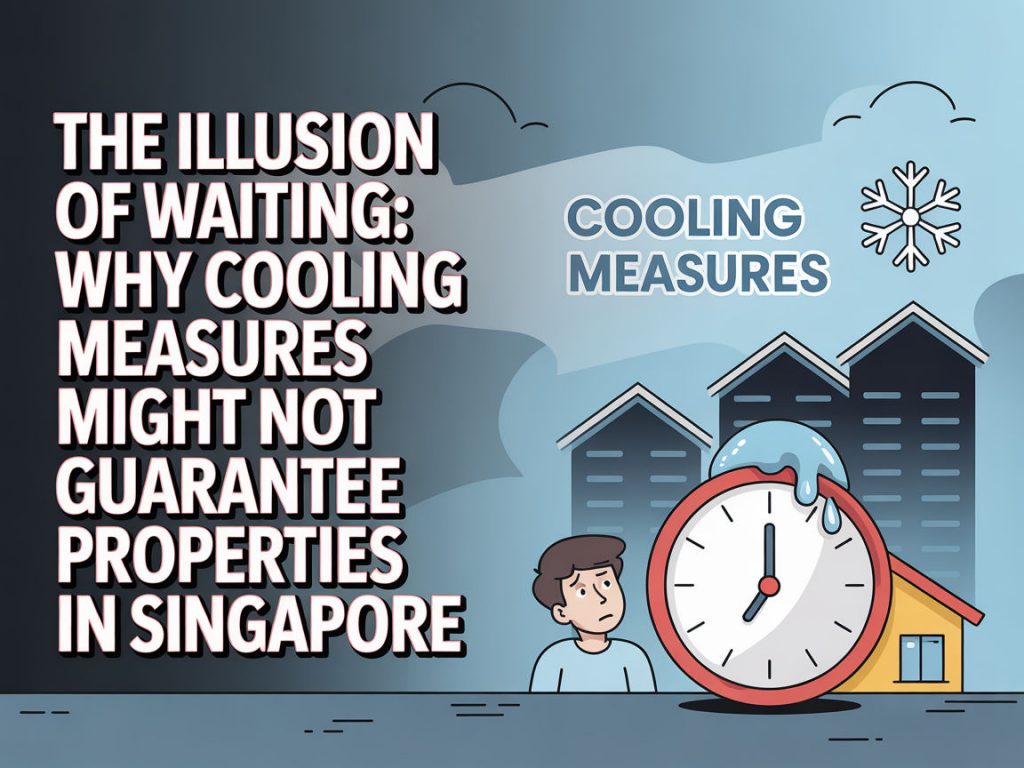
Singapore’s property market has seen price declines during major crises such as the 1985-1989 pre-recession, 1996-1998 Asian Financial Crisis, 2000-2004 dot-com bubble and SARS, 2008 Global Financial Crisis, and the 2020 COVID-19 pandemic. However, timing these dips is difficult because recovery periods are often quick, and market windows for buying at the bottom are short. Cooling measures like Loan-to-Value caps and Additional Buyer’s Stamp Duty (ABSD) also affect dynamics. Instead of trying to perfectly time the market, a data-informed approach focusing on personal financial readiness, needs, and timelines is more practical. Buyers and sellers should consider individual circumstances rather than chasing ideal market timing, as historical data shows that waiting for a perfect dip often results in missed opportunities or higher costs.
The common refrain, “I’ll wait for property prices to fall,” is often met with skepticism in Singapore. Historical trends suggest that waiting can be a costly strategy, with most individuals ultimately paying more. While a select few successfully time the market dip, they remain a minority. This analysis delves into Singapore’s property market history to explore when prices have actually fallen and the feasibility of timing these declines.
Notable Periods of Price Decline
Singapore’s property market has experienced price declines during several distinct periods:
- 1985-1989: Pre-Recession Correction
- The market was less transparent in the 1980s.
- The introduction of CPF usage for non-HDB properties in 1981 fueled a sudden price surge, leading to a bubble and subsequent correction until 1986.
- Market saturation in the construction industry by 1984 exacerbated the decline.
- Wider economic concerns, including retrenchments and falling wages, also impacted the market.
- Recovery was slow, taking 20 consecutive quarters, likely due to the less sophisticated market of the era.
- 1996-1998: First Property Cooling Measures and Asian Financial Crisis
- A price peak in Q2 1996 prompted the introduction of early cooling measures, including a precursor to the Sellers Stamp Duty (SSD) and an 80% Loan-to-Value (LTV) cap.
- The Asian Financial Crisis in mid-1997, with currency devaluations and job market instability, amplified the downturn.
- The market recovered relatively quickly, within 10 quarters, with a 51-point drop in the Private Property Index (PPI).
- 2000-2004: Dot Com Bubble, 9/11, and SARS
- The tech bubble burst (2000), 9/11 terrorist attacks (2001), and SARS outbreak contributed to a global recession and Singapore’s GDP contraction.
- Job market instability deterred upgraders, reversing the previous recovery.
- Prices declined over 16 quarters, with the PPI falling by 20.8 points.
- Recovery took around 15 quarters, with a steeper subsequent rebound than the decline.
- This period, while presenting buying opportunities, was marked by significant global and regional crises.
- 2008-2013: Global Financial Crisis and Subsequent Rebound
- Prices peaked in Q1 2008 before falling for five quarters due to the Global Financial Crisis.
- Increased awareness of property price resilience and a shift from volatile stock and bond markets towards real estate fueled a rapid recovery.
- Prices surged by 53.6 points between 2009 and 2013, reaching a new peak in Q3 2013.
- This period led to the introduction of stricter cooling measures, including TDSR and ABSD, which were further intensified over time.
- 2020: COVID-19 Impact
- The COVID-19 pandemic disrupted the market, slowing construction and creating a housing shortage.
- Prices and transactions initially dropped due to restrictions on viewings and market activity.
- Following the Circuit Breaker and reopening, home prices rebounded and continued their upward trajectory.
The Challenge of Timing the Market Dip
While property prices have fallen during crises, seizing these opportunities as a buyer is often challenging. Compared to past dips, buyers have a limited window to purchase at the market bottom before prices recover. The accumulated effects of cooling measures, such as the 60% ABSD on foreigners, also influence market dynamics.
The traditional advice to “wait for the perfect moment” rarely works in Singapore’s property market. Historical data shows that these narrow windows of opportunity close quickly.
Beyond Timing: A Data-Informed Approach
Instead of attempting to time the market perfectly, a data-informed approach that considers individual circumstances and objectives is more effective. This involves analyzing financial readiness, timeline, and needs against market realities, rather than relying on theoretical “perfect timing.”
The key is to be prepared to act decisively when personal circumstances align with the right property, regardless of short-term market fluctuations.
Should You Buy, Sell or Wait?
If you’re reading this, you must be trying to figure out the best course of action right now: is it the right time to buy or sell?
It’s difficult to give an exact answer since everyone’s situation is unique and what works for one person may not necessarily work for you.
I can bring you a wealth of on-the-ground experience and a data-driven approach to provide clarity and direction. From beginners to experienced investors, our top-down, objective approach will help you on your real estate journey.
I can help you by:
- Offering Strategic Real Estate Advice – I can help create a comprehensive plan to guide you through your property journey.
- Connecting Your Home with the Perfect Buyers – Through stunning visuals, an effective communication strategy, and an in-depth knowledge of the market, we’ll ensure your home is presented in the best possible way to fulfill your goals.


You May Also Like …
Jayson Ang – June 26, 2024 – Share
Investing in commercial real estate has become an increasingly popular choice for investors seeking stable long-term returns. There are several...
Read More
Jayson Ang – March 31, 2024 – Share
The Singapore property market has long been an attractive option for both local and international investors. However, as with any...
Read More
Jayson Ang – May 20, 2025 – Share
Investing in Singapore property can be a lucrative venture, given the country's stable economy, strategic location, and high demand for...
Read More
Jayson Ang – February 5, 2024 – Share
TLDR In this blog post, the writer delves into the Singapore property market, particularly focusing on the effectiveness of quick...
Read More
Jayson Ang – August 7, 2024 – Share
Singapore, a thriving hub of business and commerce in Southeast Asia, boasts a highly developed economy and a robust real...
Read More
Jayson Ang – March 13, 2024 – Share
With a highly competitive property market, it's crucial to choose a property developer that you can trust to deliver quality...
Read More
Jayson Ang – March 23, 2025 – Share
Singapore, a thriving business hub in Southeast Asia, offers a robust real estate market with diverse investment opportunities. While residential...
Read More
Jayson Ang – March 26, 2025 – Share
The Singapore property market has always been a hotbed for investors looking to make substantial returns on their investments. As...
Read More
Jayson Ang – March 20, 2026 – Share
TLDR The journey to financial wealth involves progressing through seven stages, from Survival to Legacy, each with distinct goals and...
Read More
Jayson Ang – May 23, 2023 – Share
TLDR When selling a condo, focusing on highlighting key facilities like gyms, swimming pools, family-friendly amenities, community gardens, and clubhouse...
Read More
Jayson Ang – May 22, 2024 – Share
Real estate investment has always been a popular choice for investors looking to generate passive income and build long-term wealth....
Read More
Jayson Ang – October 27, 2024 – Share
TLDR Searching for a forever home should balance heart and practicality. Avoid homes with stairs, high cabinets, big kitchens, and...
Read More
Jayson Ang – December 7, 2022 – Share
TLDR In 2021, the real estate market saw a surge in demand due to low interest rates and supply chain...
Read More
Jayson Ang – May 21, 2023 – Share
From Overseas to Singapore Property: 5 Steps Guide to Remitting Funds 1. The first step in remitting money to Singapore...
Read More
Jayson Ang – June 24, 2023 – Share
TLDR When trying to sell your home, ensure it is competitively priced based on its unique features and the current...
Read More
Jayson Ang – December 31, 2024 – Share
The real estate landscape in Singapore has always been a lucrative investment opportunity for both local and international investors. However,...
Read More
Jayson Ang – October 1, 2026 – Share
TLDR Upgrading from an HDB flat to a condominium between ages 30–35 is often considered optimal due to financial stability,...
Read More
Jayson Ang – February 1, 2025 – Share
Singapore's high-end rental market has been a hot topic of discussion among investors worldwide. With the city-state's robust economy, excellent...
Read More
Jayson Ang – October 31, 2024 – Share
Singapore, a vibrant city-state known for its iconic skyline and diverse culture, offers a plethora of experiences for both tourists...
Read More
Jayson Ang – November 29, 2024 – Share
Singapore, a thriving city-state known for its stable political climate, excellent infrastructure, and strong economic fundamentals, has long been an...
Read More