



Revival of Singapore Luxury Housing Market in 2023
TLDR The property market in Singapore has witnessed significant shifts in the past two years, with a surge in prices...
Read More

TLDR
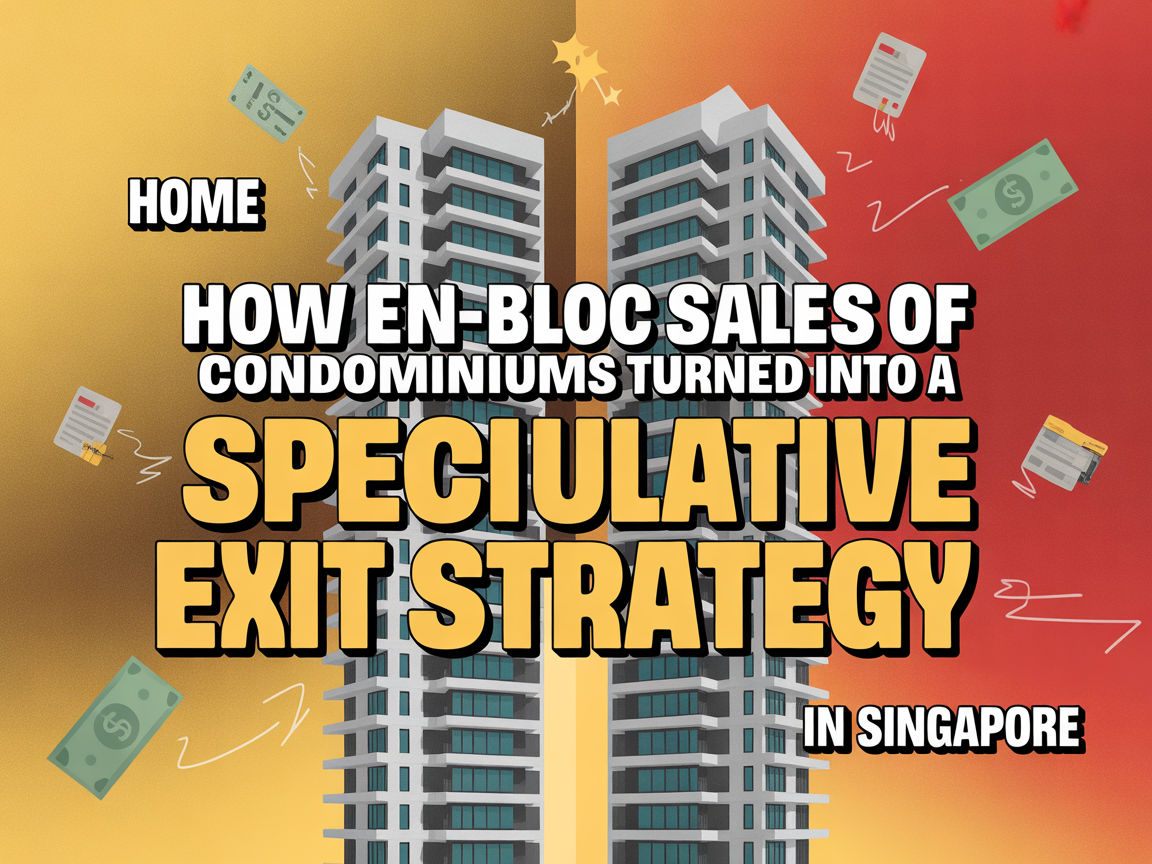
En-bloc sales—where owners collectively sell an entire property for redevelopment—have become a key feature of Singapore’s private property market, but this wasn’t always the case. The first such sale was likely five bungalows turned into Anderson 18 in 1979/80, not Cosy Mansions as some believe. The en-bloc trend accelerated when the government began sharing future urban plans via Development Guide Plans, highlighting redevelopment potential. Legal changes in 1999 made collective sales easier, shifting from unanimous approval to an 80%/90% consensus model. Apportioning sale proceeds has historically been tricky, especially for mixed-use projects, but methods have improved. While freehold sites were once seen as more attractive for en-bloc, leasehold properties gained popularity after lease top-ups became possible in the 2000s. Today, en-bloc sales are more streamlined and fair, but remain speculative and often contentious among owners.
En-bloc sales and private properties are closely linked; some Singaporeans even argue that the potential for en-bloc sales is the primary benefit of older private homes. However, aspects of this trend may be more recent than you realise, and en-bloc sales did not function in the same way historically. Here’s an exploration of how collective sales became regarded as a financial boon, and how they were perceived in the past:
This pertains to the collective sale of properties to a purchaser. In the minds of most private homeowners, this typically occurs when a condominium project becomes outdated, and a sufficient number of owners consent to sell the entire development to an entity for redevelopment.
The very first en-bloc sale and subsequent redevelopment of this nature is said to involve five bungalows that were transformed into Anderson 18. This contradicts claims that the initial en-bloc sale was Cosy Mansions; we obtained this information from a report in The Business Times, which states that the Anderson transaction took place earlier in 1979/80*.
In the same referenced report, you can also find what sparked interest in en-bloc sales: the Development Guide Plans (DGPs). Once the government began to disclose information regarding future zoning and planning intentions, developers and groups of sellers were able to identify potential opportunities and collaborate. Before this, the Master Plan only illustrated existing developments and zones, without indicating future plans.
Currently, DGPs are no longer available (the last of the 55 DGPs was for the Punggol area in July 1998), but we now integrate future zoning and urban planning into the Master Plan.
*As an intriguing aside, the article cautions about Reversionary Freehold Interest (RFI), which refers to leasehold properties constructed on freehold land. This remains a persistent issue, and the report reveals it has been a concern since the beginning.
Currently, an en-bloc sale requires an 80 per cent consensus based on share value and strata title area, rising to 90 per cent for developments that are less than ten years old. However, this was not always the case; before 1999, a single property owner had the power to object and halt the entire en-bloc process.
In November 1997, the government expressed its intention to simplify en-bloc sales. This initiative aimed to benefit the nation by facilitating the transition from older properties with fewer units to taller, denser high-rise buildings, thereby accommodating a growing population and increasing plot ratios. Additionally, it was acknowledged that en-bloc sales help combat urban decay: redevelopment prevents the accumulation of dilapidated structures that can pose health risks (such as structural problems and pest infestations).
If the free market can effectively manage this, with residents voluntarily vacating their properties and developers funding urban renewal, it would ultimately benefit the public and taxpayers. Thus, the Strata Titles (Amendment) Act of 1999 introduced a framework where the majority could supersede the minority, even in matters concerning the sale of their homes. Conversely, this approach may be essential for unlocking land parcels like freehold or 999-year leasehold properties, which might otherwise remain undeveloped for higher-intensity uses.
The MOA outlines the distribution of proceeds from an en-bloc sale. One of the previously common approaches was to allocate based on Share Value, a topic we explore in this article.
However, this method proved unfair to owners of larger units and complicated the sale of mixed-use projects. The valuation of commercial spaces within the building often differs significantly from that of residential units. Take, for instance, a restaurant space like Mookata in the former Golden Mile Complex, which has been in operation for many years: how does its value compare to that of a residential unit?
Relying solely on strata area for valuation seems illogical. A restaurant could face substantial revenue loss and the risk of losing long-established customers if it is compelled to relocate. In contrast, a homeowner—who likely has paid less in maintenance over time—might experience a significantly smaller setback.
Nevertheless, “rational” reasoning does not necessarily translate to “acceptable,” and not every residential unit owner will agree with this perspective.
At one point, this led to discussions suggesting that mixed-use projects were at a disadvantage in en-bloc sales due to potential objections limiting their collective sale prospects.
Currently, this concern has diminished (though it certainly hasn’t vanished, as en-bloc sales remain contentious). Nowadays, more intricate MOAs are commonly employed, such as ⅓ share value, ⅓ valuation, and ⅓ strata area, among other variations. Real estate firms and developers have shown greater flexibility, and the authorities appear willing to accommodate this adaptability.
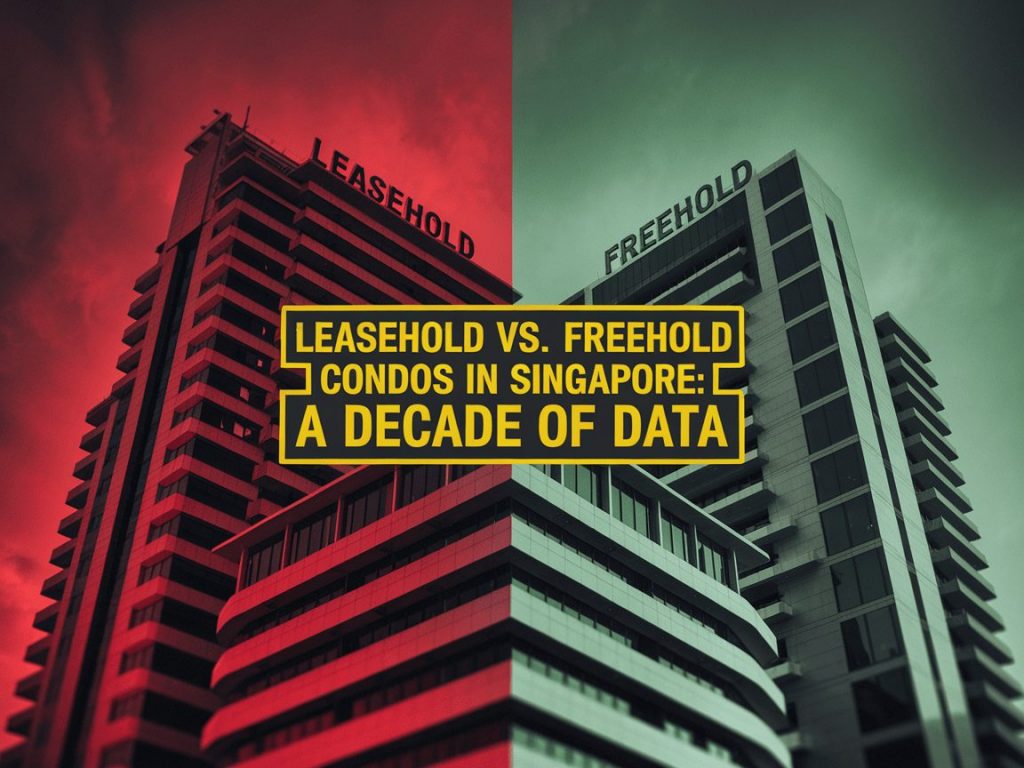
This notion was disproved during the en-bloc surge in 2017, yet the belief that developers favour freehold properties persists. In theory, freehold is advantageous as there’s no necessity to extend the remaining lease. However, there is an older rationale behind this:
Before the 2000s, it was commonly thought that developers would show little interest in properties with 99-year leases. What could a developer do with land that had, for instance, only 70 years left on its lease? It was assumed that Singaporeans would not be keen (although time and again, the market has surprised analysts; as seen with the 60-year lease Hillford).
It wasn’t until around 2004, with the en-bloc sale of Eng Cheong Tower, that leasehold properties began to gain traction. During this sale, the government had previously agreed to allow the lease to be topped up from a remaining 65 years back to 99. Once this was established, developers began to recognise the potential of leasehold sites.
While the belief that freehold is “better for en-bloc” endures, we may witness a shift in perspective in the future.
Although en-bloc sales remain speculative and not something we would wager on, it’s evident that they have evolved significantly: from a relatively novel and uncertain concept, where one objection could derail the process, to a much fairer and more straightforward procedure today. This may also level the field between leasehold and freehold properties, considering that both types typically undergo en-bloc sales before reaching 40 years of age.
For updates on both historical and current trends in the Singapore property market, feel free to follow me here. If you would like to reach out for a more detailed consultation, you can do so here.
If you’re reading this, you must be trying to figure out the best course of action right now: is it the right time to buy or sell?
It’s difficult to give an exact answer since everyone’s situation is unique and what works for one person may not necessarily work for you.
I can bring you a wealth of on-the-ground experience and a data-driven approach to provide clarity and direction. From beginners to experienced investors, our top-down, objective approach will help you on your real estate journey.
I can help you by:


You May Also Like …





















A password will be e-mailed to you