


Singapore’s Urban Landscape Transformation: 5 Key Things You Need to Know
Singapore's urban landscape has undergone significant changes over the years, with the city constantly evolving to create a sustainable and...
Read More

TLDR
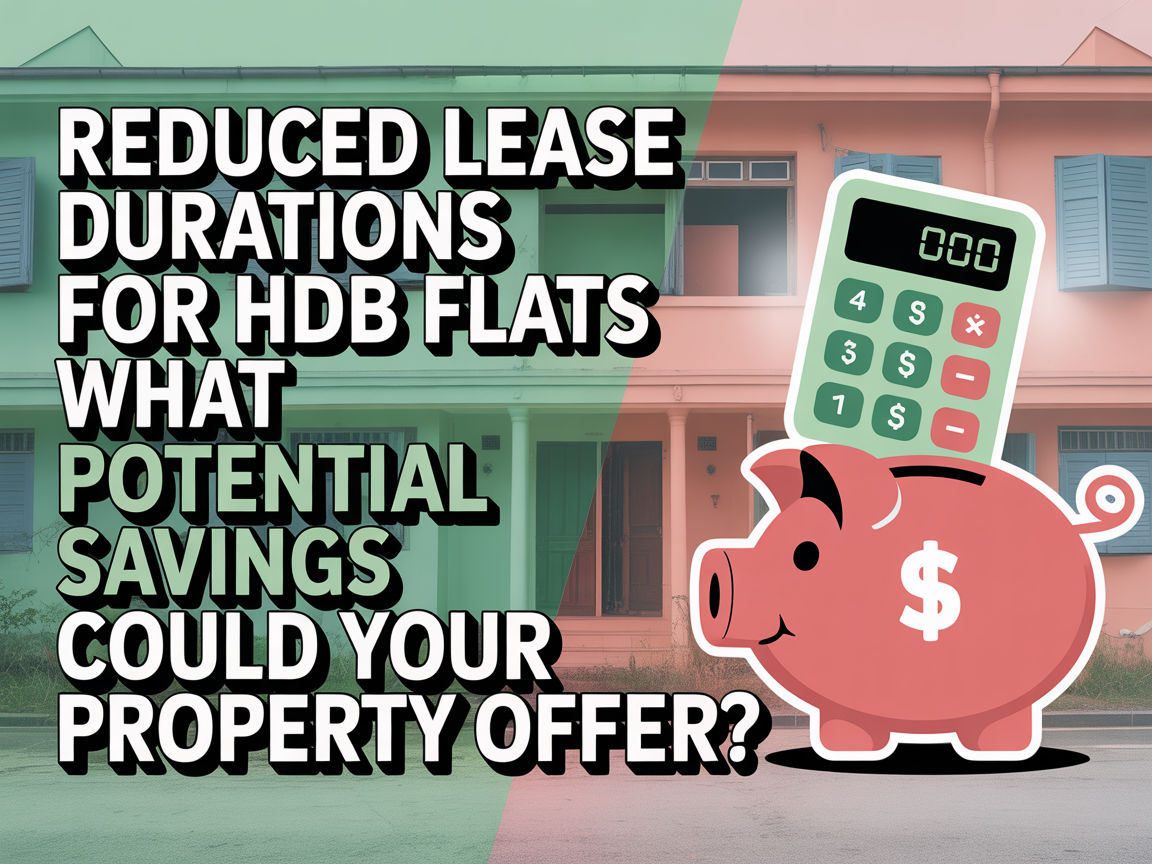
Shorter lease HDB flats are typically about 22–25% cheaper than their 99-year counterparts, based on both resale and BTO market data. For example, a 4-room resale flat with 60–70 years left on the lease is around 22% less costly than one with nearly a full lease. Similarly, 2-room Flexi BTO flats show a 40% price drop for a 45-year lease compared to a 99-year lease. This makes shorter lease flats a more affordable option, especially for singles, childless couples, or those not intending to pass homes to future generations. While HDB currently restricts shorter leases mostly to 2-room Flexi flats, policy changes could make this option more widely available. Ultimately, choosing between buying, selling, or waiting depends on your personal needs and goals, but shorter lease flats can offer meaningful savings for the right buyers.
When all factors are considered, a shorter lease HDB flat is likely to be more affordable.
In recent decades, property values in Singapore, including HDB flats, have seen a substantial increase. This surge has led the government to implement a series of property cooling measures—by our count, at least 15 since 2009, averaging around one each year. While these initiatives aim to regulate demand, the reality is that in a small, densely populated city-state like Singapore (with a population of 6.04 million as of June 2024), we can anticipate that property prices will probably stay elevated as long as the economy thrives.
Simultaneously, many Singaporeans recognise the significance of owning a home. Homeownership not only cultivates a sense of belonging within the country but also offers financial stability, as homeowners are safeguarded against rising rental prices that could diminish their disposable income. For retirees, having a fully paid home allows them to live without the stress of rental costs.
Nonetheless, as property prices continue to rise, some prospective homeowners may feel that acquiring an HDB flat—either directly from the government or through the resale market—has become prohibitively expensive. They might hesitate to purchase their ideal HDB flat due to high costs, especially when confronted with a monthly mortgage that surpasses their comfort zone. At the same time, they may still harbour significant ambitions, such as acquiring a larger HDB flat for their expanding family or residing in a preferred neighbourhood. Advising them to adjust their expectations is not an optimal solution.
One potential approach to enhance the affordability of homeownership without sacrificing size and location is to offer HDB flats with shorter leases. Presently, most HDB flats are sold with a 99-year lease. By providing options for shorter leases—such as 70-year leases—HDB flats could be marketed at lower prices via direct BTO sales or the resale market. This could motivate Singaporeans to continue purchasing homes while keeping property prices more manageable.
When all factors are considered, an HDB flat with a shorter lease tends to be less expensive than one with a longer lease. But by how much is it cheaper?
To investigate this, we examined the HDB resale market and BTO launches, referring to an article from our associates at Stacked Homes. Their analysis indicates that 4-room HDB flats aged 0-9 years have an average price of $676,377. In contrast, 4-room flats that are 30-39 years old are priced at an average of $523,132, which is approximately 22% less.
While this serves as a rough estimate that doesn’t factor in specific locations or the changes in 4-room HDB flats over time, it suggests a general market trend where buyers are willing to pay around 22% less for a flat with around 60-70 years remaining on its lease compared to one that has between 90-99 years left.
In the BTO market, where HDB determines prices, we can analyse the pricing of 2-room Flexi flats. These flats allow eligible applicants to opt for a shorter lease at a reduced price.
Reviewing the prices from a 2019 BTO launch, HDB offered 2-room flats with a 45-year lease at 60% of the cost of the same flat with a 99-year lease, making it roughly 40% cheaper. If we calculate the price difference based on a linear relationship – where a flat is 40% cheaper for having 54 fewer years on the lease – a flat with a 70-year lease would be priced at about 78% of its original price, or roughly 22% less than a flat with a full 99-year lease.
| Price | |
| 99-year lease | 100% Of Price |
| 45-year lease | 60% Of Price |
| 70-year lease | 78% (or about 22% cheaper) |
Interestingly, the figure of 22% cheaper aligns with what we discovered in the resale market.
We want to highlight that this is not an exact science, as market demand will always influence pricing. If more buyers are willing to purchase flats with shorter leases, the 22% discount we calculated for flats with a 70-year remaining lease might decrease.
Moreover, it is speculative on our part to propose that HDB would price a 70-year lease flat precisely 22% lower, based on the pricing model for 2-room flats featuring a 45-year lease.
Indeed, when HDB carried out a Selective En bloc Redevelopment Scheme (SERS) exercise in 2022, it provided homeowners the option to buy a new replacement flat with a shorter 50-year lease, rather than a new 99-year lease. Notably, the 50-year lease was priced at approximately 75% of the cost of a 99-year lease, which is about 25% cheaper.
This indicates that our estimate of a 22% discount for a 70-year lease might actually be rather generous in comparison. Nevertheless, for now, this rough estimate is the most accurate comparison we can provide.
Currently, HDB only offers 2-room Flexi flats with leases that are shorter than 99 years, but it is reasonable to consider that policies may evolve in the future if circumstances permit. As previously mentioned, HDB has provided homeowners with the opportunity to acquire a replacement flat with a 50-year lease during a SERS exercise, rather than the usual 99-year lease.
Moreover, HDB operates the Lease Buyback Scheme, which enables older Singaporeans to sell a portion of their flat’s remaining lease back to the government for extra retirement income. Selling HDB flats with shorter leases from the beginning isn’t too dissimilar from this, as both approaches involve monetising a segment of the flat’s lease.
At present, the majority of HDB flats come with a 99-year lease, which is generally adequate to accommodate at least two generations. For instance, if someone buys an HDB flat at the age of 21, they would need to live beyond 120 years old to outlast the lease, implying that these flats are frequently handed down to subsequent generations.
Nonetheless, for homeowners who are single or couples without children, the intention of leaving behind a home may not be a significant concern. In such scenarios, a less expensive flat with a shorter lease could be more appealing. For example, a 30-year-old opting for a flat with a 70-year lease would likely find it more than enough for their lifetime.
Even among families with children, the idea of passing down an HDB flat might not hold much significance if future generations prefer to buy their own properties. In these situations, inheriting an older flat with a diminishing lease would probably lead to it being sold as part of the estate, resulting in little more than some financial benefit.
For families with lower incomes, the choice to acquire a more affordable flat with a shorter lease may prove to be even more attractive. This option would enable them to fulfil their housing requirements without the financial strain of a complete 99-year lease. It could offer flexibility for varying life situations, appealing to those prioritising cost-effectiveness or those without long-term housing plans for future generations.
If you’re reading this, you must be trying to figure out the best course of action right now: is it the right time to buy or sell?
It’s difficult to give an exact answer since everyone’s situation is unique and what works for one person may not necessarily work for you.
I can bring you a wealth of on-the-ground experience and a data-driven approach to provide clarity and direction. From beginners to experienced investors, our top-down, objective approach will help you on your real estate journey.
I can help you by:


You May Also Like …