


Why Selling Your Own HDB Flat May Be More Challenging Than You Anticipate: 7 Hidden Challenges to Prepare For
TLDR Selling your flat can be a daunting task, not because of the paperwork but due to challenges in marketing...
Read More


TLDR
When upgrading your property, consider factors like rental rates, Buyer’s Stamp Duty adjustments, higher interest rates for bank loans, potential pool of buyers for your flat, obtaining home loans (75% max), CPF restrictions, HDB upgrading levy, ABSD implications, condo maintenance fees, and timeline for moving and renovation. Be aware of CPF refund requirements, ABSD charges for second properties, and condo maintenance fee calculations based on share values. Plan your renovation timeline carefully, especially for new launch units, and be prepared for potential delays in vacant possession when buying occupied properties.
2023 is shaping up to be an interesting year for upgrading property, given the recent policy tweaks and the rapid growth of the property market.
With prices skyrocketing, it may seem daunting to make a change. But don’t worry, here are a few ways you can tackle the upgrade smoothly, whether you’re looking at a new launch or a resale unit.
To ensure you make a well-informed decision, here are some factors of the booming market to consider:
Word on the street is that more and more sellers are requesting a later vacant possession date.
Some may even be open to negotiation and could be willing to pay rent to extend their stay – and this is happening during a time when rental rates are at one of the highest levels we’ve experienced in recent years.
This could potentially give buyers an edge (assuming you’re not in a rush to move in!).
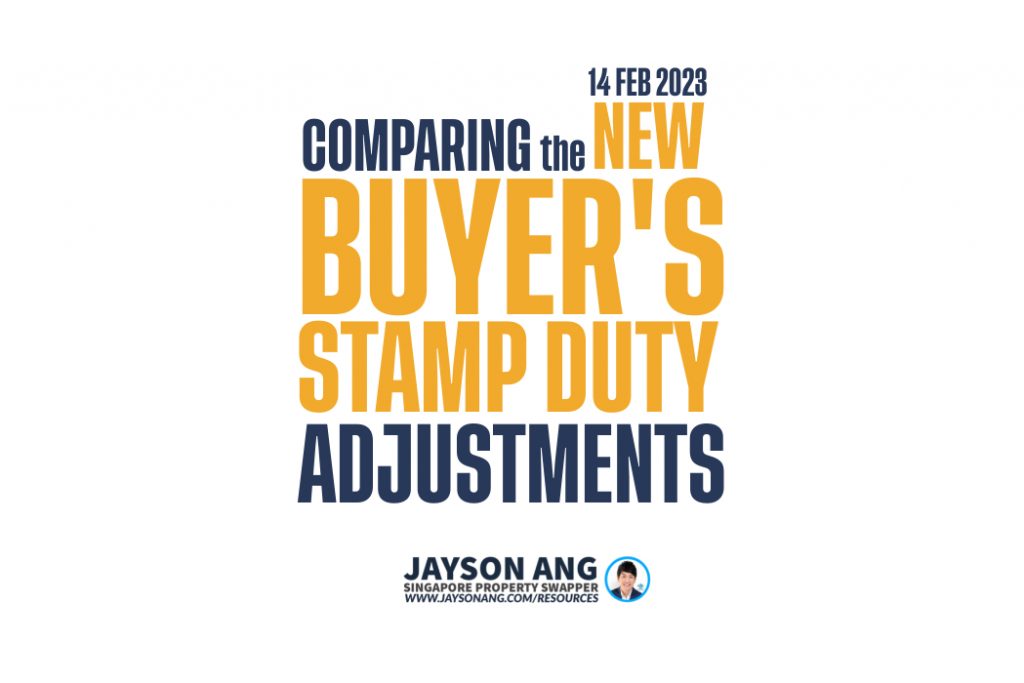
Since 14th February this year, it has been more expensive to purchase properties valued over $1.5 million due to the Buyer’s Stamp Duty (BSD) being increased.
This additional expense could affect your budgeting plans, with values over $1.5 million and up to $3 million now being taxed at five per cent, a one per cent rise from the prior rate of four per cent.
All amounts exceeding $3 million shall be subject to a 6% tax.
See This Article for Calculations >> Buyer Stamp Duty Calculations
Two years ago, loan rates were relatively low – hovering around two percent.
Fast-forward to 2023, the rates have increased to three percent, with fixed-interest loans being slightly higher at 3.8 percent. For those looking to purchase an Executive Condominium (EC), bear in mind that you must use a bank loan as opposed to an HDB loan, regardless if the EC is new or already privatised.
Interest rates being too high may result in you reaching CPF Withdrawal Limits faster than anticipated. This could, in turn, mean having to pay your home loan in cash instead of using your CPF funds at some point.
Realtors have reported that the 15 month waiting period for individuals who sell private property before they can purchase a resale flat has not led to a significant decrease in prices or transactions; yet it is a rule to remember if you’re still in the process of liquidating your flat *with some exceptions*.
Singaporeans aged 55 and above who choose to downsize to 4-room or smaller flats are exempted of this ruling.
When upgrading your home, don’t forget to consider the key points, such as securing a home loan, CPF restrictions, the HDB upgrading levy, the Additional Buyer’s Stamp Duty (ABSD) and whether it applies to you, condo maintenance fees, and the timeline of renovation and moving.
If you’re purchasing a private property, the most you can loan is 75% of its price or appraisal, whichever is lower. When buying a property straight from the developer (e.g. a condo in a new launch), the cost and valuation are treated as the same. This means that you’ll need to make sure you have enough cash or CPF to cover 25% of your home’s cost.
For the first five percent of your sale proceeds, you must pay in cash; the remaining 20 percent can be paid in a combination of cash and CPF.
However, this initial five percent is the key concern – if your sale proceeds won’t leave you with enough cash to cover it, you’ll need to put away some savings before proceeding.
Unfortunately, banks are prohibited from lending money to cover the down payment, per Monetary Authority of Singapore regulations.
When it comes to upgrading, the biggest concern for many is getting their CPF refund.
After selling your flat, you must put back the CPF funds you used (with the 2.5% interest rate) into your CPF account. Most Singaporeans will have used their CPF for their flat’s down payment, legal fees and maybe even the loan payments for the flat. All of this must be refunded from the proceeds of the sale.
CPF has a convenient online calculator so you can see how much of your CPF has gone towards your housing costs.
With the refund, it’s possible you won’t have any cash left after the sale – this is known as a negative cash sale. Don’t worry – you can still use your CPF savings to upgrade to a new property, but you’ll need to pay the first five per cent of the cost from other sources of savings.
Apart from this, there are certain CPF limitations to keep in mind. When it comes to BTO flats, this doesn’t really apply.
However, if you’re looking at condos and other properties, you need to take into account the Valuation Limit and Withdrawal Limit – in other words, you can only use a maximum of 120% of your property’s worth from your CPF account before you have to start paying the rest in cash. For more information, check out this article.
If you plan on utilizing your CPF to finance a second property, you must ensure that the Basic Retirement Sum is covered; any funds above this sum can then be utilized for your housing.
You must also be prepared for the possibility that higher interest rates may lead to your hitting the withdrawal limit, so having cash at the ready to service the home loan is essential.
A realtor can be of great help in estimating when this might occur.
Selling a flat? Some may be required to pay an upgrading levy – a compensation for previous improvements done by the HDB – such as those with flats that have undergone the Main Upgrading Programme (MUP) twice or more and Singapore Permanent Residents whose flats were upgraded under the same.
This levy is 10% of the price or the flat’s valuation (whichever is higher). Keep in mind: the last MUP was back in 2007, so it mostly applies to older flats.
Buying a new home before selling your flat? Get ready to shell out the Additional Buyers Stamp Duty (ABSD)! Singapore Citizens pay 17% and Permanent Residents pay 25% on their second property.
If you’re a married couple with at least one Singapore Citizen, you can qualify for ABSD remission by selling your flat within six months of purchasing your new home – the timeline starts from the day you own the property. Don’t forget, it must be a matrimonial home purchase, meaning both spouses must be on the title.
Don’t forget that having just six months to sell your flat can be a challenging endeavour. Time management can be difficult, so you should be prepared to accept a lower price if it takes longer than anticipated to offload – luckily, the market nowadays makes this much easier.
You have the opportunity to dodge the hefty ABSD charge if you either buy an Executive Condominium or sell your current flat before buying the new one (though it might necessitate having to rent for a period of time). Although some have sought to do this without renting, trying to secure an extension from purchasers is not always an easy task.
An important note on using CPF to pay the ABSD
If you’re looking to purchase a completed or resale property, you’ll need to pay the ABSD in cash first – but don’t worry – you can then get reimbursed from your own CPF account in a matter of two to three weeks.
But if you’re getting a new launch property, the ABSD can be taken directly out of your CPF.
Plus, don’t forget to pay your stamp duties within two weeks of the transaction being completed!
Once you make the transition to condo living, be mindful that your maintenance fees will vary drastically from HDB conservancy charges.
The fee is calculated based on the share value of your condo unit; this is usually expressed in terms such as “$85 per share value”. For example, a condo with a share value of five would pay $425 per month in maintenance fees ($85 x 5).
Share values typically start at five for any unit 50 sqm. or below, and each increase of 50 sqm. increases the share value by one (for instance, a 150 sqm. unit would have a share value of seven).
Maintenance fees at condos may fluctuate over time, and you have the opportunity to influence the costs of upkeep at management council meetings.
Unlike HDB flats, there’s no town council so you are responsible for your own decision-making. This can be a good thing, as long as you have a reliable committee in place.
Furthermore, it is usually quarterly rather than monthly payments that are requested, with a 15 percent interest charged for late payments.
When it comes to a new launch unit, remember that construction is not the only thing to consider – after the building is ready, you may still have to wait up to six months for the finishing touches such as flooring, walls and custom lighting to be completed. Talk to your realtor and contractor to find out exactly how soon you can move in. Be prepared for a little extra wait time!
Are you planning a move and some major renovations? If so, why not consider a new launch condo?
These come equipped with all the basic essentials, so you can move in right away. However, if you’re looking to buy a resale condo, the renovations may take longer to complete as the old works will have to be removed first.
If you’re in a hurry to move in, you can always select a unit that has recently been renovated – ideally, no more than five years ago – so you can move in straight away and start updating the renovations with your own over time.
Planning the date for vacant possession of a resale property can sometimes require a bit of back-and-forth.
This is particularly true when you’re purchasing a property which is currently occupied, as the seller needs to reach an agreement with the tenants.
A realtor can act as an intermediary and work to minimise any delays.
If you need help making sure your next home is an excellent fit, don’t hesitate to get in touch. I’m happy to provide reviews and guidance on both new and resale homes.
If you’re reading this, you must be trying to figure out the best course of action right now: is it the right time to buy or sell?
It’s difficult to give an exact answer since everyone’s situation is unique and what works for one person may not necessarily work for you.
I can bring you a wealth of on-the-ground experience and a data-driven approach to provide clarity and direction. From beginners to experienced investors, our top-down, objective approach will help you on your real estate journey.
I can help you by:


You May Also Like …


















A password will be e-mailed to you