


Get Into Core Central Region Before Big Price Adjustments
TLDR Jayson Ang discusses the essential factors to consider when seeking a property for investment. By analyzing the safe entry...
Read More

TLDR
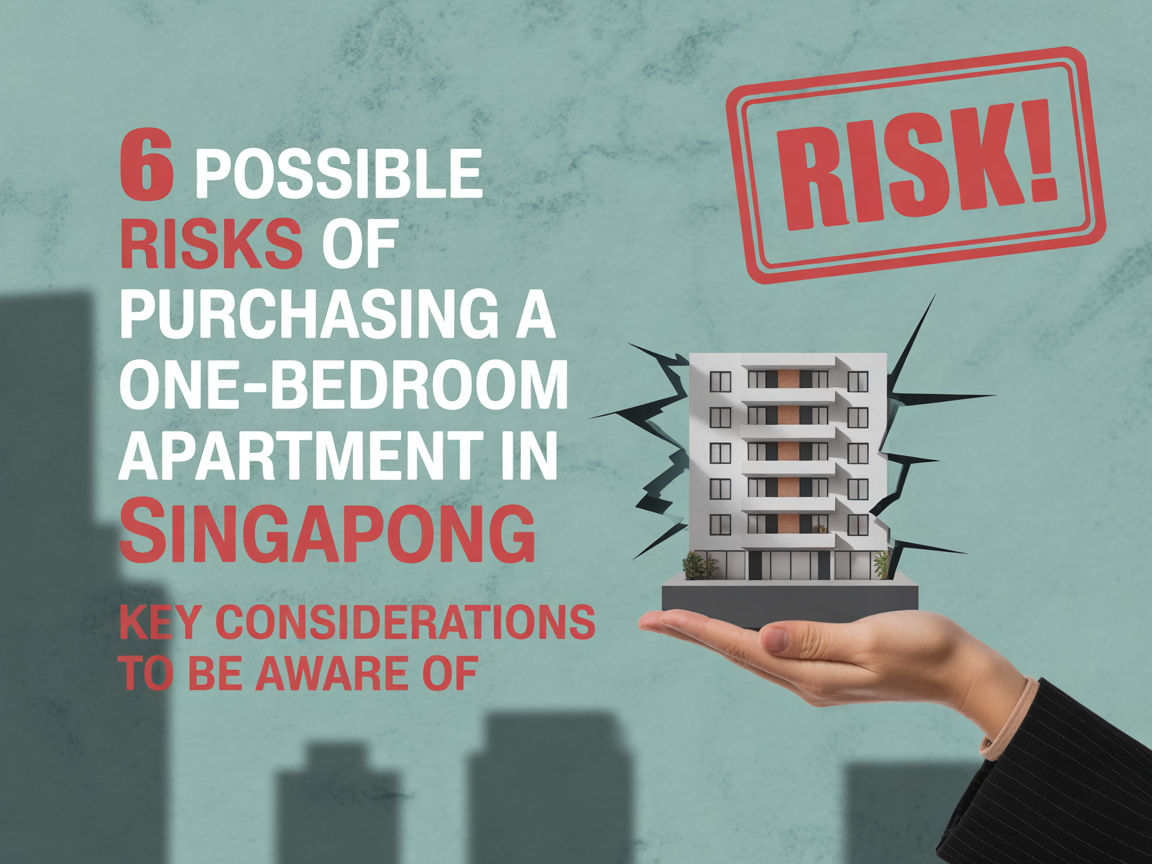
One-bedroom condos in Singapore are attractive for their lower entry price and rental potential, but buyers should be aware of key risks. These units can lack flexibility for changing personal needs (like accommodating family or future life events) due to limited space. Resale and rental prospects depend heavily on location, supply of similar units, and market sentiment. Selling a private condo also triggers a 15- to 30-month wait before buying a flat, which can complicate future moves. One-bedroom units typically face higher competition for tenants and may be harder to resell since most buyers prefer larger family homes. Owners also have less influence in en-bloc sales or condo management. Consider your long-term plans, exit strategy, and lifestyle needs before buying; a slightly larger unit may offer better flexibility and security.
In a climate of increasing interest rates and soaring prices, one-bedroom condominiums are frequently viewed as an attractive purchase due to their lower price point. For many individuals, they signify the most economical option for private property ownership and a possible entry into the rental market. However, is the lower cost truly as secure as it appears? Although a smaller investment may mitigate certain risks, it does not eliminate potential drawbacks—particularly in the face of unforeseen life circumstances.
For instance, if your elderly parents suddenly require accommodation or a sibling needs a place to live urgently, having only a one-bedroom unit may restrict your ability to assist. With a space of merely 500 sq. ft. or less, accommodating anyone other than yourself can prove challenging. Even a two-bedroom unit provides minimal additional flexibility, potentially necessitating that your relatives seek rental options elsewhere, while others with more spacious homes might be able to offer temporary refuge.
Therefore, before making a decision, it is essential to consider these critical risks associated with purchasing a one-bedroom unit:
Certainly, if you’re purchasing for your own use, then almost anything is acceptable. However, if you’re considering a potential future sale, the location will be significant depending on the type of unit.
For example, think about acquiring a one-bedroom unit in a sought-after location such as Cuscaden. Although the design may be stunning and the surroundings opulent, the crucial question is: how many buyers in the market will be able to afford such a specialised property when it’s time to sell? In this price bracket, buyers often emphasise space, as demonstrated by developments like Park Nova, where the larger units were the first to be sold.
Similarly, you should also consider the availability of one-bedroom units in the vicinity. You might find yourself in an area with strong rental demand, yet there could be an oversupply of one-bedroom units – which is obviously not ideal when it comes to selling.
When selling a private property, there is a waiting period of 15 months before you can purchase a resale flat, and 30 months before buying a BTO flat. Unless your one-bedroom unit is going to be your first and only home, this can lead to potential complications later on.
A clear example would be if you get married and require a larger space to establish your home, or if you’re renting out the one-bedroom and your living situation changes (for instance, if you’ve been staying with parents or in-laws, but they decide to sell).
In addition to the challenges of selling (hopefully, the market isn’t down at that time), the waiting period can create significant logistical hurdles. You may find yourself needing to rent during the 15-month wait or for 30 months if you opt for a BTO flat. Keep in mind that if you choose the resale option, it will likely come at a higher cost compared to a BTO flat.
We recommend having a well-defined exit strategy before making a purchase, just in case such situations arise. If you already anticipate getting married or having your first child in a few years, it might be wise to save up and consider a larger first home (perhaps starting with a bigger HDB flat initially and upgrading from there).
*This does not apply to Singaporeans aged 55 and above who are downsizing to flats of four rooms or smaller.
There can be notable variations in returns or overall performance, influenced by the mix of units. For instance, a small unit in a condominium populated by other one or two-bedroom apartments may lead to heightened competition when searching for tenants. This can also impact future resale opportunities, as certain homebuyers prefer not to reside in exclusively small-unit condominiums – even if they are single themselves (some individuals simply prefer not to live in areas predominantly occupied by transient tenants).
Some real estate agents might advise against purchasing anything smaller than a two-bedroom property. There is some merit to this advice, as two-bedroom units tend to be easier to rent: they provide tenants with the option to find a roommate, which can reduce the likelihood of vacancies during a challenging market.
Additionally, there’s a matter of negotiation: it’s often possible to convince someone to pay a little extra for a two-bedroom due to the additional space; however, it’s significantly more difficult to get someone to agree to a one-bedroom if they feel it’s too cramped. For certain couples, a one-bedroom is simply not an option.
Lastly, in challenging circumstances, you may discover that a two-bedroom can serve as a home for you and your partner, especially if there are numerous vacancies or a sluggish rental market. In contrast, a one-bedroom may remain empty and unutilised in such situations.
Even if you do not rent out your one-bedroom flat, the rental market can still have an impact on its value. This is due to the high demand for one-bedroom properties among renters, with many prospective buyers being landlords themselves.
The rental market can be quite volatile. For example, during economic downturns, businesses may decrease the number of expatriate staff or reduce housing allowances, which can negatively influence the value (or perceived value) of a one-bedroom, particularly in prime areas where expatriates tend to rent.
Government policies, such as cooling measures, also play a role in this dynamic. An increase in the Additional Buyer’s Stamp Duty (ABSD) on second properties might result in a rise in one-bedroom sales as investors look for more budget-friendly options than family condominiums; however, it may also reduce interest in rental properties altogether, making it harder for one-bedrooms to attract buyers. It is important to mention that family units continue to dominate the condo market, and many buyers do not require a one-bedroom unit.
One-bedroom units typically have less square footage and a lower market value, which helps keep maintenance expenses down. However, it’s important to note that an en-bloc sale requires an 80 per cent agreement, determined not by the number of owners but by the total strata area owned.
This implies that owners of larger family-sized condos will wield more influence, both in the everyday management of the condo and in decisions regarding an en-bloc sale. It’s not uncommon for owners of smaller units to feel marginalised or overlooked, despite residing in the same development.
Overall, a one-bedroom condo should be considered primarily as a strategy for rental yield, as its lower price point can make it an appealing investment for rentals. On the other hand, family-sized condos are generally a more secure option if you’re aiming for resale profits, given the larger pool of potential buyers.
In terms of home ownership, one-bedroom units necessitate a level of confidence in your lifestyle circumstances; there is significantly less space to accommodate changes, such as finding a partner or expanding your family.
For further insights into the Singapore property market and its diverse housing options, follow me here. If you’re interested in a more detailed consultation, feel free to reach out here.
If you’re reading this, you must be trying to figure out the best course of action right now: is it the right time to buy or sell?
It’s difficult to give an exact answer since everyone’s situation is unique and what works for one person may not necessarily work for you.
I can bring you a wealth of on-the-ground experience and a data-driven approach to provide clarity and direction. From beginners to experienced investors, our top-down, objective approach will help you on your real estate journey.
I can help you by:


You May Also Like …