TLDR
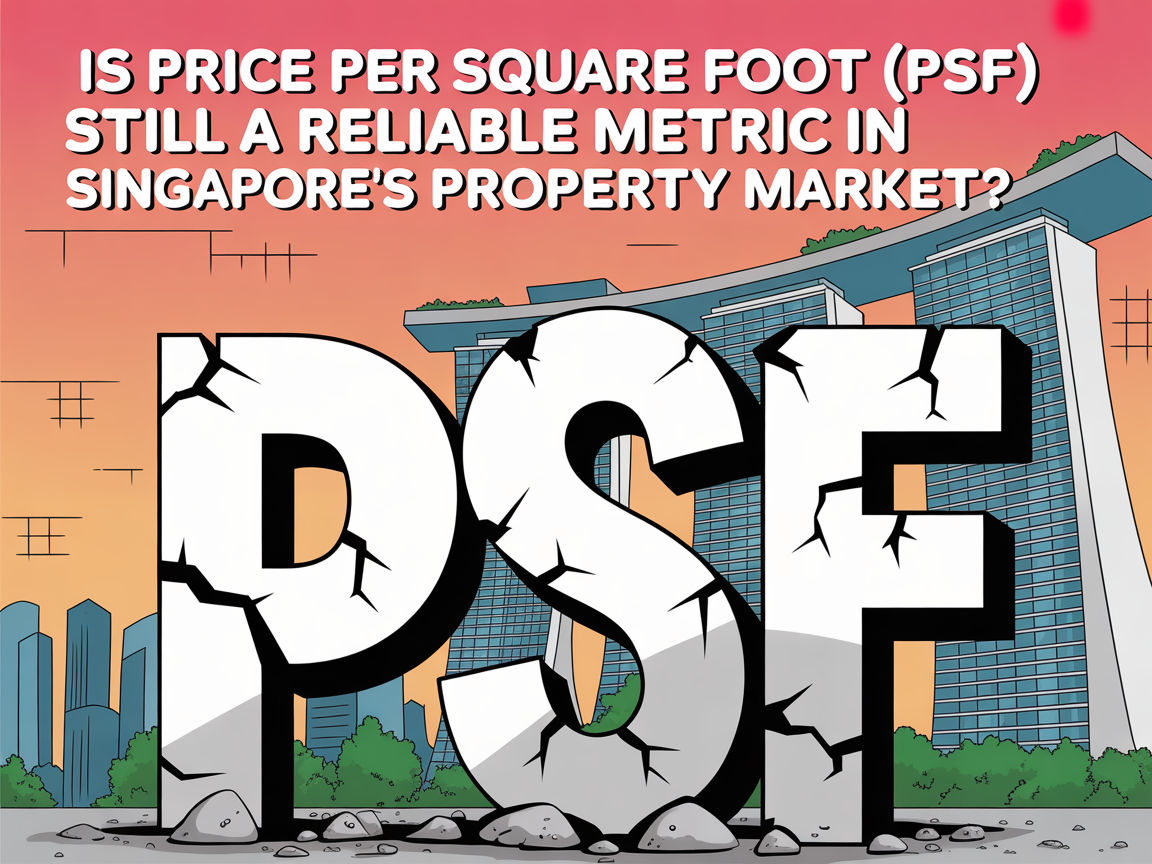
Price Per Square Foot (PSF) is increasingly a poor measure of property value in Singapore due to regulatory changes that improved space efficiency, excluding non-livable areas from Gross Floor Area (GFA). Older properties with lower PSF may have inefficient layouts and higher renovation costs, making direct PSF comparisons misleading. PSF also ignores qualitative factors like unit quality, location, and unique features, and is less useful across different property types. Instead, total price (quantum) has a greater impact on buyers’ financial commitments and should be the primary focus. PSF might only be relevant when comparing very similar units. Buyers and sellers should prioritize a comprehensive, data-driven approach considering both quantum and qualitative factors rather than relying solely on PSF.
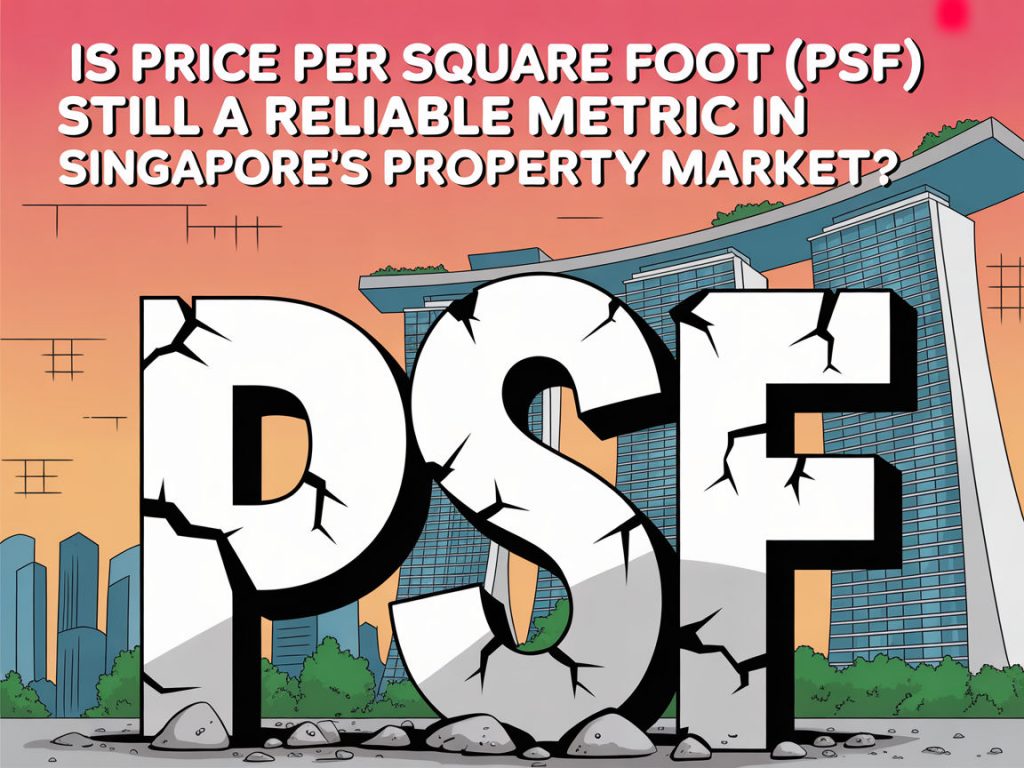
Price Per Square Foot (PSF) has long been a conventional method for comparing property prices, often mistakenly equated with value. The intuitive logic suggests that a lower PSF for two similarly sized properties implies better value. However, significant changes in Singapore’s property market have rendered this assumption often inaccurate, making PSF a potentially misleading indicator.
Why PSF is Becoming an Increasingly Poor Indicator
The relevance of PSF has diminished due to various regulatory changes over the years that have reshaped property layouts and efficiency. Historically, during the “bay window/planter era” of the 2010s, developers included spaces like air-con ledges, bay windows, and planters in the total square footage, for which buyers paid, despite these being non-chargeable to developers. This practice led to less efficient floor plans.
Subsequent regulations phased out these non-chargeable areas, leading to more efficient layouts. Most recently, the GFA (Gross Floor Area) harmonization rule has further streamlined designs by excluding unliveable spaces like air-con ledges and strata void spaces from the official GFA. Consequently, while the total price of a unit may remain the same, its reported PSF increases, creating a perception of higher prices when the actual livable space might be comparable.
For example, comparing three similar 3-bedroom properties in the East across different eras can yield a distorted picture if solely based on PSF:
As seen above, a seemingly lower PSF in older properties might not reflect real value differences, especially when considering potentially higher renovation costs and less efficient layouts. PSF also fails to account for inherent risks in older properties, such as impending en bloc sales or deteriorating facilities. This holds true for HDB properties as well.
Additional Reasons Why PSF Can Be Misleading:
- Lacks Qualitative Depth: A higher PSF might be justified by superior quality, better unit facing, proximity to premium amenities (e.g., sky gardens, elevated pools), or the exclusivity of a rare unit type (e.g., top-floor units with rooftop access, loft units). For instance, People’s Park Complex, despite its remarkably low PSF, might not be considered “better value” than a newer, more modern development like One Pearl Bank in its current condition. Dual-key units, which often have higher PSF due to their split layout, offer unique benefits like multi-generational living or rental income potential, which are not captured by a simple PSF metric.
- Ignores Space Efficiency: Efficient use of space is often more critical than sheer square footage, a factor PSF overlooks. A very large unit might boast a low PSF but could feature inefficient layouts with expansive hallways, disproportionately large balconies or patios (sometimes a third of the living room size, common in 80s terrace-style condos), or vast entry antechambers. These non-livable areas contribute to a higher reported square footage and lower PSF but translate to wasted space and higher maintenance.
- Ineffective for Comparing Different Property Types: PSF is most effective when comparing units of similar layouts within the same project. Its utility diminishes significantly when comparing across different property types. For example, bungalows at Sentosa Cove may have a low PSF compared to many condominiums due to their immense size, yet their overall quantum can still be in the double-digit millions. Conversely, compact city-fringe options like M condo might appear expensive by PSF (e.g., one-bedders exceeding $3,000 psf) but were among the few options offering units in the Beach Road/Bugis area for under $1 million at launch. Moreover, premium and penthouse units often command both larger sizes and higher PSFs.
Unless comparing highly similar units and layouts where PSF might serve as a “tie-breaker,” it’s not a versatile analytical tool.
The Primacy of Quantum:
Ultimately, the quantum (total price) of a property has the most direct impact on a buyer’s financial commitments, influencing the loan amount, stamp duties, and for investors, the rental yield and overall return. Focusing too much on PSF can be a distraction from this critical figure. During high-pressure sales situations, agents might emphasize PSF to sway buyers, so it’s important to keep the total quantum at the forefront of your decision-making.
Should You Buy, Sell or Wait?
If you’re reading this, you must be trying to figure out the best course of action right now: is it the right time to buy or sell?
It’s difficult to give an exact answer since everyone’s situation is unique and what works for one person may not necessarily work for you.
I can bring you a wealth of on-the-ground experience and a data-driven approach to provide clarity and direction. From beginners to experienced investors, our top-down, objective approach will help you on your real estate journey.
I can help you by:
- Offering Strategic Real Estate Advice – I can help create a comprehensive plan to guide you through your property journey.
- Connecting Your Home with the Perfect Buyers – Through stunning visuals, an effective communication strategy, and an in-depth knowledge of the market, we’ll ensure your home is presented in the best possible way to fulfill your goals.


You May Also Like …
Jayson Ang – July 22, 2024 – Share
Singapore, a cosmopolitan city-state known for its vibrant culture and diverse shopping scene, offers a unique blend of modern malls...
Read More
Jayson Ang – June 12, 2024 – Share
Property investment scams are unfortunately prevalent in Singapore, and unsuspecting investors can fall victim to these scams, leading to significant...
Read More
Jayson Ang – February 22, 2024 – Share
Singapore is a great starting point for travelers looking to explore the region. From Singapore, there are many great destinations...
Read More
Jayson Ang – September 16, 2024 – Share
In today's uncertain global economic climate, investors are constantly on the lookout for safe havens to park their wealth. Amidst...
Read More
Jayson Ang – May 2, 2024 – Share
Singapore, a melting pot of cultures and culinary delights, is known for its diverse and vibrant food scene. Among the...
Read More
Jayson Ang – September 8, 2024 – Share
Singapore, a melting pot of diverse cultures, offers an incredible array of street food that tantalizes the taste buds of...
Read More
Jayson Ang – August 22, 2026 – Share
TLDR Right-sizing from a condo to an HDB flat in 2025 requires careful planning beyond lifestyle adjustments. Sellers face a...
Read More
Jayson Ang – March 7, 2025 – Share
Singapore, affectionately known as the Little Red Dot, is a vibrant city-state in Southeast Asia that boasts a unique blend...
Read More
Jayson Ang – November 23, 2024 – Share
Purchasing a home is one of the most significant financial decisions you will make in your lifetime. It's essential to...
Read More
Jayson Ang – September 26, 2024 – Share
TLDR When contemplating the purchase or sale of a property under the Minimum Occupancy Period (MOP), it's crucial to consider...
Read More
Jayson Ang – June 15, 2025 – Share
TLDR Many perceived drawbacks in Singapore’s property market—such as mortgage lock-ins, leasehold status, west-facing units, nearby construction, inefficient spaces, and...
Read More
Jayson Ang – July 12, 2024 – Share
When looking to buy a property in Singapore, it's essential to know how to negotiate a good deal. Here are...
Read More
Jayson Ang – December 31, 2022 – Share
TLDR When deciding to sell your house in Singapore's competitive real estate market, timing is crucial. Selling during a seller's...
Read More
Jayson Ang – July 7, 2026 – Share
TLDR Top-floor condominium units in Singapore often come at a premium price and are associated with luxury, but they have...
Read More
Jayson Ang – January 6, 2023 – Share
TLDR The Singapore property market presents unique characteristics that foreign buyers should consider. From the high rate of homeownership to...
Read More
Jayson Ang – May 23, 2023 – Share
Here are the top 5 reasons why Chinese love to invest in Singapore's property market today. 1. Political stability: Singapore...
Read More
Jayson Ang – August 13, 2023 – Share
TLDR When it comes to purchasing property in Singapore as a Permanent Resident or Foreign National, there are specific restrictions...
Read More
Jayson Ang – November 9, 2024 – Share
Singapore, a thriving city-state in Southeast Asia, is known for its stable political climate, strong economy, and strategic location. As...
Read More
Jayson Ang – October 11, 2024 – Share
Singapore, a vibrant city-state known for its iconic landmarks and diverse culture, offers a plethora of accommodation options for travelers....
Read More
Jayson Ang – February 21, 2024 – Share
Singapore, a beautiful city-state known for its stunning architecture, lush greenery, and vibrant culture, is a photographer's paradise. The island...
Read More