
How to Identify an “Undervalued Property” in Singapore in 2025: 6 Easy Tips
TLDR Undervalued properties are harder to find in Singapore due to market transparency, but deals still exist. Target areas with...
Read More

TLDR
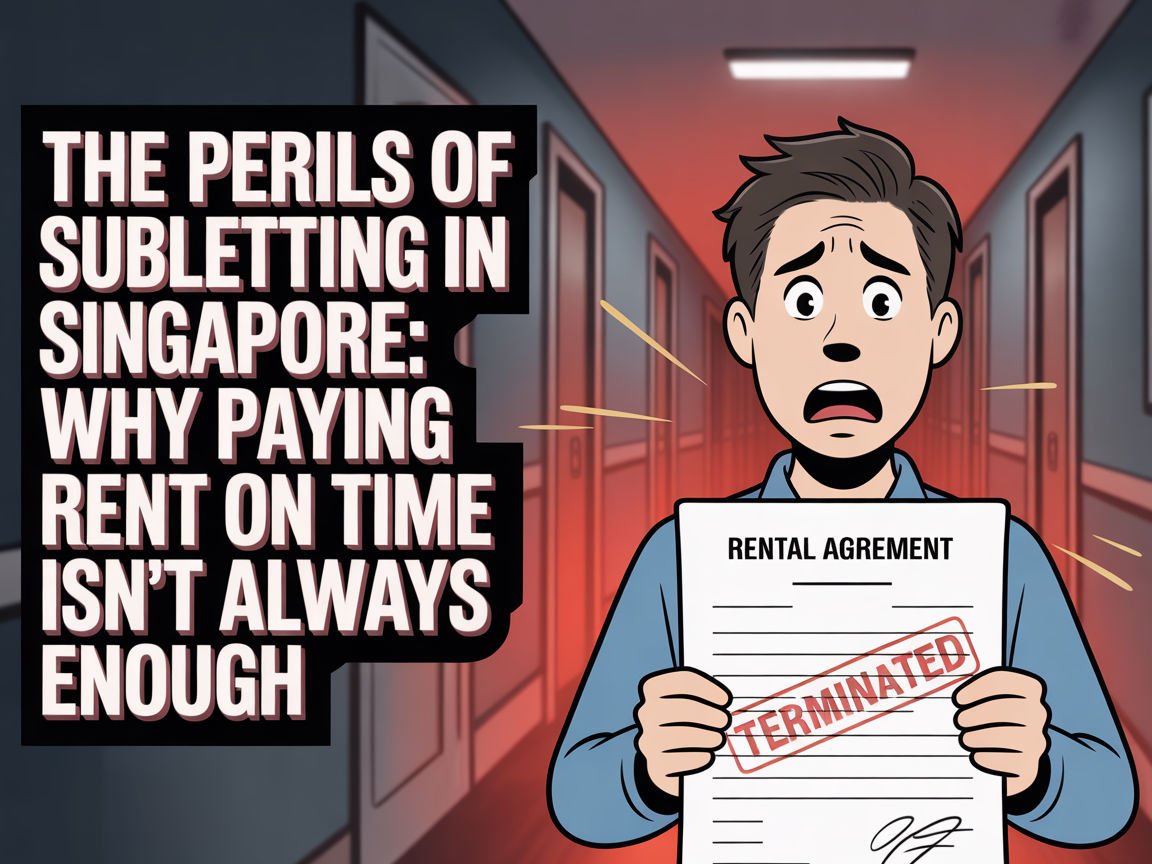
Subtenants often mistakenly believe that paying rent consistently guarantees security. However, their rights are limited since the main tenant holds the primary lease with the landlord. The Maxi Coffee Bar case illustrates the risks: despite paying rent, the subtenant was abruptly evicted when the main tenant broke the lease and failed to pay the landlord. Similar risks exist in residential subtenancies, especially when main tenants sublet without landlord permission or disappear, leaving subtenants vulnerable to eviction without compensation and minimal notice. Singapore law prioritizes landlords’ rights, making legal recourse difficult for subtenants. While subletting is common, due diligence is critical—subtenants should verify the main tenant’s relationship with the landlord and review tenancy agreements carefully. Whenever possible, securing a direct lease with the property owner is safer.
A common misconception among subtenants (individuals who rent from a main tenant rather than directly from the landlord) is that consistent rent payments guarantee security. However, the dynamics between the main tenant and the landlord are often opaque to the subtenant, and any breakdown in that relationship can have severe repercussions. Understanding these risks is crucial before entering a subtenancy agreement.
Maxi Coffee Bar, a well-known cafe on Ann Siang Hill since 2020, operated as a subtenant. This arrangement is not uncommon for certain businesses, particularly in the F&B sector. However, on May 31st, the main tenant abruptly broke their lease.
Despite Maxi Coffee Bar meticulously paying rent to the main tenant, they were informed they had to vacate. A cafe spokesperson revealed, “We submitted transaction evidence that we had been paying our rent. But we realised that this rent was not forwarded to the landlord by our main tenant.” The landlord’s subsequent actions involved a tumultuous series of revoked and shortened extensions, culminating in a mere two-day notice to vacate, delivered mid-service on June 17th.
The cafe acknowledged the landlord’s actions, while harsh, were likely legal, stating they were “simply and tragically collateral damage.” By the time news outlets reported Maxi’s impending closure, the cafe was already packing up, highlighting the vulnerability of subtenants.
The most common issue in residential subletting arises when main tenants lack the landlord’s explicit permission to sublet. Discussions on platforms like Reddit frequently feature such scenarios. It’s crucial to note that HDB flats cannot be sublet by tenants, so any such offers for non-private properties should be viewed with extreme caution.
Beyond unauthorized subletting, situations mirroring the Maxi Coffee Bar incident can occur when a main tenant defaults or disappears. The author recounts a personal experience:
Between 2014 and 2017, the author rented out a condo unit. Initially, the tenant, a foreign student, actively found reliable flatmates from her school. Upon graduation, she sought to remain, with an agreement to become the main tenant and sublet to others. However, a breakdown in trust occurred. The main tenant ghosted the author and vanished, having collected rent from two subtenants but failing to forward it. It was later discovered she was at risk of overstaying her visa after losing her job.
This incident left the two subtenants in a precarious position. One was a student facing exams, the other had just started a new job. While the author managed to work out a compromise (accepting a financial loss), the subtenants faced the immediate threat of homelessness and disruption.
When a subtenancy goes awry, several critical issues emerge:
Even if a subtenant were to pursue costly legal action, the immediate financial and emotional distress of being unhoused would remain.
Not necessarily. Subletting is a common practice in Singapore’s private property market. Many landlords rent units to co-living companies that then sublet rooms, often with positive outcomes for all parties.
However, if you choose to be a subtenant, due diligence is paramount. Thoroughly vet the main tenant, inquire about their relationship with the landlord, and meticulously review all tenancy terms. While these actions have limitations, they are essential. Whenever possible, it is always safer to enter into a direct tenancy agreement with the property owner.
If you’re reading this, you must be trying to figure out the best course of action right now: is it the right time to buy or sell?
It’s difficult to give an exact answer since everyone’s situation is unique and what works for one person may not necessarily work for you.
I can bring you a wealth of on-the-ground experience and a data-driven approach to provide clarity and direction. From beginners to experienced investors, our top-down, objective approach will help you on your real estate journey.
I can help you by:

You May Also Like …