
6 Factors Making Singaporean Properties Difficult to Sell (Even in a Strong Market)
TLDR Properties in Singapore may linger on the market due to several key factors. Small boutique developments face price volatility,...
Read More

TLDR
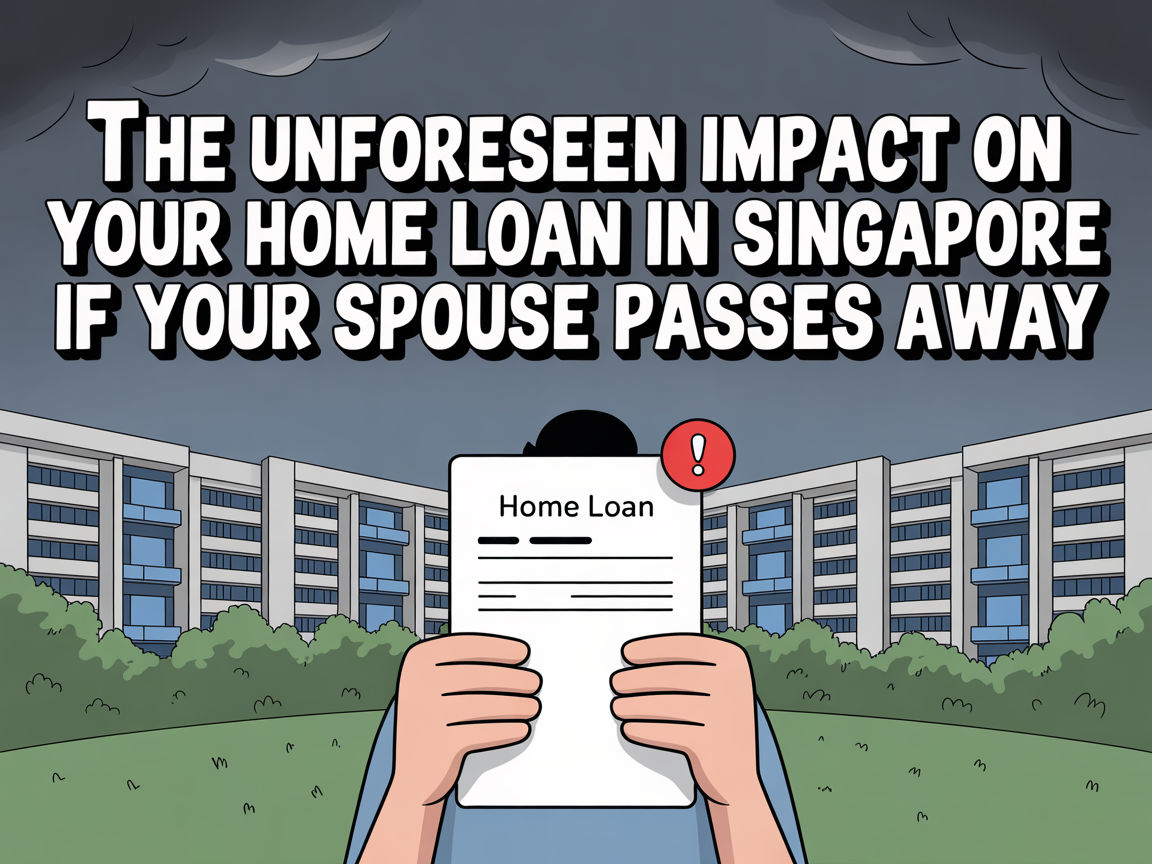
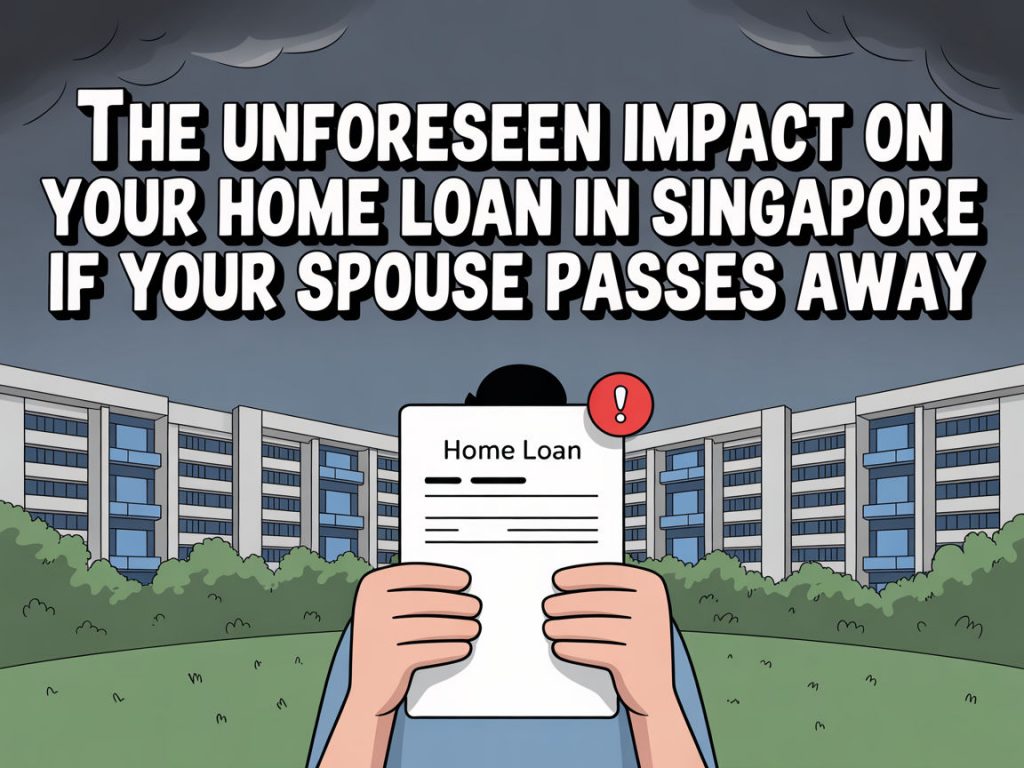
The death of a co-borrower in Singapore can trigger complex home loan challenges beyond simply taking over repayments. Banks reassess the surviving spouse’s eligibility under the Total Debt Servicing Ratio (TDSR), which caps repayments at 55% of income, and may shorten loan tenure based on age—raising monthly costs. Older loans approved before 2013 face added risk, as they may not meet current TDSR rules, even if payments seem manageable. While life insurance payouts can help, they often fall short of covering large loans and may undermine long-term family support. HDB owners benefit from the mandatory Home Protection Scheme (HPS), which clears loans upon death or disability, but private property owners lack automatic coverage unless they purchase mortgage insurance. For upgraders moving from HDB to private housing, overlooking this gap can leave families financially vulnerable, making proactive mortgage insurance essential. jaysonang.com
The passing of a co-borrower can trigger significant and often unexpected complications for a home loan in Singapore. Many assume it’s simply a matter of the surviving spouse taking on larger monthly payments. However, the reality is far more intricate, as banks re-evaluate the surviving borrower’s capacity to service the loan.
Upon the death of a co-borrower, the bank must reassess the surviving individual’s eligibility to continue the loan. This involves standard eligibility checks, including adherence to the Total Debt Servicing Ratio (TDSR), which caps monthly loan repayments at 55% of one’s income (inclusive of all other debt obligations). Additionally, the remaining loan tenure may be adjusted based on the surviving borrower’s age, potentially leading to a shorter tenure and, consequently, higher monthly repayments.
The situation can be particularly challenging for loans approved before 2013. Prior to that year, the TDSR framework was not in place. This means that a loan that was previously approved might no longer qualify under current regulations, especially with one less income stream from the deceased co-borrower. Even if the surviving spouse could manage higher payments, the inability to meet current eligibility criteria could still put the property at risk of foreclosure. Navigating such a complex financial situation while grieving can be an immense burden.
Some homeowners believe that general life insurance policies inherently cover such scenarios. While a life insurance payout can be used to service a home loan, it’s often not the most advisable or comprehensive solution. The effectiveness depends on the policy’s coverage amount versus the outstanding loan. A substantial loan (e.g., over $1 million) might not be fully cleared by a typical life insurance payout (e.g., $300,000), leaving a significant shortfall.
Furthermore, a general life insurance payout is typically intended to provide long-term financial support for the family, replacing the deceased’s income for years to come. Using a large portion, or even the entirety, of this payout to partially clear a home loan, especially when the household income has already taken a significant hit, can defeat its intended purpose and leave the family financially vulnerable.
HDB flat owners generally don’t face these concerns because the Home Protection Scheme (HPS), a form of mortgage insurance, is mandatory if they use their CPF to service their HDB loan. HPS pays off the outstanding home loan in the event of death or total permanent disability, providing an automatic safety net that many HDB owners take for granted.
However, this type of mortgage insurance is not mandatory for private properties. Unless explicitly purchased, there is no automatic mechanism to clear your outstanding condo or landed property loan if a co-borrower passes away.
This oversight is particularly risky for upgraders moving from an HDB flat to a private property for the first time. Many are unaware that the automatic mortgage protection they had with their HDB loan no longer applies. For those early in their private home loan tenure, with a substantial outstanding amount, this lack of protection can expose them to significant financial vulnerability. Therefore, for private property owners, particularly upgraders, it’s crucial to proactively consider and secure adequate mortgage insurance.
If you’re reading this, you must be trying to figure out the best course of action right now: is it the right time to buy or sell?
It’s difficult to give an exact answer since everyone’s situation is unique and what works for one person may not necessarily work for you.
I can bring you a wealth of on-the-ground experience and a data-driven approach to provide clarity and direction. From beginners to experienced investors, our top-down, objective approach will help you on your real estate journey.
I can help you by:


You May Also Like …

















A password will be e-mailed to you