
Can You Still Make Money from Older Freehold Condos in Singapore
TLDR While freehold condos might seem like a solid investment, the rise of new developments and aging buildings cast doubt...
Read More
A password will be e-mailed to you


TLDR
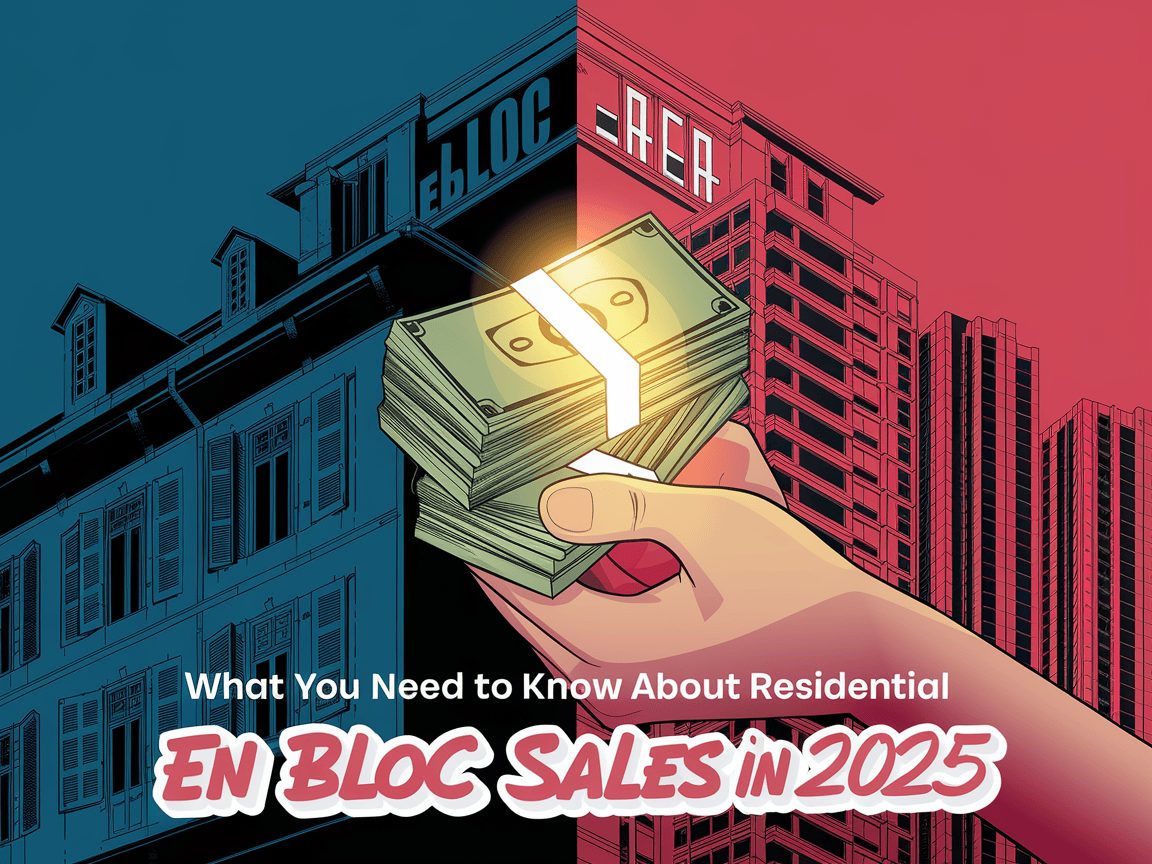
En bloc sales in Singapore involve selling entire buildings to developers for redevelopment, with most owners needing to agree. This process helps maximize land use in a land-scarce country and can offer owners significant financial gains, though it often takes 18–24 months and can bring challenges like needing to find a new home quickly and coping with moving costs. Both private and public housing can be affected, with different rules—private en bloc needs 80–90% owner consent, while public HDB flats rely on government-led SERS. Old, well-located buildings are most likely targets. The process is complex, involving committees, legal steps, and potential objections. Before agreeing to an en bloc sale, weigh the financial benefits against the time, uncertainty, and emotional costs. Stay informed and seek advice to make the best decision for your situation.
En bloc sales are reshaping Singapore’s housing scene. As old buildings make way for new ones, homeowners face both chances and challenges. Let’s break down what you should know about this process.
En bloc means selling an entire building at once. Most owners must agree to sell their units to one buyer, usually a developer. This happens most often with older buildings that could use an update.
Land is scarce in Singapore. We need to use every bit wisely. Taking down old buildings to build new ones helps us do this. New buildings can house more people and offer better facilities.
Private properties need owner agreement for en bloc – 80% for buildings over 10 years old, 90% for newer ones. For HDB flats, it’s different. The government runs SERS (Selective En bloc Redevelopment Scheme), and residents must move when chosen.
Even if you own a freehold unit, you might have to sell if most owners agree to en bloc. Developers often prefer leasehold properties now, but freehold isn’t safe from en bloc.
Money is the big draw. Owners usually get more from en bloc than selling alone. Developers pay extra for the chance to rebuild, especially if they bought their homes when prices were lower.
En bloc isn’t all good news. It takes time – sometimes years. You’ll need to find a new home fast when it happens. The money might not buy you something as good nearby. Moving costs add up too.
Some owners feel lost in the process. They don’t know what questions to ask at meetings. Getting legal help to fight an en bloc can be hard. Plus, leaving a home where you’ve lived for years isn’t easy.
Old buildings with outdated facilities often get picked. Big land plots where more units could fit are attractive to developers. Good locations near MRT stations or shopping areas catch developers’ eyes too.
From start to finish, en bloc usually takes 18 to 24 months. It could be longer if things get complicated or the market isn’t right.
Remember, en bloc can mean big changes in your life. Know your rights, stay informed, and think carefully about what’s best for you and your family.
| 2 months | Developers reach out to individuals to spark interest, or homeowners who are already considering en bloc sale can initiate discussions with neighbours. |
| 1-2 months | The Collective Sales Committee (CSC) is elected at a general meeting, which can only be called if at least 20% of the development’s total share value or 25% of all unit owners are in favour. |
| 6 months | The CSC should then seek professional advice from property consultants and lawyers to draft the Collective Sales Agreement (CSA). |
| 3-12 months | Residents who agree to the en bloc proposal can sign the CSA. As we have mentioned, the en bloc process can only continue with consent from the majority of owners, at least 80% for condos older than 10 years and at least 90% for newer condos. |
| 3 months | After gaining majority consent, the CSC needs to initiate a public tender to attract potential developers. Interested developers will then submit bids for the property. The CSC will then evaluate these bids accordingly, proceed with the negotiation process and announce the winning bidder. |
| 3-6 months | The CSC can then submit a sale application to the Strata Titles Board (STB), a government authority which acts as a mediator for en bloc sales. Do note that there is an application fee of $5,000. At this point, residents who oppose the sale can file their objections and STB will assist the parties to resolve the dispute. However, if there are no objections, STB will schedule a hearing to review the en bloc application and ensure it’s fair and legitimate. They will then either reject the application or issue a sale order, which will legally authorise the sale. |
| Up to 6 months | Once a sale order has been granted and all legal and administrative requirements have been fulfilled, the sale is complete. The developer will take over the property and residents will receive their share of the proceeds at the agreed time. |
Although the possibility of financial rewards is appealing, it’s important to keep in mind the disadvantages of en bloc. Therefore, prior to agreeing to part with your beloved home, ensure you evaluate the possible advantages alongside the time investment and intricacies involved in en bloc. If you require assistance with this, we are here to offer our support and expertise.
If you’re reading this, you must be trying to figure out the best course of action right now: is it the right time to buy or sell?
It’s difficult to give an exact answer since everyone’s situation is unique and what works for one person may not necessarily work for you.
I can bring you a wealth of on-the-ground experience and a data-driven approach to provide clarity and direction. From beginners to experienced investors, our top-down, objective approach will help you on your real estate journey.
I can help you by:


You May Also Like …