
Why Property Investing is the Key to Early Retirement in Singapore
Investing in property is a popular way to build wealth and achieve financial freedom in Singapore. With the right strategies...
Read More

TLDR
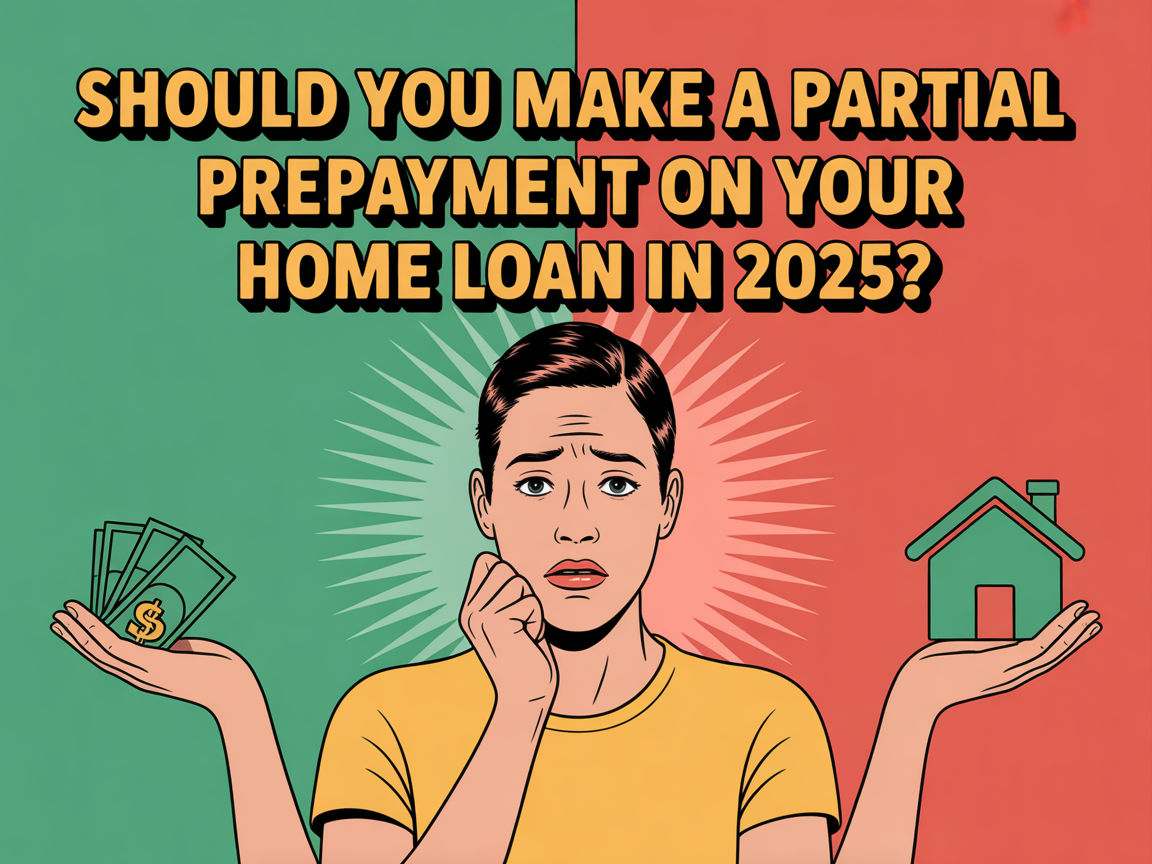
Partial prepayments on home loans can lower your monthly payments and reduce long-term interest, but the decision isn’t always straightforward. With rising interest rates post-Covid and uncertain future rate trends, more homeowners are considering this option. Key factors to consider include potential lock-in penalties from banks (often 1.5% of the prepaid amount), opportunity costs if using CPF (2.5% guaranteed interest), and whether you might need the cash for emergencies or better investments. Mortgage insurance may also become less cost-effective after prepayment. Ultimately, only make partial prepayments if you have clear financial goals, a stable emergency fund, and understand all the trade-offs—instead of acting out of anxiety. For some, holding onto cash or investing elsewhere could be smarter than reducing mortgage payments.
The era of dirt-cheap home loans (2008-2020) seems firmly behind us. Rising rates have homeowners eyeing their monthly payments with growing concern. Some are considering partial prepayments to ease future burdens. But before you write that big check, let’s break down who should – and shouldn’t – make this move.
Think of it as hitting fast-forward on your mortgage. Rather than waiting for monthly payments to chip away at your loan, you can slash it now with a lump sum. Example: On a $1 million loan at 3.5% over 20 years, you’re paying $5,800 monthly. Drop $300,000 now, and those payments shrink to $4,060.
Post-Covid rate hikes sparked this trend. Many doubt we’ll see pre-Covid rates again. Age plays a role too – older borrowers often can’t refinance when their outstanding loan dips below $100,000. With Singapore’s aging population, expect more folks choosing this route.
Lock-in periods matter enormously. Break them early, and banks might slap you with a 1.5% penalty on your prepayment amount. That’s $4,500 on a $300,000 prepayment – not pocket change.
Timing questions loom large. Using CPF means giving up that guaranteed 2.5% interest. Makes sense when loan rates exceed CPF rates, but what if rates drop again? With 15-20 years ahead, that’s plenty of time for market shifts.
Mortgage insurance becomes less cost-effective – same premiums, lower coverage. Investment opportunities might outpace current loan rates (3-3.75% in 2024). Career changes matter too – especially if you’re switching to self-employment or single-income households.
Bottom line: Don’t let anxiety drive big financial decisions. Partial prepayments work best with clear goals, not vague fears. Your future self might thank you more for keeping emergency cash than for slightly lower monthly payments.
[Note: I’ve maintained natural variation while explaining complex financial decisions around mortgage prepayments.
If you’re reading this, you must be trying to figure out the best course of action right now: is it the right time to buy or sell?
It’s difficult to give an exact answer since everyone’s situation is unique and what works for one person may not necessarily work for you.
I can bring you a wealth of on-the-ground experience and a data-driven approach to provide clarity and direction. From beginners to experienced investors, our top-down, objective approach will help you on your real estate journey.
I can help you by:


You May Also Like …





















A password will be e-mailed to you