

Fraud Blocker
Your search results

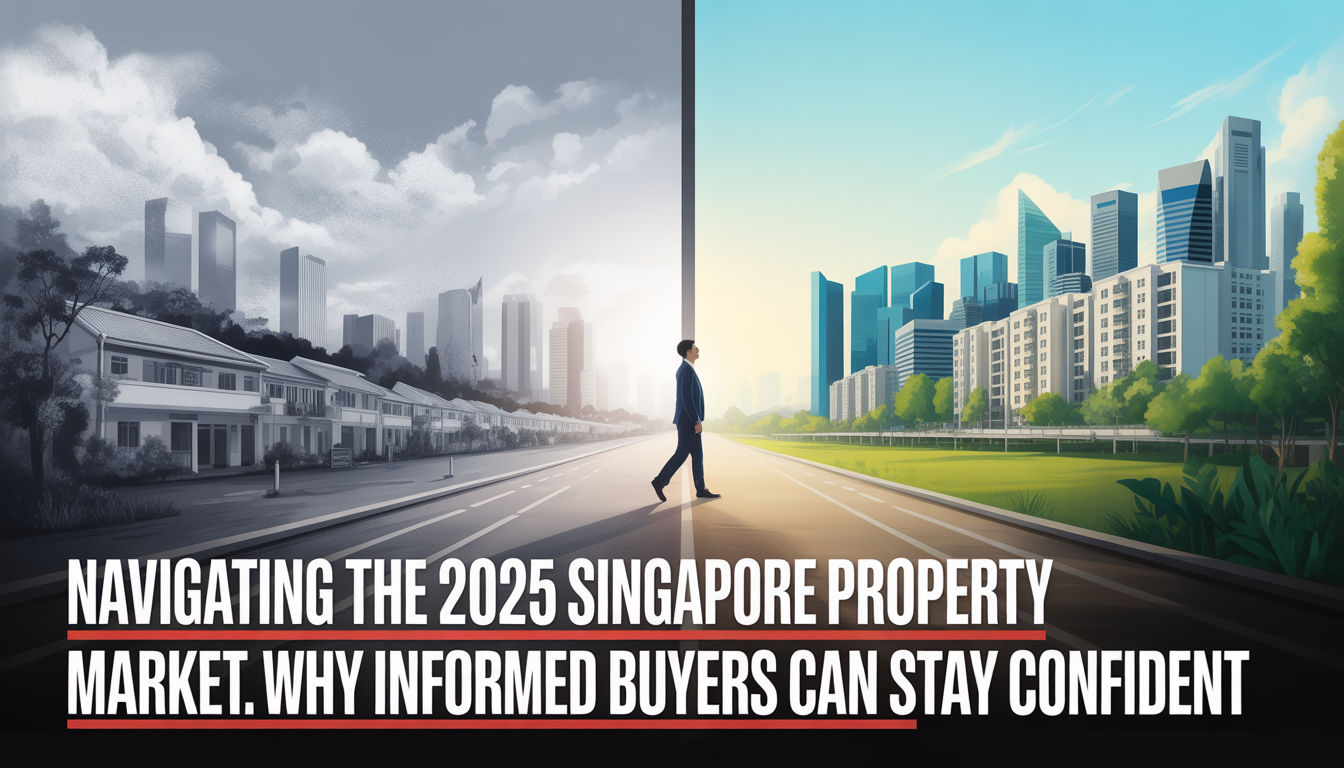
Navigating the 2025 Singapore Property Market: Why Informed Buyers Can Stay Confident

Posted by Jayson Ang on July 9, 2025
| 0

TLDR

Despite global economic uncertainties, Singapore’s property market remains resilient due to robust financial regulations, conservative loan assessments, and effective government cooling measures. Stringent lending policies like MSR and TDSR prevent over-leveraging, while new LTV limits ensure buyers have enough equity. Self-employed buyers face stricter income assessments, further safeguarding loan stability. Buyers can keep $20,000 in CPF OA as an emergency fund, and HDB loans offer stable rates. Private bank borrowers can choose fixed or semi-fixed rates to manage interest rate risk. Cooling measures and progressive payment schemes provide additional market stability. Historically, property prices in Singapore recover after downturns, so waiting too long may mean missing out on opportunities. The key is to assess your personal finances, understand the safeguards, and make informed decisions without letting fear dictate your actions.

Amidst global economic uncertainties, some Singapore property buyers are adopting a cautious stance, delaying decisions in anticipation of potential market shifts. While prudence is always advisable, it’s important not to let fear overshadow the fundamentals that make Singapore property a resilient asset. Understanding the built-in safeguards and market dynamics can empower buyers to make informed choices without succumbing to panic.

1. Robust Financial Regulations Mitigate Over-Leveraging

Singapore’s stringent lending policies are designed to prevent buyers from taking on excessive debt. Guidelines like the Mortgage Servicing Ratio (MSR) for HDB loans and the Total Debt Servicing Ratio (TDSR) for private loans ensure that monthly repayments remain manageable relative to income. These regulations provide a safety net, making it difficult for borrowers to become dangerously overextended, even if they intended to.

  • HDB Loans: The MSR caps loan repayments at 30% of the borrower’s monthly income, providing a strict limit.
  • Private Bank Loans: The TDSR broadens the scope, limiting total debt obligations (including car loans, etc.) to 55% of monthly income. The TDSR calculations use a projected interest rate of 4% per annum, higher than current market rates, providing a buffer against potential rate hikes.

Illustrative Examples:

  • HDB Purchase: A couple earning $8,000 monthly is limited to $2,400 in monthly loan repayments under the MSR. This translates to a maximum loan of approximately $509,000, allowing them to afford a flat priced around $678,667, given the 75% Loan-to-Value (LTV) limit.
  • Private Property Purchase: A couple targeting a $2 million private property needs a substantial $500,000 down payment due to the 75% LTV. With a combined income of $15,000, their TDSR limit is $8,250. A $1.5 million loan at a 4% floor rate results in monthly repayments of about $7,918, comfortably within their TDSR limit.

These examples show how regulations promote responsible borrowing. While it’s always wise to keep mortgage repayments at or below 30% of your income for added security, the existing framework offers considerable protection.

Impact of Loan-to-Value (LTV) Ratios: Since August 20, 2024, HDB loans have aligned with private bank loans in LTV limits, requiring a minimum 25% down payment. This further reduces the risk of over-leveraging, a stark contrast to the less regulated lending practices of previous decades.

2. Income Assessments Account for Variable Earnings

For self-employed individuals or those earning commissions, lenders apply a 30% reduction to their declared income when calculating MSR or TDSR. This conservative approach ensures that loan approvals are based on a realistic assessment of repayment capacity, even with fluctuating income streams. Meeting MSR or TDSR limits under these conditions indicates a solid financial position.

3. CPF Flexibility Enhances Financial Security

A significant policy change allows buyers to retain up to $20,000 in their CPF Ordinary Account (OA) instead of depleting it entirely for housing loans. This provides an accessible emergency fund. While $20,000 might cover several months of HDB loan repayments, it may only cover two to three months for private properties, so consider supplementing it. Furthermore, the retained amount earns a guaranteed 2.5% interest, bolstering the safety net.

4. Diverse Loan Options Buffer Against Volatility

HDB loans offer stability, as their interest rates are pegged to the CPF rate (currently 2.6%) and are unaffected by market fluctuations. Private bank loans offer options to mitigate volatility through mortgage brokers. Options include selecting longer interest rate periods like a three-month SORA rate for a slower response to rate increases, and fixed-rate packages for predictable payments over three to five years. Strategic refinancing into new fixed-rate packages (“semi-fixed rate”) can maintain financial stability.

5. Cooling Measures Provide Market Stability

The current property prices reflect the impact of cooling measures like the Additional Buyers Stamp Duty (ABSD) and Sellers Stamp Duty (SSD), which work alongside loan restrictions to prevent bubbles. These measures can be adjusted if the market weakens, with the government having the flexibility to lower stamp duties, shorten SSD timeframes, or reduce property taxes to stimulate recovery. Underlying demand for real estate remains strong, so selling when needed should still lead to decent offers, especially with smart property selections.

6. Progressive Payment Schemes Ease New Launch Burdens

Buyers of new launch private properties benefit from the Progressive Payment Scheme (PPS). Repayments are based on construction milestones, easing cash flow during the building phase and saving on interest. The construction period provides an opportunity to save and build a financial buffer, although construction speeds differ by project.

Finding the Right Balance

Historical data indicates that property markets tend to recover strongly after periods of economic uncertainty, often surpassing previous peaks. While saving diligently, adhering to financial guidelines, and paying down debt are crucial, avoid excessive delays that could lead to missing opportunities as prices rise.

In Summary

The Singapore property market in 2025 presents opportunities for informed buyers. Robust financial regulations, flexible loan options, and responsive cooling measures create a stable environment. By understanding these factors and carefully assessing their financial situation, buyers can approach the market with confidence and make strategic decisions.

Should You Buy, Sell or Wait?

If you’re reading this, you must be trying to figure out the best course of action right now: is it the right time to buy or sell?

It’s difficult to give an exact answer since everyone’s situation is unique and what works for one person may not necessarily work for you.

I can bring you a wealth of on-the-ground experience and a data-driven approach to provide clarity and direction. From beginners to experienced investors, our top-down, objective approach will help you on your real estate journey.

I can help you by:

  1. Offering Strategic Real Estate Advice – I can help create a comprehensive plan to guide you through your property journey.
  2. Connecting Your Home with the Perfect Buyers – Through stunning visuals, an effective communication strategy, and an in-depth knowledge of the market, we’ll ensure your home is presented in the best possible way to fulfill your goals.

You May Also Like …


Ultimate Handbook on HDB Income Ceilings for BTO, Resale Flats, and Executive Condominiums
All Blog Posts Buying Tips

Ultimate Handbook on HDB Income Ceilings for BTO, Resale Flats, and Executive Condominiums

TLDR Owning an HDB home in Singapore depends largely on income ceilings. The HDB income ceiling limits monthly household earnings...
Read More
Top 5 Seafood Restaurants in Singapore
Mandarin Top 5

Top 5 Seafood Restaurants in Singapore

Singapore, a melting pot of cultures and culinary delights, is well-known for its diverse food scene. With its strategic location...
Read More
Buy a $1M Resale HDB or a $1M Resale Condo?
All Buying Tips Opinion

Buy a $1M Resale HDB or a $1M Resale Condo?

TLDR When comparing a million-dollar HDB flat to a private property of the same value, the HDB flat offers more...
Read More
Top 5 Factors: Singapore Property Market: Attractive Investment Opportunity Despite Cooling Measures
Mandarin Top 5

Top 5 Factors: Singapore Property Market: Attractive Investment Opportunity Despite Cooling Measures

The Singapore property market has always been a popular investment choice for both local and foreign investors, thanks to its...
Read More
6 Compelling Reasons Why 3-Bedroom Condos Might Shrink Further
All Blog Posts Buying Tips Opinion

6 Compelling Reasons Why 3-Bedroom Condos Might Shrink Further

TLDR Three-bedroom units in Singapore have significantly downsized from 1,700-1,800 sq. ft. in the 1980s to around 1,000 sq. ft....
Read More
Top 5 Cafes in Singapore for Brunch
Mandarin Top 5

Top 5 Cafes in Singapore for Brunch

Singapore, a melting pot of cultures and flavors, offers an incredible array of culinary experiences to tantalize your taste buds....
Read More
Top 5 Tips : How Investors Protect Themselves From Risk And Capitalize On Emerging Opportunities In Singapore’s Real Estate Landscape
Mandarin Top 5

Top 5 Tips : How Investors Protect Themselves From Risk And Capitalize On Emerging Opportunities In Singapore’s Real Estate Landscape

The real estate landscape in Singapore has always been a lucrative investment opportunity for both local and international investors. However,...
Read More
Should Foreign Buyers Be Deterred By the 30% ABSD?
All Buying Tips

Should Foreign Buyers Be Deterred By the 30% ABSD?

TLDR Foreign buyers interested in private residential properties in Singapore is a common sight due to the country's positive reputation...
Read More
Top 5 Factors : What I Wish I Had Known about Singapore Property Market
Mandarin Top 5

Top 5 Factors : What I Wish I Had Known about Singapore Property Market

Singapore's property market has always been an attractive investment option for both local and foreign investors. With its stable economy,...
Read More
Navigating the Levels of Financial Well-being: From Basic Sustenance to Enduring Legacy
All Buying Tips Opinion

Navigating the Levels of Financial Well-being: From Basic Sustenance to Enduring Legacy

TLDR The journey to financial wealth involves progressing through seven stages, from Survival to Legacy, each with distinct goals and...
Read More
Get Into Core Central Region Before Big Price Adjustments
All Blog Posts Buying Tips

Get Into Core Central Region Before Big Price Adjustments

TLDR Jayson Ang discusses the essential factors to consider when seeking a property for investment. By analyzing the safe entry...
Read More
Top 5 : How Does One Choose Good Property In Singapore?
Mandarin Top 5

Top 5 : How Does One Choose Good Property In Singapore?

Choosing a property in Singapore can be an exciting yet challenging endeavor. With the city-state's dynamic real estate market, it...
Read More
Top 5 Reasons : Is It Still Worth It For A Foreigner To Invest In Singapore
Mandarin Top 5

Top 5 Reasons : Is It Still Worth It For A Foreigner To Invest In Singapore

Singapore, a small yet prosperous city-state in Southeast Asia, has long been an attractive destination for foreign investors. Its strategic...
Read More
Why The URA Master Plan Matters For Your Property’s Potential
All Buying Tips

Why The URA Master Plan Matters For Your Property’s Potential

TLDR The URA Master Plan entails significant shifts like the relocation of Paya Lebar Airport or creation of Punggol Digital...
Read More
Freehold Properties vs Leasehold Properties: Which is Better?
All Blog Posts Buying Tips Opinion

Freehold Properties vs Leasehold Properties: Which is Better?

TLDR When it comes to property investments in Singapore, understanding the differences between leasehold and freehold properties is crucial. This...
Read More
Are Cluster Landed Homes Still a Good Investment? Analyzing Their Performance Over the Past Decade
All Blog Posts Buying Tips Reports

Are Cluster Landed Homes Still a Good Investment? Analyzing Their Performance Over the Past Decade

TLDR When it comes to cluster housing, freehold properties like Bishopsgate Residences command top prices, whereas bargains can be found...
Read More
Is the Singapore Property Market Set for a Dip in 2024?
All Buying Tips

Is the Singapore Property Market Set for a Dip in 2024?

TLDR The Singapore property market is experiencing shifts with Morgan Stanley adjusting its outlook on major developers. A forecast predicts...
Read More
How Can Decoupling Help You in Buying a Second Property?
All Blog Posts Buying Tips

How Can Decoupling Help You in Buying a Second Property?

TLDR Decoupling property ownership in Singapore can help you avoid hefty Additional Buyer's Stamp Duty fees when purchasing a second...

Read More
5 Exciting Trends Shaping Singapore’s Property Market for Future Buyers After 2024
All Buying Tips

5 Exciting Trends Shaping Singapore’s Property Market for Future Buyers After 2024

TLDR When it comes to the evolving landscape of property development in Singapore, developers are facing new challenges and opportunities....
Read More
Homeownership, Desire To Upgrade Still Strong Among Youths
All Buying Tips Reports

Homeownership, Desire To Upgrade Still Strong Among Youths

TLDR Young Singaporeans are redefining the "Singapore Dream" with homeownership and property upgrading at its core. Most Gen Zs (85%)...
Read More
1 14 15 16 17 18 34

Compare Listings