


Is It Wise to Make a Partial Prepayment on Your Home Loan in 2024? Here’s How to Make Your Decision
TLDR Partial prepayment of your home loan means paying off a chunk of your mortgage early to lower future monthly...
Read More

TLDR
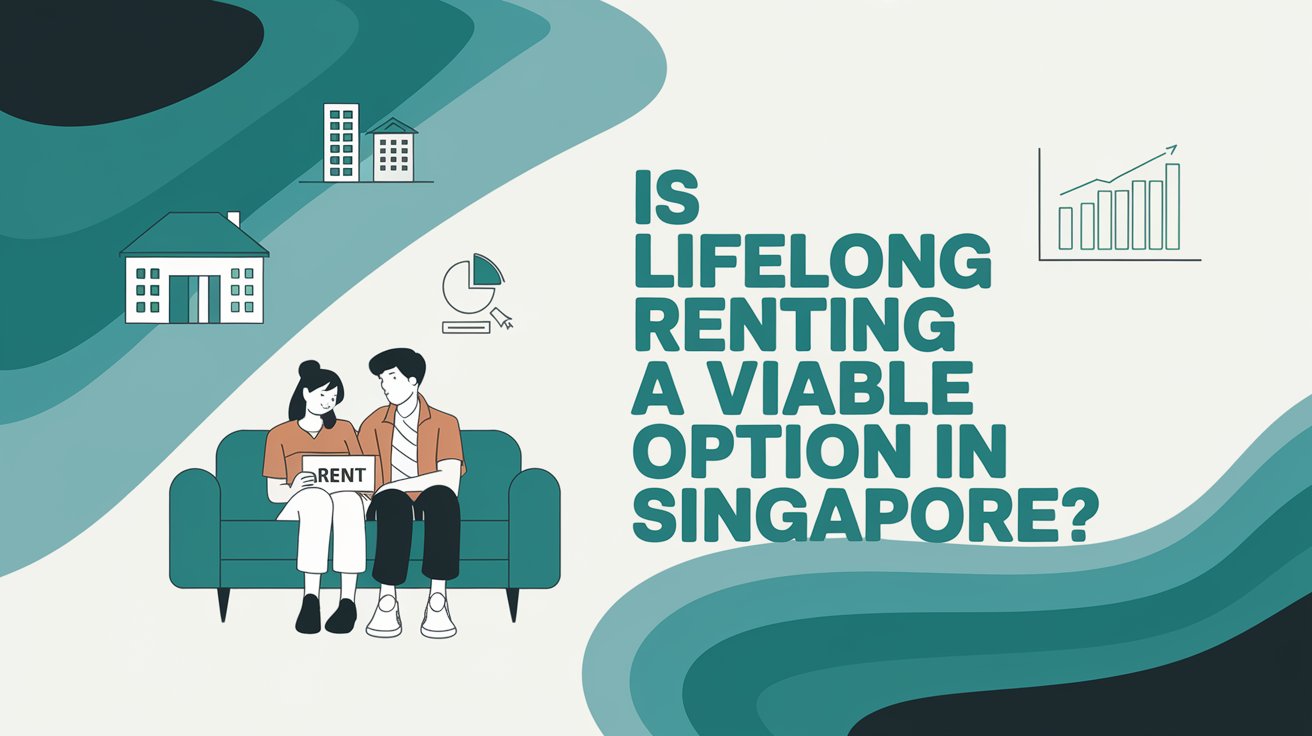
In Singapore, while the majority aspire to own homes, a small segment opts for lifelong renting, driven by personal preference or necessity. Lifelong renters enjoy freedom of mobility, superior investment opportunities, and flexibility in adapting to life changes. Renting allows them to keep their capital liquid and avoid the hassles of home maintenance. However, it requires financial acumen and is feasible mainly for those with substantial wealth or a lifestyle demanding high mobility. For others, property ownership offers stability, equity building, and a hedge against unpredictable rental costs. Whether to buy or rent depends on individual circumstances and priorities.
For many Singaporeans, the idea of renting for extended periods, or even a lifetime, seems unusual. With nearly 90 percent of the population owning their homes, it is anticipated that everyone will eventually have a place they can call their own. Nevertheless, a small segment of Singaporeans opts to remain lifelong tenants—some out of personal preference, while others find themselves in that situation out of necessity. Here are some reasons behind this choice:
Certain Singaporeans fall through the gaps or have lacked the proper opportunities. Factors such as the difficulty in advancing from low-paying jobs, overwhelming medical expenses, and unfortunate business setbacks that resulted in losing their homes contribute to their plight. This article does not focus on this demographic, who have not opted for their rental circumstances.
The advantages of lifelong renting:
One of the primary motivations for lifelong renting is the desire for mobility. If you’re uncertain about living in Singapore permanently, it makes sense to avoid the commitment of owning a property along with the associated mortgage (also, keep in mind that your Minimum Occupancy Period for HDB flats doesn’t decrease when you’re not residing in them).
Nowadays, there are intriguing alternatives such as purchasing a cabin on a cruise ship, or the possibility of renting while exploring the globe—potentially until you move into a nursing home. A growing number of young Singaporeans are opting for lifestyles that diverge from traditional paths like marriage and settling down; a recent survey revealed that seven out of ten believe this isn’t essential. As this trend continues to rise, we may see more individuals embracing a nomadic lifestyle that allows for travel and flexibility.
Not everyone views property as a viable retirement asset. Some individuals are skeptical about the idea of enduring 25 years of mortgage payments on a condo or large apartment, only to downsize and rely on the leftover sale proceeds during retirement.
Many believe they can achieve superior returns through alternative investments, such as starting their own business or engaging in stocks, bonds, and other options. If they are confident in their ability to secure better returns than those offered by real estate, they might choose to rent throughout most of their lives.
There are also concerns regarding the lack of diversification when a significant portion of one’s wealth is concentrated in a single property. If your home represents the majority of your net worth, it becomes akin to placing all your eggs in one basket. As one reader pointed out: If you wouldn’t invest half your net worth in a single stock, why is it acceptable to do so with one property?
It’s important to note that this strategy requires a solid understanding of financial matters, as planning for retirement must involve other assets as well.
There are individuals who remain single throughout their lives and achieve financial success, yet they lack heirs to inherit their wealth. Many of these individuals adopt a philosophy of “die with $0,” prioritizing the enjoyment of their earnings before they pass away.
Take, for instance, affluent singles who opt to reside in serviced apartments or even luxury hotels for the entirety of their lives. This choice alleviates them from concerns such as home upkeep and cleaning. When examined from a financial perspective, the rationale becomes clearer:
A typical landed property might run up to approximately $5 million when you account for renovations, stamp duties, and other expenses. On top of that, there are ongoing costs like property taxes and periodic maintenance tasks, such as repainting or roof repairs.
In contrast, living in a reasonably upscale serviced apartment could cost around $96,000 annually. Therefore, for the price of that landed property, one could afford to stay in a serviced apartment for just over 52 years. Plus, this option eliminates worries about maintenance, property taxes, and securing a mortgage.
For lifelong singles without anyone to inherit a home, it raises the question of whether choosing hotels or serviced apartments might be a more practical solution.
However, this lifestyle does require a certain level of wealth, and most average Singaporeans would find it challenging to sustain such an arrangement comfortably. Additionally, one must consider the increasing costs of hotels and serviced apartments over time due to inflation.
Consider the issue of divorce: when both partners are merely tenants instead of co-owners of a property, the separation tends to involve fewer complications. There are fewer concerns regarding when to sell the property, how to divide assets fairly, and similar matters.
On the other hand, think about marriage: if you were renting prior, it is straightforward to pack up and relocate to a larger home together or move nearer to one of your families. However, if you already owned a home and had a mortgage beforehand, the process becomes considerably more cumbersome; it may take several months, or even a year or two, to finalize everything and move.
This situation can be exacerbated during a property market downturn, as you would likely prefer to wait for market conditions to improve before selling and relocating.
These are just two examples of significant life transitions, and there are many more you may face—from moving abroad for work to dealing with health issues or career shifts. Navigating these changes can be much simpler if you have the flexibility to move freely and adapt between different types of properties.
Firstly, rental prices fluctuate over time and can be quite unpredictable. You can’t be certain if rental costs will remain stable after a two-year lease, not to mention what they might look like in five, ten, or even fifteen years. This uncertainty can complicate your financial planning, and enduring several years of soaring rental prices may even compel you to seek part-time employment.
It’s important to note that mortgage rates also vary (in Singapore, there are no endlessly fixed-rate home loans from banks). However, once you’ve paid off your mortgage, the only ongoing expense you face is maintenance fees. In contrast, with renting, you continually contend with varying costs between leases throughout your life.
Another significant drawback of renting is the absence of equity building. When you have a mortgage, your payments contribute to the increasing value of your property. Many homeowners even regard their property as a form of “forced savings.” This concept doesn’t hold for renters—every dollar spent on rent merely contributes to someone else’s mortgage.
Given this perspective, a lifetime of renting is only advisable in specific scenarios. If you are wealthy, a lifelong single (and certain about it), or have a lifestyle that demands a high level of mobility and flexibility, then indefinite renting may suit you well.
However, if you lead a more traditional lifestyle, many of the benefits associated with renting may not apply. For instance, if you have a stable, long-term career in Singapore, how beneficial is the supposed “flexibility” of renting? Your job anchors you here anyway, making it sensible to invest in a long-term housing asset.
If you’re reading this, you must be trying to figure out the best course of action right now: is it the right time to buy or sell?
It’s difficult to give an exact answer since everyone’s situation is unique and what works for one person may not necessarily work for you.
I can bring you a wealth of on-the-ground experience and a data-driven approach to provide clarity and direction. From beginners to experienced investors, our top-down, objective approach will help you on your real estate journey.
I can help you by:


You May Also Like …














A password will be e-mailed to you