


5 Pros Of Buying A Resale Property
Luxury properties in Districts 9 and 10 of Singapore are highly coveted, and for good reason. From stunning views and...
Read More

TLDR
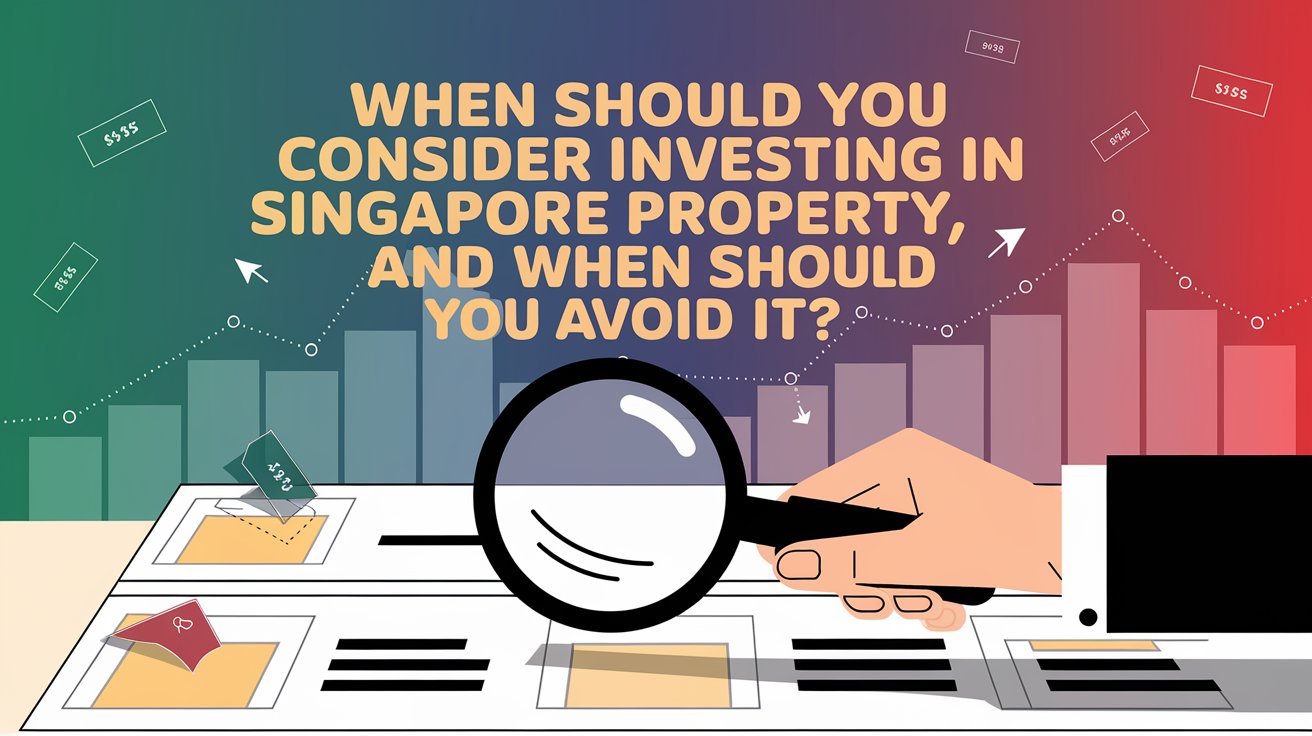
Investing in real estate is a complex decision influenced by personal goals, investment horizon, rental plans, and financial liquidity. Property valuation is subjective, varying among different buyers based on their unique needs and perspectives. Before investing, consider factors like your investment timeline, specific financial objectives, potential rental income, invisible costs such as emotional stress, and ensuring sufficient liquidity to avoid being asset-rich but cash-poor. Understanding these elements can help you make informed decisions about whether to buy, sell, or wait in the current real estate market. For personalized advice tailored to your situation, consider consulting with a real estate expert who can provide strategic guidance and connect you with the right opportunities.
Many individuals become annoyed when they inquire about investing in real estate and we end up providing a lengthy response. Although we wish we could give a concise answer or a few brief sentences, that’s simply not feasible (unless you find a vague reply like “it depends” to be helpful). The reality is that people invest for various reasons, which makes it impossible to offer straightforward answers. Therefore, while this explanation may take some time, it is important to delve into the topic thoroughly:
While it may appear that we’re straying from the main topic, please bear with us: this is directly related to determining whether a particular property is a sound investment for you.
So, considering that properties possess numerous intangible attributes and attract different types of buyers, how can property valuation truly be effective? Here’s a little insight:
It can’t.
We simply require a fixed figure to facilitate loan approvals, set stamp duty prices, and so forth. However, what one buyer views as a fair price can seem completely unreasonable to another. Take, for instance, the perspectives of three distinct buyers regarding a newly launched one-bedroom apartment priced at $1.2 million in a prime location:
This is ridiculous; it’s only half the size of my previous apartment. My family won’t be able to fit here, and the money I made from the sale barely covers the down payment. Who on earth would want to buy this?
I’m looking for a retirement option that can give me over $3,000 a month and has the potential to increase with inflation. The idea is to purchase it and simply collect rent until I retire. That seems reasonable to me.
Who cares about the current price? I plan to sell it for a much higher amount in four or five years, or at least I hope so.
A quick 10-minute stroll to Orchard Road, just a few stops away from my office in the CBD, and fits my budget? I’m in!
In reality, we often adhere to overly simplified concepts of “property value,” which facilitate the calculation of property taxes, stamp duties, and loans. However, these notions overlook a fundamental truth: a single property can hold significantly different values for different individuals.
To illustrate this, consider properties as playing cards in a deck. Some individuals might be engaged in Poker, while others are playing Blackjack, Gin Rummy, or Solitaire. Depending on the game being played, the same cards can carry varying values for each player.
It would be quite ironic to claim that every case is unique and then offer a one-size-fits-all response. To clarify, we recommend contacting us directly so we can assist you in assessing your specific needs and circumstances.
With that in mind, here are some important considerations to take into account before you begin investing:
Finally, we’ll have a quick word on the inescapable nature of biases
If you have a lengthy investment horizon, such as over 20 years, the significance of the lease may be greater for you compared to other investors. Typically, securing financing can be challenging for properties with 60 years or fewer remaining on the lease, and obtaining financing for those with 30 years or less may be nearly impossible. This situation impacts potential resale profits, as buyers are likely to offer significantly lower prices due to the considerable cash investment and limited remaining lease term.
Therefore, investors with very long-term investment plans might find that freehold properties are a better option, despite the higher initial cost.
On the other hand, for shorter holding periods of around 10 years or less, a newly launched property may not have aged enough for the benefits of freehold status to become apparent. In such instances, it could be advantageous to consider a leasehold condominium to mitigate higher expenses.
There are also more adventurous investors who may plan to sell within just four years. This strategy often involves purchasing new launches instead of resale condos, as early launch phases typically offer better pricing. This allows for a quicker sale and the opportunity to realize profits close to the issuance of the Temporary Occupancy Permit (TOP). However, this approach carries significant risk, as it relies on the developer not reducing prices later and ensuring there is demand for your resale unit.
Lastly, some investors may simply wish to collect rental income until the end of their investment period without concern for resale profits. They might not anticipate selling during their lifetime, rendering transaction history irrelevant. Their primary focus is whether the rental income meets their financial objectives in absolute terms.
Holding power is essential here, as things may not go to plan
Always consider the chance that you may need to hold onto your investment longer than you initially anticipated. For instance, you might have planned to sell a unit within four years, but you could find yourself in an unfortunate situation where the developer has reduced the price instead.
This scenario may require you to wait several additional years for the property’s value to increase. If you are unable to do this, you risk having to sell at break-even or even at a loss.
We recommend incorporating a buffer into your planning. Be ready to retain ownership of the property for a longer duration than originally intended, as it may take some time to recover from a downturn in the market.
You can’t succeed in a game if you don’t know where the goalposts are situated. Simply aiming to “make more money” isn’t a solid investment objective for real estate. Instead, strive for measurable goals, such as a specific percentage of returns or a defined target amount for the sale proceeds.
If your plan is to relax and collect rent to achieve a certain Income Replacement Rate (IRR), that could also align with your retirement aspirations.
In some instances, your investment objectives may extend beyond personal gain. They could be linked to legacy planning, which entails considering aspects like lease decay or the ability to pass on the property as intended (for instance, keep in mind that your children cannot inherit your flat if they already own one).
While setting your investment goals falls outside our expertise—since our focus is on property rather than financial planning—if you can establish those precise figures, feel free to contact us. We would be glad to assist you in identifying properties that align with your objectives.
If you have no plans to rent out the property, then aspects like rental yield become irrelevant to your priorities. Conversely, if you are residing elsewhere and leasing the entire unit, rental yield might be your primary focus:
Some landlords may not even have an affinity for the properties they lease to tenants (though they would rarely admit it). This could lead to acquiring properties that don’t align with your personal needs: a profitable rental property might be located far from your workplace or your children’s school, making it unappealing for you to live in.
On the other hand, some individuals purchase properties as replacements for their homes in order to rent out their existing ones. A common scenario today, especially due to high Additional Buyer’s Stamp Duty (ABSD) rates, involves Singaporeans buying a residence in Malaysia while leasing out their unit in Singapore. The rental income from the Singapore property could effectively cover the mortgage for the more affordable Malaysian home.
There are also cases where properties are acquired primarily for rental purposes, although rental income is not the main priority. This approach can be beneficial if you’re looking to buy a private residence for your children: you could lease the condo until they grow older and marry, at which point they would move in, and the property would no longer serve as a rental.
It’s important to recognize that rental income and resale profits can sometimes conflict. For instance, properties that generate high rental yields might not appreciate well in value (e.g., if you purchase an old, inexpensive property solely for renting, the yield may be attractive, but its resale potential could be quite limited).
Your property comes with an invisible price tag, which is the emotional burden or anxiety it can bring.
We’ve seen young buyers who stretch their budgets to purchase a condo as their first residence. This decision can be somewhat rational, especially if they are living with their parents while renting out the unit and possibly earning a good income. However, concerns about potential vacancies, tenant management, and substantial monthly mortgage payments can create considerable stress.
In addition, allocating too much of your capital to real estate may restrict your ability to diversify your investment portfolio. We strongly advise against acquiring property if it compromises essential insurance coverage or leaves your entire investment strategy tied up in a single, unhedged real estate asset.
Furthermore, many people are more affected by losses than by gains, making them prone to anxiety triggered by news about falling property values, rising interest rates, government land acquisitions, and similar topics. Managing these obstacles while staying focused on your goals contributes to that hidden emotional toll.
It’s essential to ensure that you are emotionally equipped for this commitment; if you choose to become a landlord, be prepared for additional time, costs, and stress. Being a landlord is fundamentally different from investing in an index fund.
Selling properties can be quite challenging, often involving significant costs in agent fees and the time lost in the process—unless you’re prepared to accept substantial losses from a quick sale. Moreover, it can tie up your capital in a way that’s difficult to grasp until you’ve lived through it.
We’ve encountered individuals who struggle to cover basic expenses like bus fares and lunch, even while owning fully paid flats and condos. Unfortunately, cash isn’t hidden within the walls, and the local chicken rice vendor won’t be sympathetic to the fact that your $600,000 flat is mortgage-free when you’re hungry. Frequently, being cash-strapped means you can’t simply sell your property.
In short, avoid becoming asset-rich but cash-poor, as this scenario can transform your property from an asset into a liability.
While real estate can play an important role in a diversified investment portfolio, it’s essential to have a clear understanding of your investment goals and to buy only when you’re truly prepared. We may not be in the earlier phases of the property market that yield spectacular returns, but we are also not in a phase dominated by rampant speculation. Additionally, be cautious about mimicking other property investors; they might be pursuing a different strategy than yours.
If you’re reading this, you must be trying to figure out the best course of action right now: is it the right time to buy or sell?
It’s difficult to give an exact answer since everyone’s situation is unique and what works for one person may not necessarily work for you.
I can bring you a wealth of on-the-ground experience and a data-driven approach to provide clarity and direction. From beginners to experienced investors, our top-down, objective approach will help you on your real estate journey.
I can help you by:


You May Also Like …






















A password will be e-mailed to you