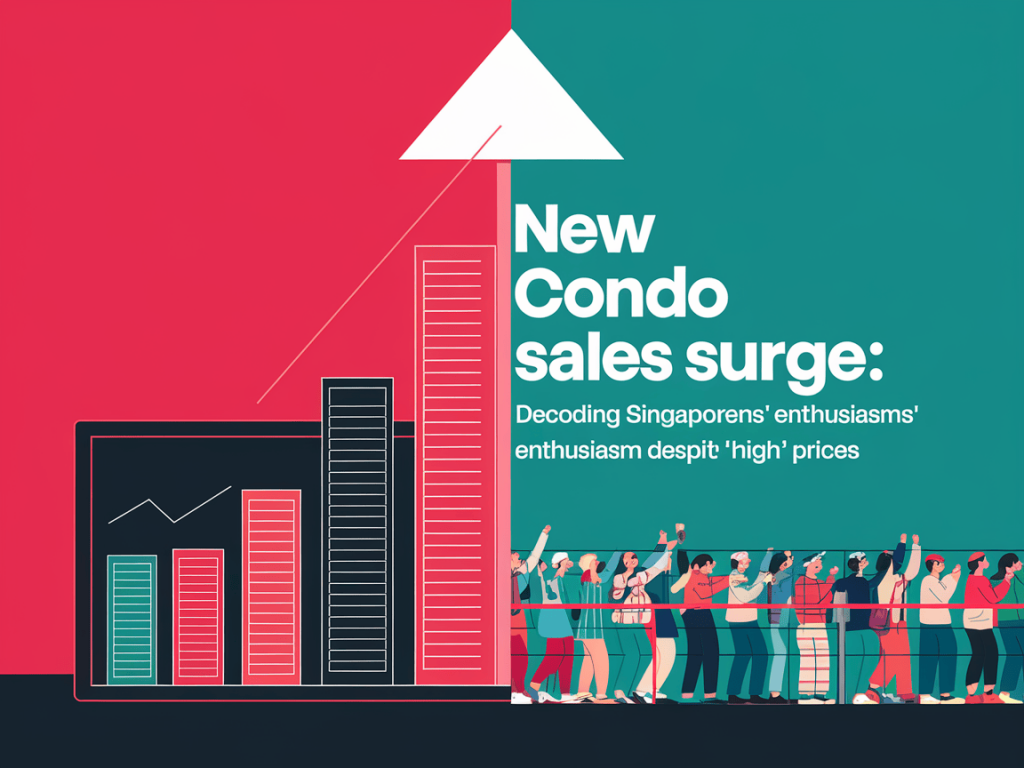
New Condo Sales Surge: Decoding Singaporeans’ Enthusiasm Despite “High” Prices
TLDR Recent strong condo sales in Singapore, including Emerald of Katong’s 99% take-up during launch, challenge perceptions of unaffordability. Key...
Read More

TLDR
When it comes to navigating the Additional Buyers Stamp Duty (ABSD) in Singapore, there are legal strategies available to help investors save on costs and own multiple properties. Key methods include purchasing properties under a single owner to leverage spouse’s eligibility, decoupling ownership to free up names, unofficially acquiring properties under adult children, setting up property trusts for minors, and considering dual-key layouts. Additionally, exploring commercial and international real estate can offer alternatives to save on ABSD. Each method has its considerations, benefits, and potential challenges, so it’s essential to assess individual circumstances and financial goals before proceeding.
Do you want to invest in a property but worried about the Additional Buyers Stamp Duty (ABSD)? It is a significant challenge for property investors as it can consume a large portion of their eventual returns.
However, there are legal ways to save on ABSD and own a second or subsequent property.
Let me share with you some methods that will help.
Also, let’s quickly review the ABSD changes as of 27 April 2023 in Singapore to refresh your memory.
The ABSD is an extra tax that applies to buying residential property in Singapore, in addition to the standard Buyer Stamp Duty (which is currently 3-4% of the property price).
Both BSD and ABSD are calculated as a percentage of the property price or valuation, whichever is higher.
Singapore citizens pay no ABSD on their first property, 20% on their second property, and 30% on any subsequent property purchases.
Singapore Permanent Residents pay 5% ABSD on their first property purchase, 30% on their second property, and 35% on all subsequent purchases.
Foreigners pay a high rate of 60% ABSD on all property purchases.
If you plan to buy the property through your company, entities pay 65% ABSD on all property purchases. However, this approach is not commonly preferred these days.
Citizens and Permanent Residents of Iceland, Lichtenstein, Norway, Switzerland, and the United States are eligible for ABSD remission under FTAs that are currently in effect.
Foreigners should check with their respective authorities to see if their home country’s taxes will also apply on top of the ABSD.
To legally save on Additional Buyer’s Stamp Duty (ABSD), one can consider the following options:
Alternatively, investing in commercial and international real estate can also be a viable option to save on ABSD.
The simplest way to own two properties in a family is by purchasing the first one in the name of either spouse without listing them as co-owners. In the case of an HDB flat, they can be listed as an occupier.
However, note that fulfilling a 5-year MOP is necessary before buying a private property.
The downside of not being listed as an owner is that CPF cannot be used, and incomes cannot be considered for loan applications.
Only the listed owner is obligated to pay the mortgage by law.
Later on, the other spouse can buy a private property as a first-time homebuyer and not pay ABSD or only pay five per cent if they are a Permanent Resident.
The sole owner’s CPF Ordinary Account funds can be used, and they must meet the income requirements to qualify for the home loan.
Legal ownership lies with the sole owner, even if their partner contributes to the mortgage.
It is recommended that the higher income owner holds the higher value property for future portfolio growth plans.
This refers to the transfer of ownership share in a property from one co-owner to another. If the departing party purchases a property, they will be considered a first-time home buyer.
However, it is important to note that married couples cannot use this method for HDB flats since the option for frivolous transfer of ownership has been closed since May 4, 2016.
Decoupling was commonly used by married couples before the implementation of ABSD, who would purchase homes under both names as a norm.
It involves the removal of one owner from the property through a buyout by the other party, also known as part-sale or part-purchase.
In some cases, variations have emerged due to insufficient financing capabilities.
As an example, let’s say you and your spouse buy a private property together. You can split the ownership, usually 99-1 (your spouse owns 99%, while you own 1%).
This allows both of your incomes and CPF Ordinary Account funds to be used for the home loan application and mortgage payments.
If you decide to invest in a second property a few years later, you can sell your 1% ownership to your spouse. They will only need to pay a Buyer Stamp Duty on the value of the 1% being transferred, which must be paid in cash before it can be redeemed through CPF.
If this happens within 3 years, you may also incur a Seller Stamp Duty.
Splitting ownership 50-50 is not recommended as it incurs much higher Buyer Stamp Duty/Seller Stamp Duty fees.
Other fees that come with the decoupling process include conveyancing fees and mortgage restructuring fees and penalties.
Once the sale is complete, the exiting party can purchase another private property as a first-time home buyer without paying ABSD.
There is no need to wait for the decoupling process to finish before buying a new property.
The method requires you to have enough cash or CPF to return the exiting party’s CPF with accrued interest. You also need to have sufficient income to take over the full loan on your own.
In case you lack funds, there are creative financing methods available, but they may not be suitable for discussion publicly.
Holding 99-1 may not accurately reflect the situation and could cause issues in disputes or divorce.
The process requires two conveyancing law firms, takes around 4-6 weeks, and costs approximately S$5,000-6000/-.
It is crucial to work with experienced and up-to-date conveyancing lawyers as not all lawyers specialize in this area, and hiring someone with the wrong expertise can cause significant financial and emotional pain.
This is when your child, who is over 21 years old, buys a private property using your money for the down payment. As a first-time homebuyer in Singapore, you do not need to pay ABSD. However, this method can lead to complications in the future.
The first potential problem is that your children will be considered private property owners. If they get married and buy their own private property, you will have to dispose of or transfer the property back to you with ABSD payable.
If they buy a BTO flat or Executive Condominium, they must dispose of the private property at least 30 months before their application.
You must also wait 15 months to be eligible to buy a non-subsidized resale flat if you dispose of a private property.
I once encountered a case where a client’s son-in-law was upset because they couldn’t buy a BTO flat due to his wife owning a small apartment given to her by her father.
The second issue is that your children must qualify for the mortgage loan based on their income alone.
The third issue is one of trust because your children legally own the property, which can lead to family disputes.
While this method may seem like an easy way to save on ABSD, it is essential to discuss and anticipate all potential issues that may arise in the future.
Verbalizing and documenting potential pitfalls and discussing them with clients can provide more clarity and assurance on their options later on.
This approach is suitable for individuals with significant cash reserves, as it necessitates the ability to purchase a property without employing a loan or CPF funds.
Through this technique, you may establish a property trust for your child who is below 21 years old and acquire a property under the trust, with yourself serving as the Trustee.
Legally, the property purchased in this manner is not considered yours, but rather belongs to the beneficiary (your child).
However, you are responsible for any taxes and expenses associated with the property. Since you are not the legal owner of the property, it does not count towards your property ownership count.
Thus, if you were to use this strategy to purchase a second home, you would not be subject to ABSD.
Update : Effective 27th April 2023, trustees will be required to pay an ABSD rate of 65%.
However, trust arrangements that follow the remission conditions may receive a partial or full refund of the 65% paid.
Buyers must pay 65% ABSD upfront and apply for a refund within 6 months of exercising the sales and purchase agreement. It is important to have a conveyancing lawyer who is skilled in creating eligible trusts that qualify for a full refund. If not, you may lose a significant amount of money.
Buying under a trust has an added benefit of protecting the property from being seized by debtors if the buyer is declared bankrupt. However, the property belongs to the child and not the buyer.
Banks do not grant loans for properties under a trust, so buyers must be prepared to pay for the full value of the property in cash plus Buyer Stamp Duties.
Setting up a trust under a child above 21 years old is generally not recommended as it may implicate conveyancing law firms in abetting ABSD avoidance.
A dual-key layout refers to a property that is divided into two separate units, with a shared entrance that leads to each unit. This type of layout can be ideal for those who wish to live in one unit while renting out the other. It can also provide extended families with greater privacy by allowing them to live in separate units.
One benefit of a dual-key unit is that it counts as a single property, which can save you money compared to purchasing two separate units.
However, keep in mind that this layout may require sacrificing some living space, as extra utility rooms are needed for each unit.
While dual-key units may cost slightly more per square foot than regular units, this can vary depending on the project. Additionally, it’s important to note that dual-key units may be less flexible when it comes to renovations, so it’s recommended to consult with an Interior Designer or contractor beforehand.
If you’re considering investing in commercial and industrial real estate, it’s important to understand that this involves different risks and returns compared to residential properties.
Segments such as shophouses, retail fronts, F&B outlets, offices, and industrial B1/B2 sites all have unique considerations.
However, one advantage is that they are only subject to GST (if the seller is registered) and do not require ABSD payment.
Have you found the most effective method that suits your financial situation, family profile, and plans? There is no one-size-fits-all solution since it varies depending on individual circumstances.
Nonetheless, there are more advanced methods that involve layering techniques in various sequences to assist investors in owning more properties, obtaining higher financing, and saving on taxes and expenses.
However, due to their complex nature, they may not be suitable for everyone.
If you require assistance in these matters, please don’t hesitate to contact me to schedule a video consultation.
If you’re reading this, you must be trying to figure out the best course of action right now: is it the right time to buy or sell?
It’s difficult to give an exact answer since everyone’s situation is unique and what works for one person may not necessarily work for you.
I can bring you a wealth of on-the-ground experience and a data-driven approach to provide clarity and direction. From beginners to experienced investors, our top-down, objective approach will help you on your real estate journey.
I can help you by:

You May Also Like …








A password will be e-mailed to you