


Fraud Blocker
Your search results

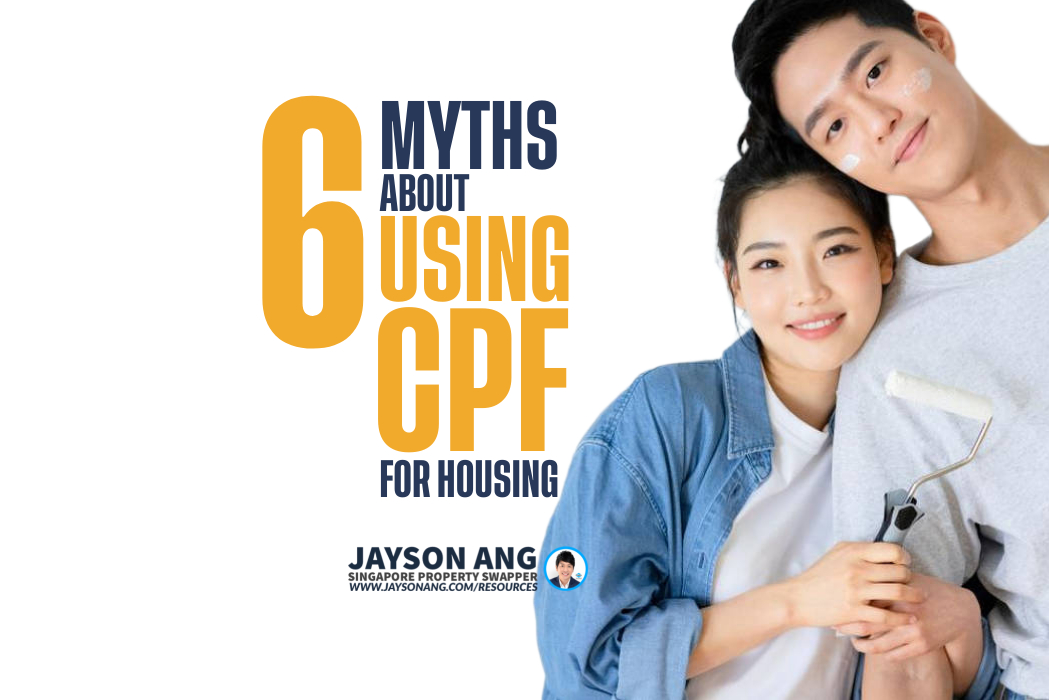
6 Myths About Using Your CPF For Housing

Posted by Jayson Ang on February 2, 2023
| 0

TLDR

When it comes to purchasing a house in Singapore using CPF funds, there are several myths that need to be debunked. From the misconception that grant money needs to be returned to the government to the belief that CPF funds can only be used for HDB loans, there are various aspects to consider. It’s important to understand that grant money does not need to be repaid to the government but returned to the CPF account with interest. Additionally, when selling a house at a lower price, you only need to return the actual cash value without any additional payment. It’s crucial to retain a portion of your CPF Ordinary Account funds when taking an HDB loan and to be aware of the CPF housing limits based on the remaining lease duration. Moreover, CPF funds can be used for both HDB and private property loans, with certain differences in Loan-To-Value percentage. Finally, even at 55 years old, you can still utilize your CPF OA for housing needs without affecting retirement payouts if you remain employed.

Are you aware of the myths around CPF and how it can help with purchasing a flat?

Let us clear things up for you so you can confidently make your home-buying decision!

As Singaporeans, we may grumble about a large part of our salary going into our CPF accounts – but when it comes to buying a house, it’s practically a gift from the gods!

Suddenly you’ve got access to a huge fund that can be used instantly. To those who are unfamiliar with the process, purchasing property may mean completely emptying out all your CPF accounts and topping up the additional amount.

However, there are countless aspects to using your CPF that will make you rethink how you use it for your home purchase.

Have you ever wondered whether the grant money from the government needs to be paid back, or if CPF funds are only accessible if an HDB loan is taken?

Well, if you or anyone you know has been misled by any of these common CPF house-buying misconceptions, it’s time to stop the misinformation and gets the facts straight.

Myth #1 – Grant Money Has To Be Returned To The Government

It’s often said there’s no such thing as a free lunch, however this does not apply when it comes to housing grants. The government can provide homebuyers with monetary assistance depending on their income, who they’re living with, the size of their home, and the proximity to their parents’ house.

So, take advantage of these fantastic housing grants :

  • Enhanced Housing Grant (EHG) — up to S$80,000
  • Family Grant (FG) — up to S$50,000 for resale flats and up to S$30,000 for ECs
  • Proximity Housing Grant (PHG) — up to S$30,000
  • Singles Grant — up to S$25,000

It is a common misunderstanding that grant money must be given back to the government when selling a home, but this is not the case!

Rather, the grant money must be returned to the CPF account, along with the interest of 2.5%. This ensures the grant money you had originally credited to your CPF Ordinary Account will not be deprived of the regular 2.5% annual interest it can earn.

Paying back the grant money and accrued interest may feel like a burden, yet the money is still yours to keep!

Myth #2 – If The Sale Of My House Resulted In A Negative Sale, I Still Need To Make Up The Difference To My CPF In Cash

It’s no secret that you must return the original sum of money with a 2.5% interest to your CPF account in order to prevent people from taking their funds out of the CPF prematurely by buying and selling a house.

But what if you’ve sold your home at a lower price than what you paid? Many think you’ll have to replenish the gap with cash into your CPF account.

Despite what some may think, you don’t have to pay the government anything that isn’t part of the actual cash value of your home.

For instance, if you purchased your house for S$600,000 but sold it for S$550,000 (including interest), you would just need to return the S$550,000 to your CPF account – no need to pay any extra money.

Myth #3 – I Can Secure A HDB Housing Loan Without Needing To Draw From My OA Funds

If you’re considering taking an HDB loan, you should retain up to S$20,000 of your available CPF Ordinary Account (OA) funds.

That way, you can have a financial cushion to fall back on in case of any unforeseen circumstances and avoid late payment penalties.

The remaining balance must be used to cover the purchase of the flat before the loan is taken up. So, the CPF Board advises setting aside the full S$20,000 in your OA.

Myth #4 – I Can Wipe Out My Entire OA To Pay For My House

Although it may be contrary to what was mentioned before. Sure, you can use funds from your OA to buy a home, but that is contingent on the house you’re getting.

Starting May 10, 2019, the total CPF savings you can use to cover either the initial purchase or the monthly mortgage payments of your flat will depend on the duration of the remaining lease; it must last until the youngest buyer is 95.

When purchasing a BTO flat or a recently MOP-ed resale flat, you’ll likely be able to finance your entire purchase with your OA funds.

But if there are only a few years left on the lease, be sure to check the guidelines to understand how much of your OA funds can be put towards the purchase.

Myth #5 – I Can Only Use CPF for HDB Loans

It is commonly believed that CPF funds are restricted to the repayment of HDB Concessionary Loans.

Nonetheless, there is no such limitation when it comes to repaying bank loans. You can apply your CPF money to both HDB or private properties.

But be aware of the Loan-To-Value (LTV) percentage that differ between HDB and bank loans.

You are eligible up to 85% of the purchase price for HDB loans and only 75% for bank loans, meaning that you’ll need to pay a higher down payment for a bank loan as opposed to an HDB loan.

Myth #6 – I Can’t Pay For My Home Loan With My CPF When I Reach 55 

Once you hit 55, your Retirement Account will be set up for you automatically with your CPF SA savings transferred first, followed by CPF OA savings to fulfil the Retirement Sum.

You can still take advantage of the CPF OA to cover your housing needs without it affecting your retirement payouts – provided you remain in employment and actively earning an income.

At 55, you have the option to reserve your OA savings for your house before it is transferred to your Retirement Account. Yet, any unallocated savings in your OA account will be relocated to your RA by the CPF Board.

  • No payments are made for your property for six months
  • You have not started using your CPF savings for your house for five years
  • Your property is sold
  • When the purchase of the property is aborted

It’s possible that certain CPF housing limits may still be in effect to stop homeowners from recklessly using their loan repayments for housing, sacrificing their retirement savings in the process.

Should You Buy, Sell or Wait?

If you’re reading this, you must be trying to figure out the best course of action right now: is it the right time to buy or sell?

It’s difficult to give an exact answer since everyone’s situation is unique and what works for one person may not necessarily work for you.

I can bring you a wealth of on-the-ground experience and a data-driven approach to provide clarity and direction. From beginners to experienced investors, our top-down, objective approach will help you on your real estate journey.

I can help you by:

  1. Offering Strategic Real Estate Advice – I can help create a comprehensive plan to guide you through your property journey.
  2. Connecting Your Home with the Perfect Buyers – Through stunning visuals, an effective communication strategy, and an in-depth knowledge of the market, we’ll ensure your home is presented in the best possible way to fulfill your goals.

You May Also Like …


Singapore’s Aging Population: Is the Housing Market Ready?
All Opinion

Singapore’s Aging Population: Is the Housing Market Ready?

TLDR Singapore is rapidly aging, with one in four citizens expected to be over 65 by 2030. Current housing models,...
Read More
Navigating the Singapore Property Market as a Foreign Investor: What You Need to Know

Mandarin Top 5

Navigating the Singapore Property Market as a Foreign Investor: What You Need to Know

Singapore, a thriving hub of business and commerce in Southeast Asia, boasts a highly developed economy and a robust real...
Read More
What Type of Properties Can a Permanent Resident PR Buy in Singapore?
All Buying Tips

What Type of Properties Can a Permanent Resident PR Buy in Singapore?

TLDR When it comes to purchasing property in Singapore as a Permanent Resident or Foreign National, there are specific restrictions...
Read More
What’s Next for HDB Owners?
All Buying Tips

What’s Next for HDB Owners?

Buying a home always seems daunting especially such it is a big-ticket item and the prices for private homes can easily...
Read More
Could It Be Wise to Sell Your Property After Just 3 to 4 Years?
All Buying Tips Selling Tips

Could It Be Wise to Sell Your Property After Just 3 to 4 Years?

TLDR In this blog post, the writer delves into the Singapore property market, particularly focusing on the effectiveness of quick...
Read More
Beyond Marina Bay Sands: Uncovering Singapore’s 5 Little-Known Secrets
Mandarin Top 5

Beyond Marina Bay Sands: Uncovering Singapore’s 5 Little-Known Secrets

Beyond Marina Bay Sands: Uncovering Singapore's 5 Little-Known Secrets Singapore is a small country with a rich history and culture....
Read More
CPF Accrued Interest On Housing: Learn What It Is and How to Calculate It
All Blog Posts Buying Tips

CPF Accrued Interest On Housing: Learn What It Is and How to Calculate It

TLDR Understanding the CPF accrued interest on housing loans is crucial for Singaporean homeowners. When using CPF funds to finance...
Read More
Ultimate Handbook on HDB Income Ceilings for BTO, Resale Flats, and Executive Condominiums
All Blog Posts Buying Tips

Ultimate Handbook on HDB Income Ceilings for BTO, Resale Flats, and Executive Condominiums

TLDR Owning an HDB home in Singapore depends largely on income ceilings. The HDB income ceiling limits monthly household earnings...
Read More
Ouch! Our $1.8 Million Condo Investment Blunder: Unpacking 5 Crucial Takeaways from Our Bad Experience
All Buying Tips Opinion

Ouch! Our $1.8 Million Condo Investment Blunder: Unpacking 5 Crucial Takeaways from Our Bad Experience

TLDR The blog post delves into the complexities of real estate investments using Bob's experiences as examples. It highlights the...
Read More
A First-Time Condo Buyer’s Guide to Evaluating Property Developers in Singapore
All Buying Tips

A First-Time Condo Buyer’s Guide to Evaluating Property Developers in Singapore

TLDR When buying a new launch condominium in Singapore, a developer’s reputation is crucial since buyers rely on trust and...
Read More
Should You Pay For A Buyer Agent?
All Buying Tips Opinion

Should You Pay For A Buyer Agent?

TLDR The idea of making buyers pay their own property agents in Singapore, as suggested by SEAA, makes sense in...
Read More
Freehold Properties vs Leasehold Properties: Which is Better?
All Blog Posts Buying Tips Opinion

Freehold Properties vs Leasehold Properties: Which is Better?

TLDR When it comes to property investments in Singapore, understanding the differences between leasehold and freehold properties is crucial. This...
Read More
Why Can’t More People Own Private Property?
All Opinion

Why Can’t More People Own Private Property?

TLDR The blog post discusses the aspirations of individuals like Siti and Mr. Tan regarding property ownership in Singapore. Siti...
Read More
Why Chinese Investors Should Not Be Deterred by ABSD: 5 Reasons
Buying Tips Mandarin Top 5

Why Chinese Investors Should Not Be Deterred by ABSD: 5 Reasons

Why Chinese Investors Should Not Be Deterred by ABSD: 5 Reasons Here are the top 5 reasons why Chinese investors...
Read More
SP Utilities Guide – Quick Guide To Setting Up Utilities In Singapore For Your New Home
All Blog Posts

SP Utilities Guide – Quick Guide To Setting Up Utilities In Singapore For Your New Home

TLDR Setting up utilities in Singapore for a new home is hassle-free. Contact SP Services for electricity and water accounts,...
Read More
Top 5 : Benefits of Investing in Newer vs. Older Singapore Property Market Condos for International Buyers
Mandarin Top 5

Top 5 : Benefits of Investing in Newer vs. Older Singapore Property Market Condos for International Buyers

Singapore's property market has always been an attractive investment option for international buyers, thanks to its stable economy, strategic location,...
Read More
5 Smart Techniques That Resourceful Homebuyers Utilize to Overcome Restrictions on Home Loans
All Buying Tips

5 Smart Techniques That Resourceful Homebuyers Utilize to Overcome Restrictions on Home Loans

TLDR When it comes to navigating the complex world of home loans and property acquisition, it's crucial to be aware...
Read More
Property Market: Buyer’s Paradise or Seller’s Dreamland?
All Buying Tips Opinion Selling Tips

Property Market: Buyer’s Paradise or Seller’s Dreamland?

TLDR The property market in Singapore post-Covid has seen a surge in HDB and private property prices, with a noticeable...
Read More
Top 5 : Regret Buying An Old Condo in Singapore
Mandarin Top 5

Top 5 : Regret Buying An Old Condo in Singapore

In the bustling city-state of Singapore, the real estate market is a dynamic and ever-evolving landscape. As of 2023, new...
Read More
Singapore Homebuyers: Finding Hidden Value in ‘Undesirable’ Property Traits
All Buying Tips Selling Tips

Singapore Homebuyers: Finding Hidden Value in ‘Undesirable’ Property Traits

TLDR Many perceived drawbacks in Singapore’s property market—such as mortgage lock-ins, leasehold status, west-facing units, nearby construction, inefficient spaces, and...
Read More
1 2 3 34

Compare Listings