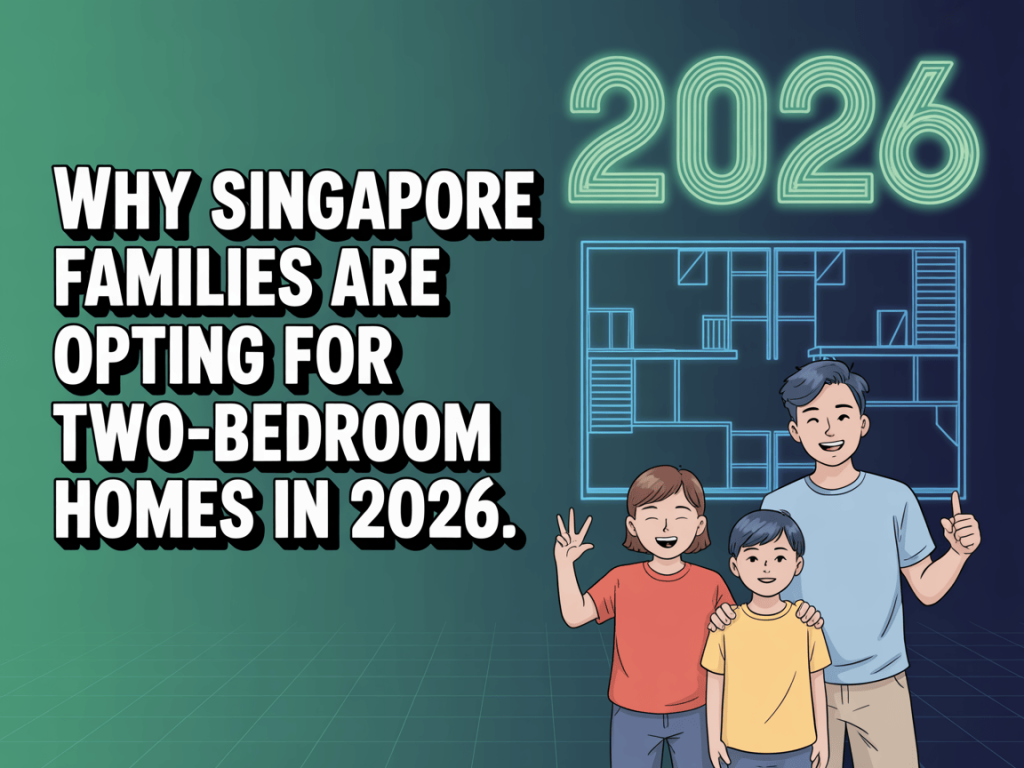


Why Singapore Families Are Opting for Two-Bedroom Homes in 2025
TLDR By 2025, Singapore families are increasingly choosing two-bedroom condos as practical long-term homes rather than temporary stepping stones. This...
Read More


TLDR
In Singapore’s property market, prioritizing a home you genuinely love over chasing maximum profit may be the smarter long-term move. While financial gains are tempting, homes are more than assets—they shape daily life, family experiences, and personal well-being. Chasing “perfect” investment timing often leads to stress, missed opportunities, or compromises that don’t align with lifestyle needs. A property that fits your values, offers comfort, and supports stability can deliver intangible returns that outweigh speculative gains. Over time, appreciation still occurs, but the joy of living in a space that feels right provides lasting value beyond dollars. The unconventional wisdom: choose a home that enriches your life, not just your portfolio.
In Singapore’s property-obsessed culture, expressing a desire for a home based on personal enjoyment rather than wealth accumulation often elicits skepticism. However, there’s a compelling argument to be made for prioritizing personal satisfaction, rather than solely focusing on asset appreciation. Ignoring societal pressure to chase property returns might just be the most intelligent approach.
“Wealth progression” in the property context refers to using each home as a stepping stone to a more valuable one. Coincidentally, this narrative encourages individuals to continuously upgrade to more expensive properties.
Consider a common scenario: A first-time homebuyer, for whom a private property is currently out of reach, is bombarded with advice from family, colleagues, and property gurus emphasizing private property as the ultimate goal, to be achieved swiftly due to its continuous appreciation. Initially, the buyer might consider a BTO flat for affordability. However, “wealth progression experts” might steer them towards a resale flat, promising faster upgrade potential (e.g., after the 5-year Minimum Occupation Period, or MOP).
It’s crucial to note that the 5-year MOP for a BTO flat starts from key collection, not purchase. If construction takes four years, the actual waiting time before selling and upgrading becomes nine years. For wealth progression advocates, this is too slow, as every year of waiting increases the risk of being priced out of the market.
Following this advice, the buyer acquires a resale flat, often compromising on age, size, or location, as it’s viewed as a temporary stepping stone. Renovations are kept minimal because the property is destined for sale in five years. Cash flow is managed to ensure sufficient cash-in-hand upon sale (by using more cash, or even all cash, for the purchase) to facilitate the next upgrade.
After five years of these compromises, the buyer hopefully sells and upgrades, often to an Executive Condominium (EC), as private property remains out of reach. This introduces a new set of compromises: ECs are often located further from MRT stations or in less mature estates. The buyer also transitions from a protected HDB loan to a private bank loan, where banks are less forgiving. Anxiety over fluctuating interest rates becomes a constant companion, a risk arguably better absorbed by more affluent buyers.
During the EC’s 5-year MOP, the buyer faces higher maintenance fees ($300-$400), increased property taxes, and potentially higher interest rates. The hope is to sell again after five years and accumulate enough profit for the next upgrade.
(Note: The cost-effectiveness of private versus HDB loans fluctuates. From 2009-2018, private bank rates were often cheaper, but they have since risen, dipped during COVID, and are now generally above HDB rates, creating a volatile financial journey.)
Another five years pass, and perhaps the buyer finally makes the jump to a private property. But the “wealth progression” mindset might be so ingrained that they continue to make compromises to chase potential gains. The property’s value must always appreciate. This obsession can lead to counter-intuitive choices, such as buying a condo in Clementi while working in Punggol, purely for perceived better resale potential. While financially sound, the daily commute might diminish their quality of life. Even at the condo-ownership stage, compromises persist: choosing a higher floor for better resale despite preferring a pool view, not merging rooms for comfort to maintain more bedrooms for resale, or buying near an MRT they rarely use because it boosts resale value.
The “wealth progression” concept often becomes a lifelong habit. Some buyers continue beyond their first private property, aiming for bigger condos or landed homes. For some, the pursuit never ends, even extending to legacy planning based on potential property value for future generations. This can result in a perpetually unhappy home journey, a series of uncomfortable “temporary stepping stones” that may or may not deliver the promised wealth. While some achieve success, others find it a path of misery.
Wealth progression can feel like a smart, cunning, or informed strategy. It offers an emotional high from seeing property values rise and the tantalizing possibility of a larger, more luxurious home “in a few years.” However, this promise isn’t universal, and it often leads to a succession of uncomfortable homes.
The origin of this trend is debatable. Some realtors suggest it gained traction in the 1990s, coinciding with the rise of Singaporean property tycoons and the introduction of the EC scheme in 1995. Others point to the aftermath of the 2008/09 Global Financial Crisis, when record-low mortgage rates and fewer restrictions made upgrading highly feasible. Regardless of its genesis, wealth progression is now a pervasive sales narrative, often reinforced by finance gurus and property seminars.
(In 2011, some home loan interest rates were even negative, a level not seen since.)
The fundamental flaw in universally applying “wealth progression” is that homebuyers are not solely investors. This obsession blurs the lines in an unhealthy manner.
1. Homebuyers Should Prioritize Personal Needs: Consider a “harder-to-sell” dual-key unit. While potentially offering lower resale gains due to its niche appeal, it enables multi-generational living with privacy, allowing grandparents to live with grandchildren or adult children to care for aging parents, all without incurring ABSD on a second property. The “gain” here is in enhanced quality of life, practicality, and family well-being, which far outweighs a marginal difference in investment returns. Similarly, choosing a home further from an MRT station for more living space or a quieter environment, or prioritizing proximity to schools and work for more sleep, are compromises that significantly impact daily life and personal comfort. For homeowners, the true “gain” should be the comfort and lifestyle a home provides, not just its potential resale price.
2. Dependence on Personal Financial Situations: Wealth progression often assumes a robust financial position. For instance, while a buyer could acquire a condo with monthly loan repayments consuming 55% of their income (the TDSR cap), most financial planners would strongly advise against such a high debt burden. The ability to handle fluctuating interest rates, $300-$400 monthly maintenance fees, and significant cash outlays for stamp duties and down payments is not universal. Wealth progression, as a strategy, is generally more suited for higher-income individuals or those with existing multiple properties, who can compartmentalize their investment assets from their primary residence.
3. Selling is More Complex Than It Seems: The decision to sell and upgrade is rarely as simple as “sell high, buy high.” A booming market might mean that even with substantial appreciation, you’re still priced out of your desired next property. Market trends can shift; if your property’s layout or project falls out of vogue, selling might mean limited upgrade options, or holding on and risking further depreciation. Economic downturns, sudden stamp duty hikes, or other cooling measures can derail plans. The notion that one can simply “sell and upgrade later” oversimplifies a complex, stressful process involving market timing and myriad external factors. Lifestyle factors, such as children’s schooling or elderly family members’ routines, also complicate selling decisions.
4. The Risk of Unforeseen Setbacks: Committing to a disliked location for five years in hopes of appreciation can be devastating if unforeseen circumstances (e.g., job loss, medical issues) make upgrading impossible. You could be stuck indefinitely in an uncomfortable home. Market appreciation might not keep pace with rising costs, or new policies could extend your waiting time. If this occurs, are you content to remain in your unit for decades longer than planned? For many, this risk is too high.
It is crucial not to sacrifice personal comfort for the assumption of better appreciation or temporary tenure. Always factor in the possibility of a longer-than-expected stay. A comfortable home is paramount in such circumstances, so don’t compromise on quality of life for the sake of wealth progression.
This is not to say wealth progression is universally wrong, but rather that it’s often misapplied. For some homeowners, property might not be the most suitable avenue for wealth growth, given its capital-intensive and illiquid nature. Diversifying investments, perhaps into index funds, could still enable future property ownership while prioritizing the primary residence as a comfortable family home first, and an investment second (or not at all).
If you’re reading this, you must be trying to figure out the best course of action right now: is it the right time to buy or sell?
It’s difficult to give an exact answer since everyone’s situation is unique and what works for one person may not necessarily work for you.
I can bring you a wealth of on-the-ground experience and a data-driven approach to provide clarity and direction. From beginners to experienced investors, our top-down, objective approach will help you on your real estate journey.
I can help you by:


You May Also Like …