
Fresh Take On What Singapore Condo Buyers Want In 2025
TLDR 2025 property buyers in Singapore are more discerning, prioritizing transparency, smart design, and real quality over flashy gimmicks. They...
Read More

TLDR
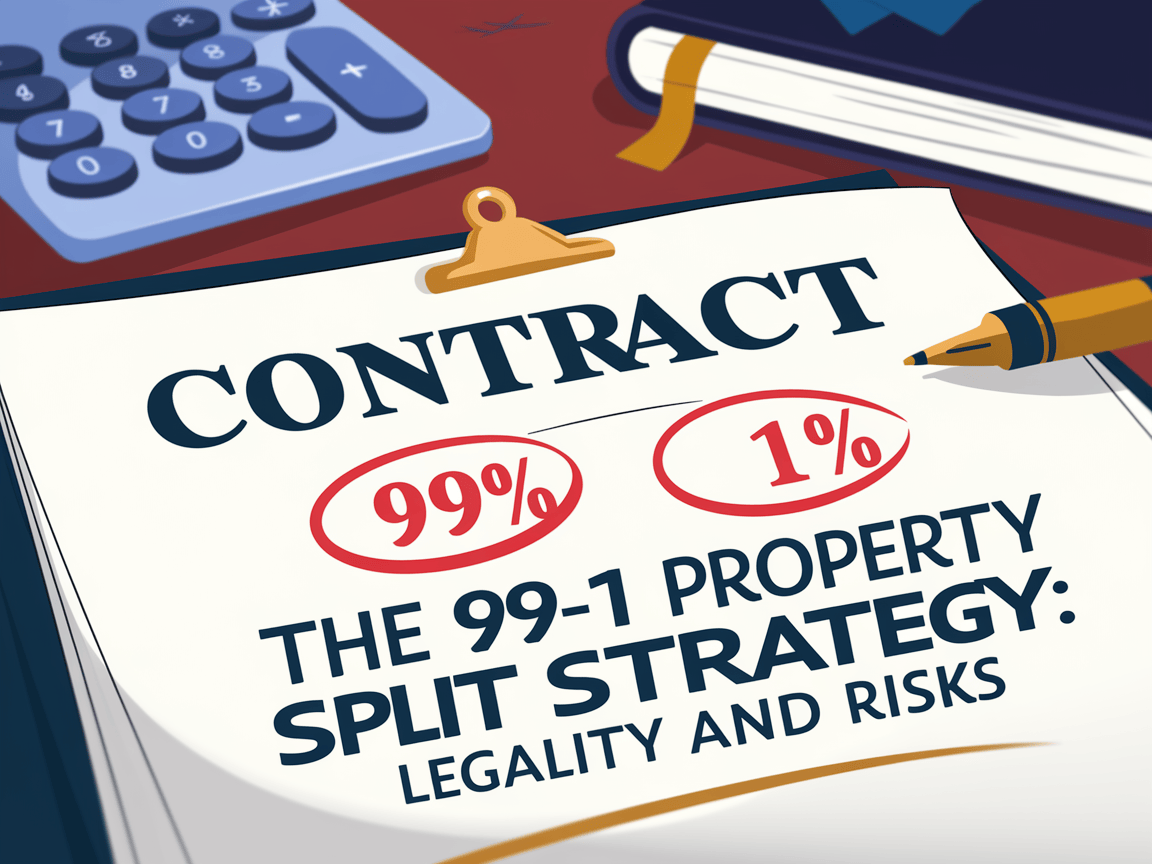
The 99-to-1 property ownership split in Singapore, where one spouse holds 99% and the other 1%, is used to reduce Additional Buyer’s Stamp Duty (ABSD) when buying multiple properties. However, a recent High Court case (Hillcrest Arcadia) revealed that beneficial ownership depends on actual financial contributions, not just title shares. The court indicated that intending to use this split to avoid ABSD could be unlawful, even if not penalized when the plan is unexecuted. The Inland Revenue Authority of Singapore (IRAS) may audit and impose heavy penalties if tax avoidance is detected, with no time limit on such audits. Despite this, many buyers are misled about the risks by agents or lawyers. Buyers should seek clear advice and understand the risks before using this strategy, especially as penalties have become more severe with rising property prices. Personalized, data-driven real estate guidance is recommended for making informed buy, sell, or wait decisions.
The 99-to-1 property ownership split, a strategy commonly used in Singapore for over a decade, involves one co-owner (typically a spouse) holding 99% of a property, while the other holds 1%. The underlying intention is that when funds become available for each to own a separate property, the 1% share is transferred to the other spouse. This theoretically incurs Buyer’s Stamp Duty (BSD) only on the 1% portion, allowing the spouse who now has a “zero” property count to purchase a second property without incurring Additional Buyer’s Stamp Duty (ABSD). This has long been a cornerstone of the “sell one, buy two” strategy. However, a recent High Court case has cast light on the legality of this practice.
In a notable case, a couple purchased a Hillcrest Arcadia condo with a 99:1 ownership split. The female spouse claimed 99% ownership, as stated on the title. The relationship, however, dissolved less than a year later. When the couple split, she asserted full ownership of her 99% share.
However, the High Court intervened. The judge ruled that based on the boyfriend’s financial contributions, he effectively owned 54% of the property. This decision undermined her 99% claim, emphasizing that financial contributions, not just paper titles, determine beneficial ownership.
More significantly, the case revealed a crucial detail: “The pair admitted that they planned for Mr Ngor to transfer and pay taxes on his one per cent share to Ms Wong when they decide to buy a second property. Justice Lee said there was no nefarious intention or knowledge that this would be an unlawful act. Moreover, the plan was never carried out.”
The phrase “would be an unlawful act” is key. It suggests that while the Court did not penalize them (as the plan was unexecuted), it implicitly deemed the intention to circumvent ABSD through this method as problematic.
A parliamentary response further clarifies the official stance: “Whether a ‘99-to-1’ arrangement involves tax avoidance depends on the facts and circumstances surrounding the specific case. Should IRAS determine that tax avoidance has occurred, it will recover the rightful amount of stamp duty from the buyers, and may impose a 50 per cent surcharge on the additional stamp duty payable. There is no statutory time limit for stamp duty audits.”
This indicates that while a 99-to-1 tenancy-in-common split is not inherently illegal, its contrived use specifically for tax avoidance can be challenged by authorities.
Despite this nuanced reality, many buyers report being assured by property agents or lawyers that the 99-to-1 strategy carries no risks. This often leads to buyers unknowingly entering a legal “grey area,” only to face audit letters and potential penalties later.
There is a pressing need for more transparent communication regarding the risks associated with such strategies. If a 99-to-1 split is recommended, all potential risks, not just the perceived benefits, should be clearly articulated to buyers. In 2025, with higher property prices, the penalties for tax avoidance could be substantial, making it even more critical for buyers to be fully informed.
If you’re reading this, you must be trying to figure out the best course of action right now: is it the right time to buy or sell?
It’s difficult to give an exact answer since everyone’s situation is unique and what works for one person may not necessarily work for you.
I can bring you a wealth of on-the-ground experience and a data-driven approach to provide clarity and direction. From beginners to experienced investors, our top-down, objective approach will help you on your real estate journey.
I can help you by:


You May Also Like …





















A password will be e-mailed to you