


The Power Imbalance: Why Singaporean Landlords Often Have the Upper Hand
TLDR Singapore’s rental market reveals a clear power imbalance favoring landlords. Limited housing supply, rising demand from expatriates, and high...
Read More

TLDR
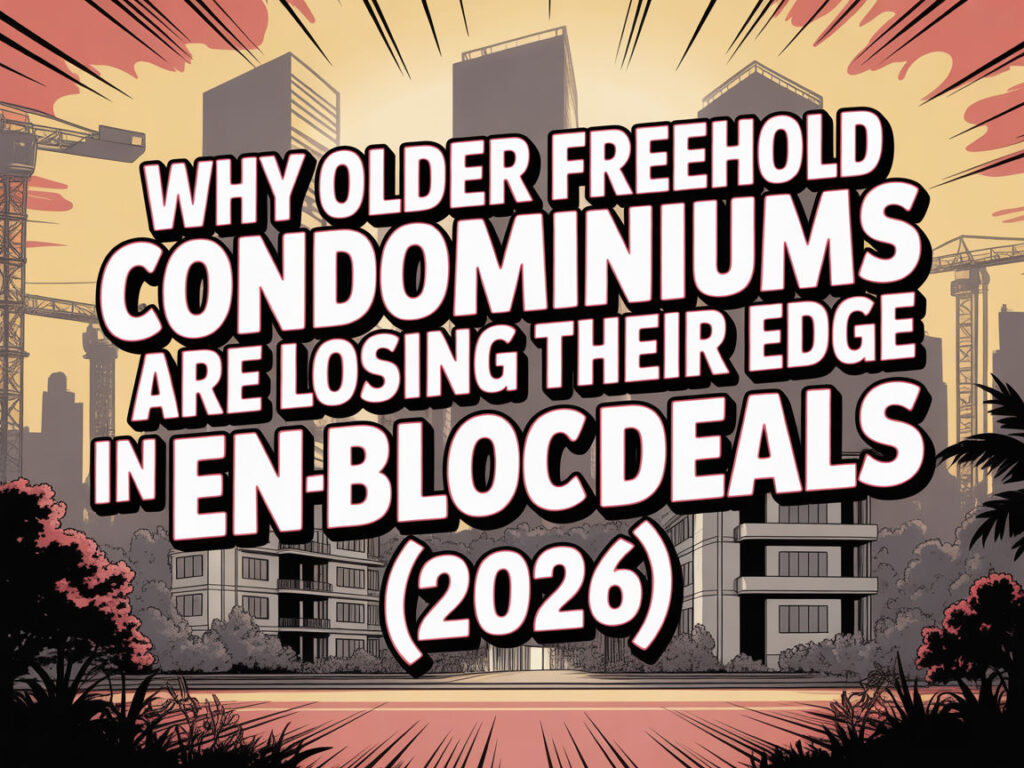
Older freehold condominiums in Singapore are losing their edge in en‑bloc deals due to several structural shifts. Developers increasingly prefer Government Land Sales (GLS) sites, which offer certainty, lower costs, and faster timelines compared to the complexities of collective sales. Rising replacement-home prices push owners to demand higher payouts, widening the gap between seller expectations and developer bids. Post‑COVID demand for larger resale units has further strengthened owners’ resolve, while harmonisation of Gross Floor Area (GFA) rules has reduced saleable space, lowering developer margins. Freehold tenure, once a strong selling point, now matters less than affordability, layout efficiency, and amenities, making 99‑year projects equally attractive. As a result, large freehold estates face stalled negotiations, while smaller boutique freehold sites remain viable. For many owners, private resale may be more realistic than waiting for en‑bloc success.
“It wasn’t supposed to turn out like this.”
That’s a line I’ve heard repeatedly in 2025, and given how commentators talked before COVID, I can see why. Freehold developments were thought to have an advantage in collective sales: buyers don’t have to factor in topping up a lease to 99 years, and owners aren’t pushed by an imminent lease expiry to accept a low offer. That perceived benefit helped justify the freehold premium for many purchasers.
Yet by October 2025 a clear pattern has emerged: many older, larger freehold estates are struggling to get over the line on en‑bloc attempts. Here’s what’s driving that shift.
More Government Land Sales (GLS) and a developer preference for smaller sites Developers are increasingly favouring GLS plots and compact sites, which has weakened the case for large freehold en‑blocs. The government boosted GLS supply through 2024–2025: by the second half of 2025 the Confirmed List alone accounted for roughly 4,725 private housing units, and the total annual pipeline surpassed about 9,200 units when Reserve List sites were included — higher than 2024’s elevated level.
GLS tenders appeal because they offer defined planning parameters, transparent bidding and a predictable timeline (roughly a 15‑month pathway to launch). That certainty is a powerful contrast to the time, cost and uncertainty of getting 80% owner consent for a collective sale. When GLS options exist, many big developers will prioritise them rather than get tied up in protracted en‑bloc campaigns.
There’s an important caveat: small, boutique freehold sites — typically with double‑digit unit counts — still attract buyers, often smaller developers that lack the balance sheet to contest GLS tenders. Examples like River Valley Apartments (48 units sold for $56 million) show compact freehold parcels can still transact. Large freehold estates with many owners, high reserve prices and complex negotiations, however, are much harder to move.
Developers also face opportunity cost. Committing to an en‑bloc can mean missing out if a prime GLS plot is released nearby. On pricing, anecdotal figures in 2024–2025 placed GLS land bids roughly around $1,223–$1,318 psf plot ratio, while some en‑bloc sites pushed higher (Pine Grove cited near $1,335 psf). With higher interest rates and construction costs in 2025, the cheaper — and clearer — GLS route often makes more economic sense.
Owners aren’t simply “greedy” — replacement costs explain a lot A key driver of owners’ high expectations is the rising cost of replacement housing. Take District 9 as an illustration: in 2024 new freehold or 999‑year three‑bedroom units averaged about $4.68 million, while resale freehold three‑bedroom units averaged roughly $3.33 million — a premium of about 40.6% for newer product.
For an owner in an ageing D9 block, cashing out today means their nearest like‑for‑like replacement could cost over 40% more. Asking for higher proceeds is therefore a rational reaction to that replacement gap, not simple avarice. Unless replacement-home prices fall significantly, this gap will keep influencing negotiations.
A minority of owners may be foreign buyers who purchased before the current Additional Buyer’s Stamp Duty (ABSD) framework. For these owners, selling and buying again could incur a heavy ABSD (up to 60% in some cases), so they are likely to resist collective sales even if they are not the majority.
Recent resale transactions give owners confidence to hold out Post‑COVID demand for larger homes — driven by hybrid work, home offices and multi‑generational living — has lifted resale prices for bigger units. Buyers who want space often turn to the resale market because many new launches offer smaller layouts.
Pandan Valley demonstrates this dynamic: average prices moved from about $1,113 psf in 2020 to around $1,572 psf by September 2025. When comparable resale transactions command those levels, owners expect developers to match or beat them. But developers have redevelopment thresholds they cannot exceed and must account for costs and margin. This mismatch means many collective sale negotiations stall: owners benchmark against strong resale comparables while developers stick to what the site economics will allow.
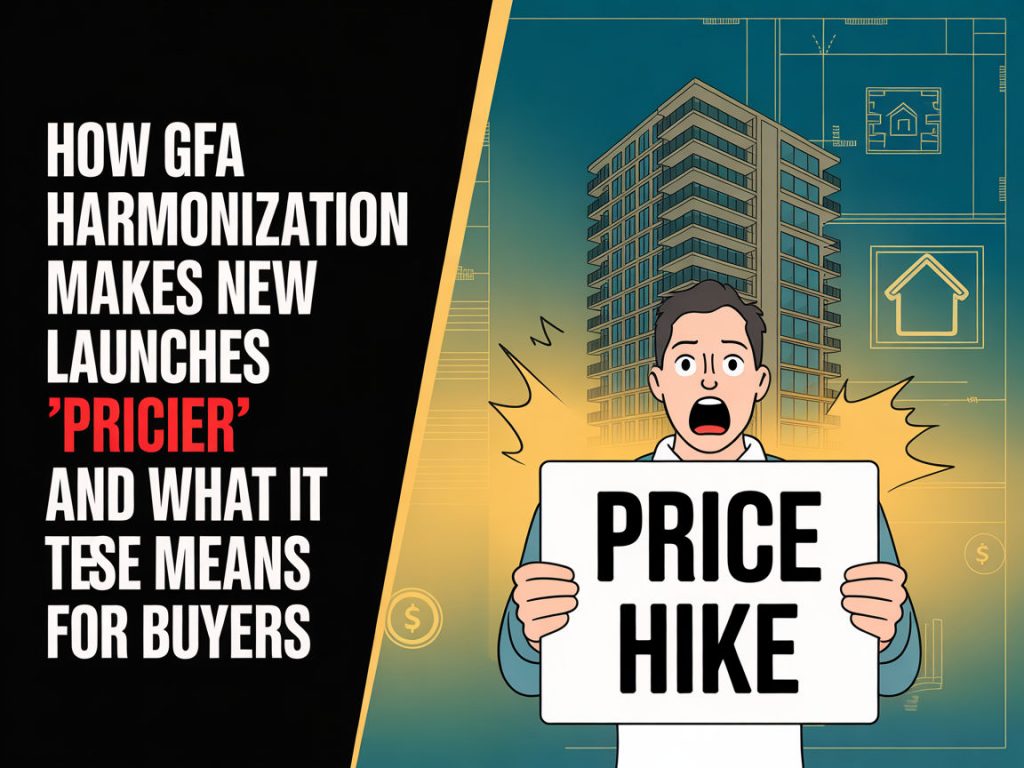
GFA harmonisation has reduced saleable floor area and developer bids The Urban Redevelopment Authority’s harmonisation of Gross Floor Area (GFA) rules, implemented from 2023, removed many of the previous “bonus” spaces developers could count separately from chargeable GFA — items such as air‑con ledges, planter boxes, large voids and some bay windows. Now only liveable, chargeable areas count. Market feedback suggests removing those elements reduces saleable area by roughly 6% in some older projects — a meaningful loss when multiplied across hundreds of units.
For developers, a smaller monetisable floor area lowers the amount they can extract from a site, which in turn reduces the top bid they are prepared to make. For owners, that means the en‑bloc premium they expect is narrower. Many older freehold estates relied on those bonus areas to underpin their earlier pricing, so harmonised GFA has widened the gap between owners’ expectations (based on old measurements) and today’s realistic developer bids. That gap creates tougher, longer negotiations inside the condo and forces pro‑sale committees to justify lower reserve figures.
Freehold status matters less to buyers and developers than it once did Freehold used to be a major marketing point in Singapore. In theory, a freehold site should be more attractive because there’s no lease top‑up cost. In practice in 2025, tenure matters far less than price quantum, unit layout and amenities.
Many successful launches in 2024–2025 — for example River Green, Promenade Peak and Emerald of Katong — sit on 99‑year land and have sold well despite freehold neighbours. For buyers focused on affordability and liveability, a 99‑year tenure is no longer a deal‑breaker. Developers therefore prioritise sites that deliver acceptable margins after factoring in GFA limits, construction and marketing costs, regardless of tenure. A freehold parcel with a low plot ratio, tight setback rules or conservation constraints can be less appealing than a 99‑year site with better development potential.
What this means for owners and the market The current en‑bloc environment for older freehold condos is one of caution. Rising replacement costs, growing GLS supply, shifting buyer preferences and tighter GFA rules have combined to make large freehold collective sales harder to pull off. Owners hoping to cash out via en‑bloc face tougher bargaining, and many will find a private sale with an agent the more realistic route.
That said, some owners benefit from the shift: foreign owners who would face high ABSD if they replaced their homes, and residents who simply prefer to stay put, may welcome the reduced en‑bloc pressure.
If you want a deeper analysis of a specific freehold project or help assessing en‑bloc prospects, say which development and I’ll run through the factors that matter most.
If you’re reading this, you must be trying to figure out the best course of action right now: is it the right time to buy or sell?
It’s difficult to give an exact answer since everyone’s situation is unique and what works for one person may not necessarily work for you.
I can bring you a wealth of on-the-ground experience and a data-driven approach to provide clarity and direction. From beginners to experienced investors, our top-down, objective approach will help you on your real estate journey.
I can help you by:


You May Also Like …





















A password will be e-mailed to you