TLDR
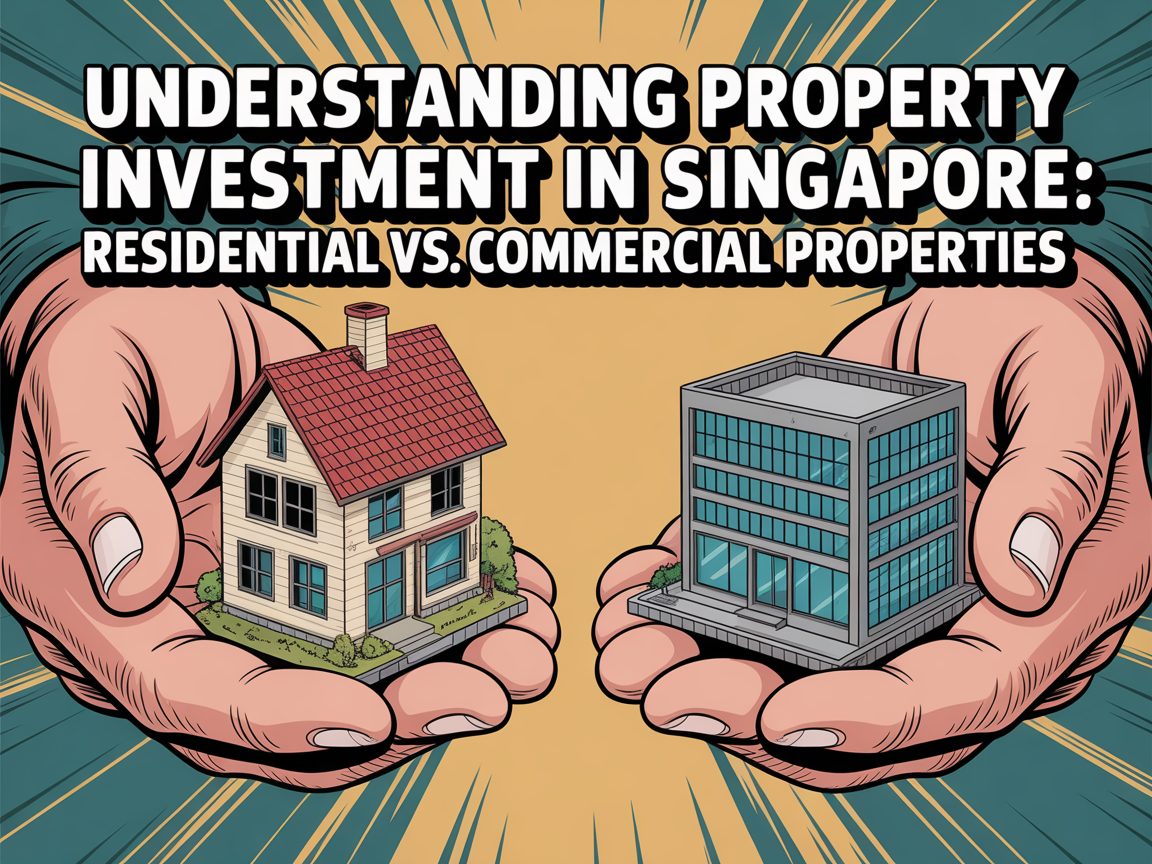
Singapore’s real estate market offers distinct differences between residential and commercial properties. Residential properties typically have longer leases (up to 999 years), allow CPF use for purchase, but come with higher Buyer’s and Additional Buyer’s Stamp Duties (BSD and ABSD), stricter loan-to-value (LTV) limits, and progressive property taxes. Commercial properties have shorter leases (30-60 years), lower stamp duties, no ABSD, more flexible financing with higher LTVs, and are subject to GST. Foreign ownership rules are stricter for landed residential properties but generally lenient for commercial ones. Seller’s Stamp Duty applies mainly to residential sales within four years but not to most commercial sales. Investors should weigh lease duration, financing, tax implications, and ownership rules against their goals and financial capacity. Understanding these factors is key to making an informed investment decision in Singapore’s dynamic property market.
Singapore’s real estate market offers attractive prospects for investors, both local and international. The lure of consistent rental income and capital appreciation makes property ownership a compelling venture. A key decision for prospective investors is whether to acquire a residential or a commercial property. This guide outlines nine crucial distinctions to help you make an informed choice.
Key Differences at a Glance
In-Depth Comparison:
1. Lease Duration
Residential properties in Singapore typically come with more extended lease terms, such as 99-year or 999-year leases, or even freehold status. These longer tenures often contribute to sustained value appreciation, providing investors with a clearer long-term investment horizon. In contrast, commercial properties usually have shorter lease periods of 30 or 60 years, which can make them more financially accessible.
2. Buyer’s Stamp Duty (BSD)
All property acquisitions in Singapore incur Buyer’s Stamp Duty, calculated on the higher of the purchase price or market valuation. Since February 15, 2023, the progressive BSD rates mean that residential properties can attract a top marginal rate of 6%, while non-residential properties have a slightly lower peak marginal rate of 5%. This implies that for properties exceeding S$3 million, residential purchases will generally have a higher BSD burden.
3. Central Provident Fund (CPF) Usage for Acquisition
A significant advantage for residential investors is the ability to utilize savings from their CPF Ordinary Account. However, certain conditions apply, such as the need to retain a minimum Basic Retirement Sum in your CPF account, particularly for second or subsequent residential property investments. As CPF funds are designated for housing and retirement, they cannot be used for commercial property purchases.
4. Loan-to-Value (LTV) Limits
When securing a bank loan for property acquisition, LTV limits vary considerably. For a second or subsequent residential property, banks typically cap the LTV at 45%. Commercial properties, however, generally enjoy more favorable financing terms, with banks often extending LTVs of at least 80%, and sometimes even up to 90%. Furthermore, interest rates for commercial property loans are often lower than those for residential loans.
5. Annual Property Tax
Property tax in Singapore is based on the Annual Value (AV) of the property—its estimated yearly rental income. Residential properties (especially those not owner-occupied) are subject to a progressive tax scale, starting from 12% for the first S$30,000 of AV and rising to 32% for AVs exceeding S$140,000. Commercial properties, conversely, face a flat annual property tax rate of 10% of their AV, irrespective of whether the owner occupies the premises.
6. Goods and Services Tax (GST)
One notable difference is the application of GST. Residential property transactions are exempt from GST. Conversely, all commercial property purchases are subject to the prevailing 9% GST rate.
7. Seller’s Stamp Duty (SSD)
Seller’s Stamp Duty is a levy on residential properties sold within four years of purchase, designed to curb speculative activities that could inflate property prices. For commercial properties, SSD is generally not imposed on sales of office or retail spaces. However, industrial properties (e.g., factories, showrooms) are subject to SSD if resold within three years.
8. Additional Buyer’s Stamp Duty (ABSD)
Perhaps the most impactful distinction is the Additional Buyer’s Stamp Duty (ABSD). This tax applies to Singapore Citizens acquiring a second residential property, and to Permanent Residents, foreigners, entities, and housing developers buying any residential property. ABSD rates can be substantial (starting from 20% for some categories), significantly influencing the viability of residential investments. Commercial properties, by contrast, are not subject to ABSD, offering a potential advantage for certain investors.
9. Foreign Ownership Regulations
Foreign investors face different rules depending on the property type. Non-landed private residential units, such as condominium apartments, are generally unrestricted for foreign ownership. However, acquiring landed private homes (e.g., bungalows, semi-detached houses) or developments zoned as “commercial & residential” typically requires prior approval from the Singapore Land Authority. For purely commercial properties, foreign ownership is largely unrestricted, though exceptions exist for specific mixed-use developments.
Concluding Thoughts
The decision to invest in residential or commercial property in Singapore hinges on various factors, including an investor’s financial capacity, risk tolerance, and investment goals. While residential properties offer longer leases and CPF usage benefits, they come with higher stamp duty costs and stricter financing rules for multiple purchases. Commercial properties, despite their shorter leases and GST implications, provide freedom from ABSD and more flexible loan options, making them an attractive alternative for specific investment strategies. A thorough understanding of these differences is essential for navigating Singapore’s dynamic property market effectively.
Should You Buy, Sell or Wait?
If you’re reading this, you must be trying to figure out the best course of action right now: is it the right time to buy or sell?
It’s difficult to give an exact answer since everyone’s situation is unique and what works for one person may not necessarily work for you.
I can bring you a wealth of on-the-ground experience and a data-driven approach to provide clarity and direction. From beginners to experienced investors, our top-down, objective approach will help you on your real estate journey.
I can help you by:
- Offering Strategic Real Estate Advice – I can help create a comprehensive plan to guide you through your property journey.
- Connecting Your Home with the Perfect Buyers – Through stunning visuals, an effective communication strategy, and an in-depth knowledge of the market, we’ll ensure your home is presented in the best possible way to fulfill your goals.


You May Also Like …
Jayson Ang – June 14, 2026 – Share
TLDR When your preferred property becomes unavailable, broaden your search beyond immediate location and reconsider priorities like transport access, school...
Read More
Jayson Ang – January 6, 2025 – Share
Singapore, a thriving hub of business and commerce in Southeast Asia, has become an attractive destination for foreign investors looking...
Read More
Jayson Ang – April 29, 2024 – Share
TLDR When deciding whether to repay your HDB flat loan early, consider the limitations of not being able to obtain...
Read More
Jayson Ang – January 18, 2023 – Share
TLDR Considering the Singapore property market trends and financial factors, it's crucial to make informed decisions about upgrading from an...
Read More
Jayson Ang – April 6, 2026 – Share
TLDR District 15 condos show a nuanced split between old and new developments. Freehold projects have driven much of the...
Read More
Jayson Ang – July 21, 2025 – Share
TLDR To assess if Singapore’s property cooling measures are working, compare our actions with China, which is applying the opposite...
Read More
Jayson Ang – December 10, 2023 – Share
TLDR When it comes to navigating the ups and downs of the Singapore property market, timing is crucial. Three real-life...
Read More
Jayson Ang – February 11, 2025 – Share
Singapore, a vibrant city-state known for its diverse culture and rich history, offers a plethora of unique experiences that go...
Read More
Jayson Ang – August 22, 2025 – Share
TLDR Undervalued properties in Singapore are those priced at least 10% below market value, often due to urgent sellers, developer...
Read More
Jayson Ang – July 10, 2024 – Share
The future of Singapore's property market is shaped by several emerging trends that reflect cautious optimism, enviable locations, and sociable...
Read More
Jayson Ang – December 29, 2024 – Share
As the global economy continues to recover, the real estate market in Singapore remains a promising investment opportunity for savvy...
Read More
Jayson Ang – January 22, 2025 – Share
Singapore's property market has been experiencing a tight supply in recent years, leading to increased demand and rising property prices....
Read More
Jayson Ang – July 16, 2024 – Share
Singapore, a melting pot of diverse cultures and culinary delights, offers an exquisite high tea experience that caters to both...
Read More
Jayson Ang – March 14, 2025 – Share
TLDR Determining the best time to sell a newly launched condo involves weighing the benefits of selling before or after...
Read More
Jayson Ang – May 21, 2023 – Share
From Overseas to Singapore Property: 5 Steps Guide to Remitting Funds 1. The first step in remitting money to Singapore...
Read More
Jayson Ang – February 24, 2025 – Share
TLDR Building a landed property in Singapore can be a costly endeavor, with prices ranging from $300 to $500 per...
Read More
Jayson Ang – November 3, 2024 – Share
TLDR In Singapore, owning both an HDB flat and a private property has become complicated due to factors like Additional...
Read More
Jayson Ang – July 3, 2023 – Share
TLDR The article delves into the intricacies of property asset progression in Singapore's real estate market. It highlights the risks...
Read More
Jayson Ang – January 8, 2023 – Share
TLDR The Singapore residential property market has shown resilience in 2022, with price growth in both private housing and HDB...
Read More
Jayson Ang – April 11, 2024 – Share
TLDR The Singapore housing market is a rollercoaster of unpredictable changes. Three homebuyers share their experiences: Tristan waited too long...
Read More