TLDR
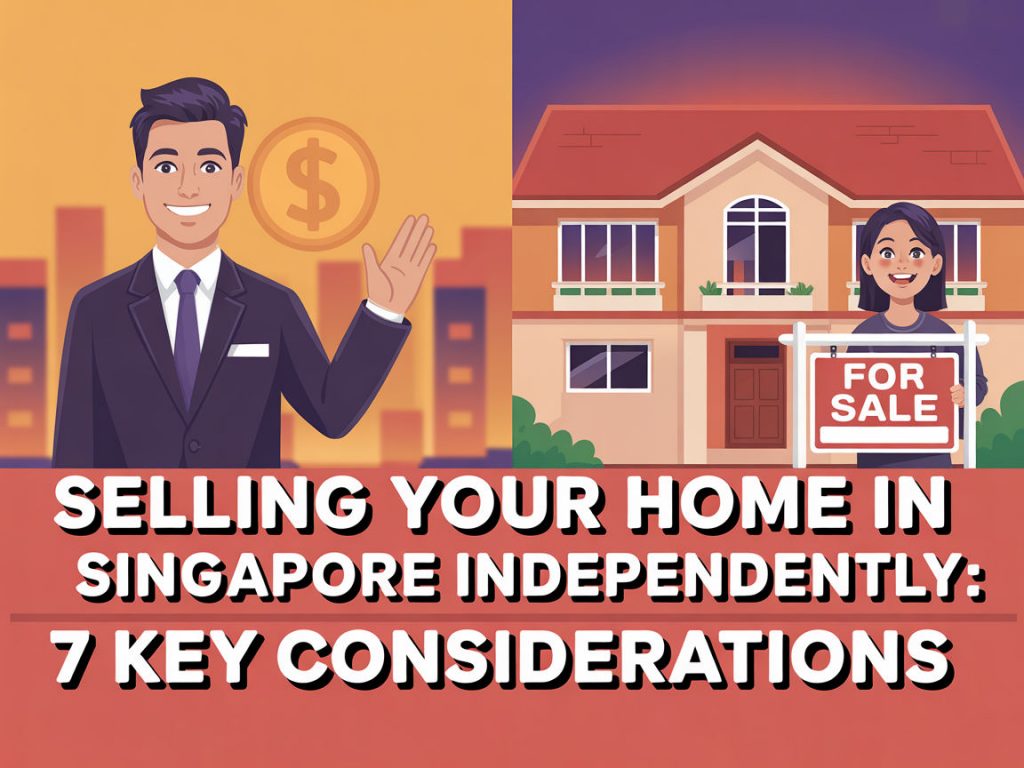
Selling your home in Singapore involves careful planning over several stages. Start 4-6 weeks before listing by consulting a property professional, setting a realistic price based on valuation, assessing outstanding mortgage and CPF refund, and preparing the property for viewings. List and market your property for 1-3+ months, responding quickly to offers and negotiating effectively. Once an offer is accepted, issue the Option to Purchase (OTP), giving the buyer exclusivity to buy within 14 days. The sale completes in 8-12 weeks after OTP exercise, involving legal paperwork, loan and CPF coordination, and payment of Seller’s Stamp Duty if applicable. Maintain the property until completion and move out before handover. Net sale proceeds are received after paying off mortgage, CPF refund, and fees. Seeking professional advice throughout can help navigate pricing, legalities, and marketing for a successful sale.
Selling your home for the first time can be a daunting experience, perhaps even more so than buying. From managing viewings to navigating the complexities of pricing and legal procedures, it’s a process that requires careful planning and execution. To help first-time sellers in Singapore, here’s a comprehensive timeline to follow:
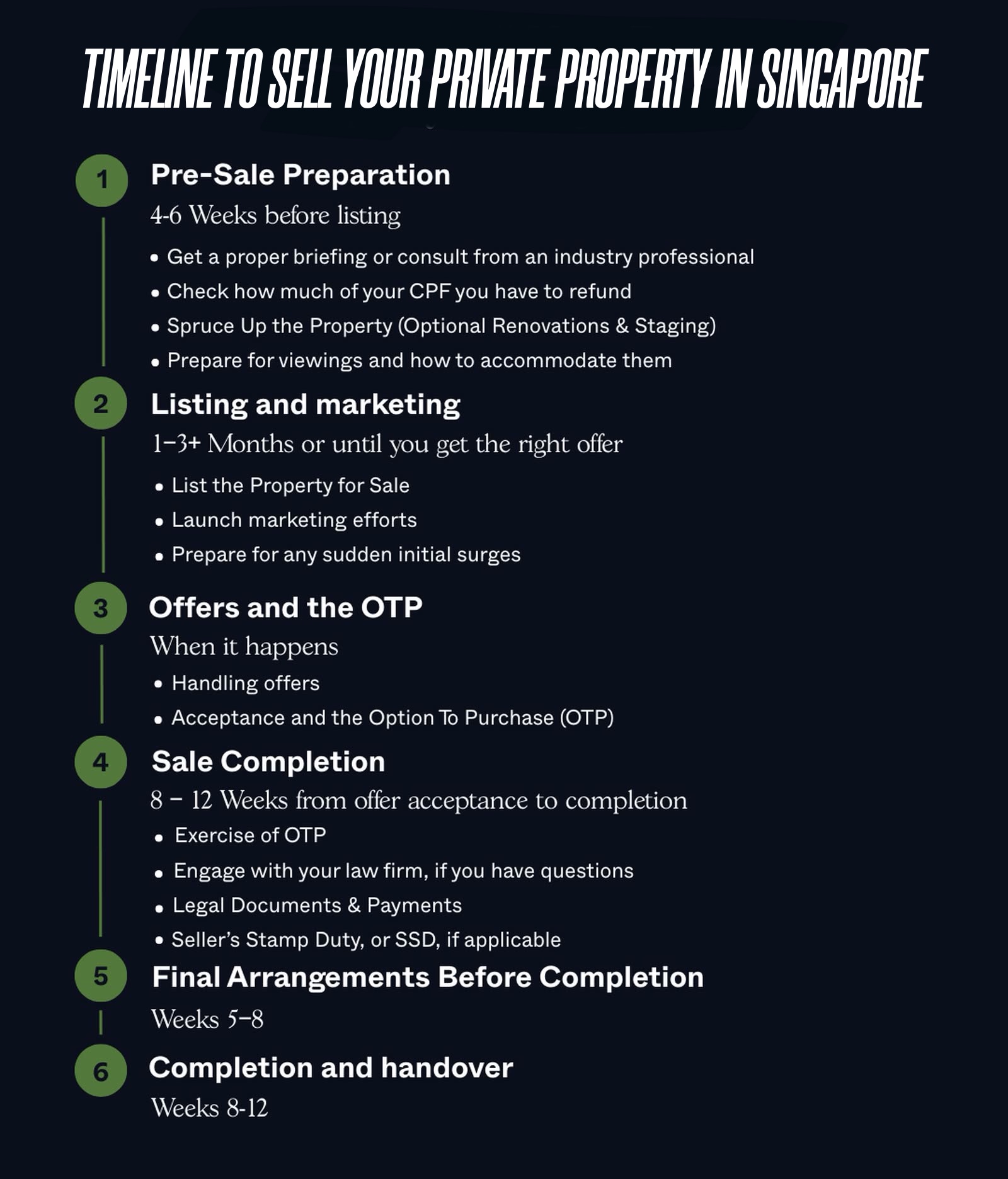
Pre-Sale Preparation (4-6 Weeks Before Listing)
- Seek Professional Guidance: Consult with a property professional (agent or consultant) regardless of whether you plan to sell independently. They can provide crucial insights on factors like the Sellers Stamp Duty (SSD) period (tax on sale proceeds within the first three years of purchase), selling a tenanted property, or selling in a down market. Discuss these factors to determine if selling is the right decision for you.
- Determine Property Valuation and Set Price: Obtain a property valuation to set a realistic asking price. Discuss your price expectations with your agent and be prepared to adjust them based on market conditions. Define your minimum acceptable price beforehand.
- Assess Outstanding Mortgage and CPF Refund: Check your outstanding mortgage amount and any penalties for early redemption. Calculate the amount of CPF used for the purchase, including accrued interest, that needs to be refunded. This impacts your net proceeds and budget for a replacement property. While you’re not required to top up any shortfall if sale proceeds don’t cover the full CPF refund, it means you’ll have no cash for your next purchase.
- Property Enhancement (Optional): Address minor repairs and cosmetic touch-ups to present your home in good condition. Avoid major renovations, as they may not translate to a higher selling price. You can also offer the property “as is,” but be prepared for lower offers and reduced appeal.
- Plan for Viewings: Coordinate with your agent on the listing date and viewing schedule. Ideally, you should vacate the property during viewings to allow buyers to explore freely and envision themselves in the space. If the property is tenanted, ensure your tenants are cooperative with viewings. Small touches like fresh air, pleasant scents, and soft music can enhance the viewing experience.
Listing and Marketing (1-3+ Months or Until Offer)
- List Your Property: Utilize major property portals (most require an agent license) or smaller portals for DIY sellers. Create a compelling listing with professional photos, highlighting key features and nearby amenities. Choose an agent who demonstrates competence in marketing strategies.
- Launch Marketing Efforts: Implement a proactive marketing strategy, including online ads and social media, if using a full-service agent. DIY sellers should also explore various marketing channels. Continuously tweak your marketing based on market response and competitor activity.
- Prepare for Initial Surge in Interest: Be ready to accommodate viewings immediately after listing. New listings often attract the most interest in the first two weeks. The highest offers may come early, so be prepared to accept a generous offer if it arises. Stay flexible and responsive to inquiries and viewing requests.
Offers and the Option to Purchase (OTP)
- Handling Offers: Respond to offers promptly. Be prepared to negotiate, but have a clear minimum price in mind. Consider other aspects of the offer beyond price, such as move-in dates or minor repair requests. A slow response can cost you a serious buyer.
- Acceptance and OTP: Once you agree on a price, issue the OTP to the buyer. This legal document grants the buyer the exclusive right to purchase the property within a set period (commonly 14 days for private properties). You cannot sell to another buyer during this period, even if they offer a higher price. If the buyer backs out, the Option fee is non-refundable. Ensure any agreements on extensions or other terms are in writing and signed.
Sale Completion (8-12 Weeks from Offer Acceptance)
- Exercise of OTP: The buyer exercises the OTP by signing it and paying the remaining down payment (usually 4% of the price). The OTP becomes a binding Sale & Purchase (S&P) Agreement. Engage a conveyancing lawyer to represent you. Note that the Option fee (1%) and Exercise fee (4%) are received separately.
- Liaise with Your Lawyer: Your lawyer will coordinate with the buyer’s lawyer, banks, CPF Board, and government agencies for title transfer. They will handle tasks like drafting the S&P Agreement, requesting loan redemption statements, coordinating CPF refunds, and ensuring legal charges are cleared.
- Legal Documents and Payments: Sign completion paperwork at your lawyer’s office, including the S&P Agreement, loan and CPF authorizations, and transfer documents. Pay your lawyer’s fees.
- Seller’s Stamp Duty (SSD): If applicable (selling within three years of buying), your lawyer will handle the filing and payment of SSD to IRAS within 14 days of the OTP being exercised.
Final Arrangements Before Completion (Weeks 5-8)
Maintain the property’s condition until the completion date (typically 8-10 weeks after OTP exercise). Be prepared for a final inspection by the buyer to verify the property’s condition and ensure it’s vacant. Move out a few days before completion to allow for cleaning.
Completion and Handover (Weeks 8-12)
On the completion day, ownership officially transfers to the buyer. Your lawyer will represent you at the meeting with the buyer’s lawyer. The buyer pays the remaining balance, and your lawyer hands over the keys and legal documents.
Receiving Sale Proceeds:
Your outstanding mortgage and CPF refund are disbursed first. Your lawyer’s commission and other fees are also paid. The remaining balance is your net sale proceeds, typically issued as a cashier’s order or transferred to your bank account. These proceeds are usually available on the completion date to facilitate your next property purchase.
Selling your home involves navigating various complexities. Understanding the timeline and potential challenges, like timing offers and the duration of the process, is crucial for a successful sale. Seeking professional guidance can provide valuable support throughout the journey.
Should You Buy, Sell or Wait?
If you’re reading this, you must be trying to figure out the best course of action right now: is it the right time to buy or sell?
It’s difficult to give an exact answer since everyone’s situation is unique and what works for one person may not necessarily work for you.
I can bring you a wealth of on-the-ground experience and a data-driven approach to provide clarity and direction. From beginners to experienced investors, our top-down, objective approach will help you on your real estate journey.
I can help you by:
- Offering Strategic Real Estate Advice – I can help create a comprehensive plan to guide you through your property journey.
- Connecting Your Home with the Perfect Buyers – Through stunning visuals, an effective communication strategy, and an in-depth knowledge of the market, we’ll ensure your home is presented in the best possible way to fulfill your goals.


You May Also Like …
Jayson Ang – August 1, 2024 – Share
TLDR When considering the best time to buy or sell a property in Singapore, historical data analysis reveals key insights....
Read More
Jayson Ang – July 20, 2023 – Share
Powering The Lion City: The Top 5 Industries Driving Singapore's Economy Singapore is widely recognized as one of the most...
Read More
Jayson Ang – May 20, 2024 – Share
Singapore, a vibrant and multicultural city-state, is well-known for its diverse food scene, stunning architecture, and bustling shopping districts. However,...
Read More
Jayson Ang – May 1, 2023 – Share
TLDR When it comes to property advice, it's crucial to be cautious of common misconceptions. For instance, schemes like the...
Read More
Jayson Ang – August 9, 2024 – Share
TLDR The Singapore property market for new condo launches in 2023 saw varying degrees of success. Factors like limited competition,...
Read More
Jayson Ang – April 9, 2023 – Share
TLDR The increasing trend of right-sizing properties in Singapore is driven by various factors such as lifestyle changes, financial gains,...
Read More
Jayson Ang – July 14, 2024 – Share
Singapore's prime district properties continue to be in high demand due to a combination of factors that make them attractive...
Read More
Jayson Ang – April 8, 2024 – Share
TLDR Older properties come with unique challenges due to outdated design elements, potential roofing issues, odd land shapes, basement drawbacks,...
Read More
Jayson Ang – March 3, 2024 – Share
Deciding whether to buy a new development or a resale property can be a challenge. In the next few video...
Read More
Jayson Ang – February 9, 2023 – Share
TLDR When looking to sell your home, consider simple ways to boost its value without costly renovations. Organize living spaces,...
Read More
Jayson Ang – February 2, 2025 – Share
TLDR Investing in real estate is a complex decision influenced by personal goals, investment horizon, rental plans, and financial liquidity....
Read More
Jayson Ang – October 9, 2025 – Share
TLDR Freehold properties in Singapore offer indefinite ownership but come with a 15–25% premium over 99-year leasehold units. Despite common...
Read More
Jayson Ang – August 7, 2024 – Share
Singapore, a thriving hub of business and commerce in Southeast Asia, boasts a highly developed economy and a robust real...
Read More
Jayson Ang – March 13, 2024 – Share
With a highly competitive property market, it's crucial to choose a property developer that you can trust to deliver quality...
Read More
Jayson Ang – September 18, 2024 – Share
Singapore, a thriving hub of business and commerce in Southeast Asia, offers a robust real estate market with various investment...
Read More
Jayson Ang – January 28, 2023 – Share
TLDR When it comes to real estate investments in Singapore amidst rising inflation rates, consider strategies such as capitalizing on...
Read More
Jayson Ang – April 16, 2026 – Share
TLDR Singapore’s executive condominiums (ECs) have improved significantly, now matching private condos in design and facilities but at lower prices....
Read More
Jayson Ang – July 5, 2025 – Share
TLDR Property ownership and prenuptial agreements are key for married couples in Singapore. Joint ownership (either joint tenancy or tenancy-in-common)...
Read More
Jayson Ang – March 5, 2023 – Share
TLDR The Singapore property market faces challenges with the ongoing en bloc stalemate. Lower success rates, higher development risks, and...
Read More
Jayson Ang – May 6, 2026 – Share
TLDR Pasir Ris has transformed over the past decade from a quiet beach town into a family-friendly hotspot, driven by...
Read More