TLDR
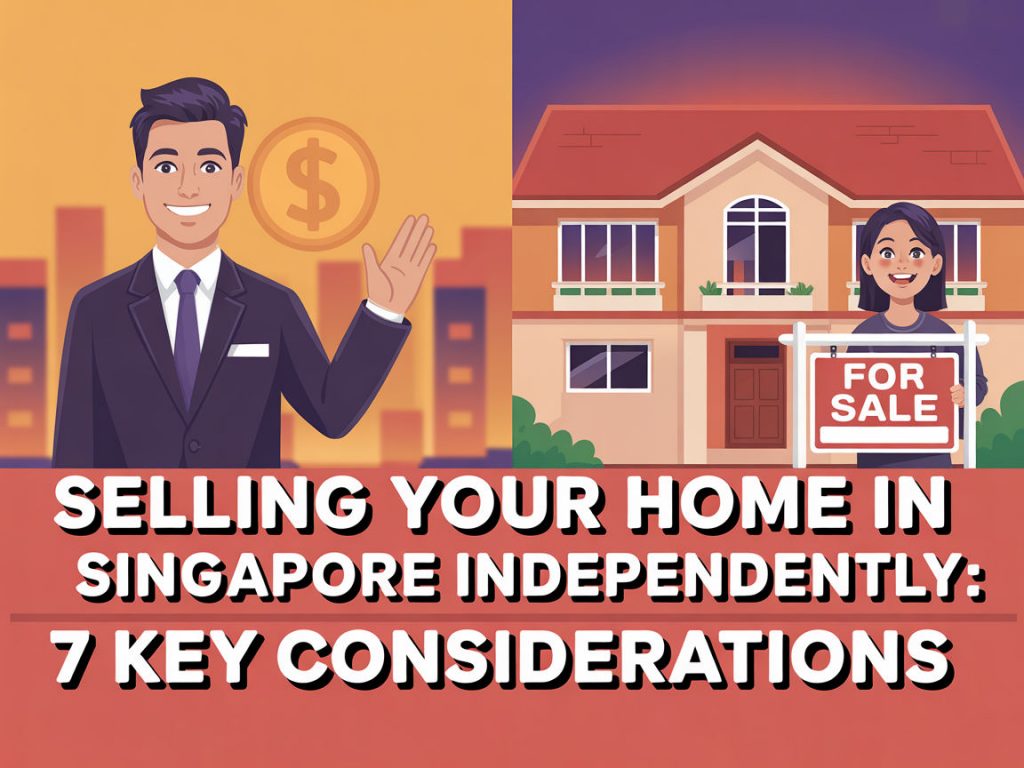
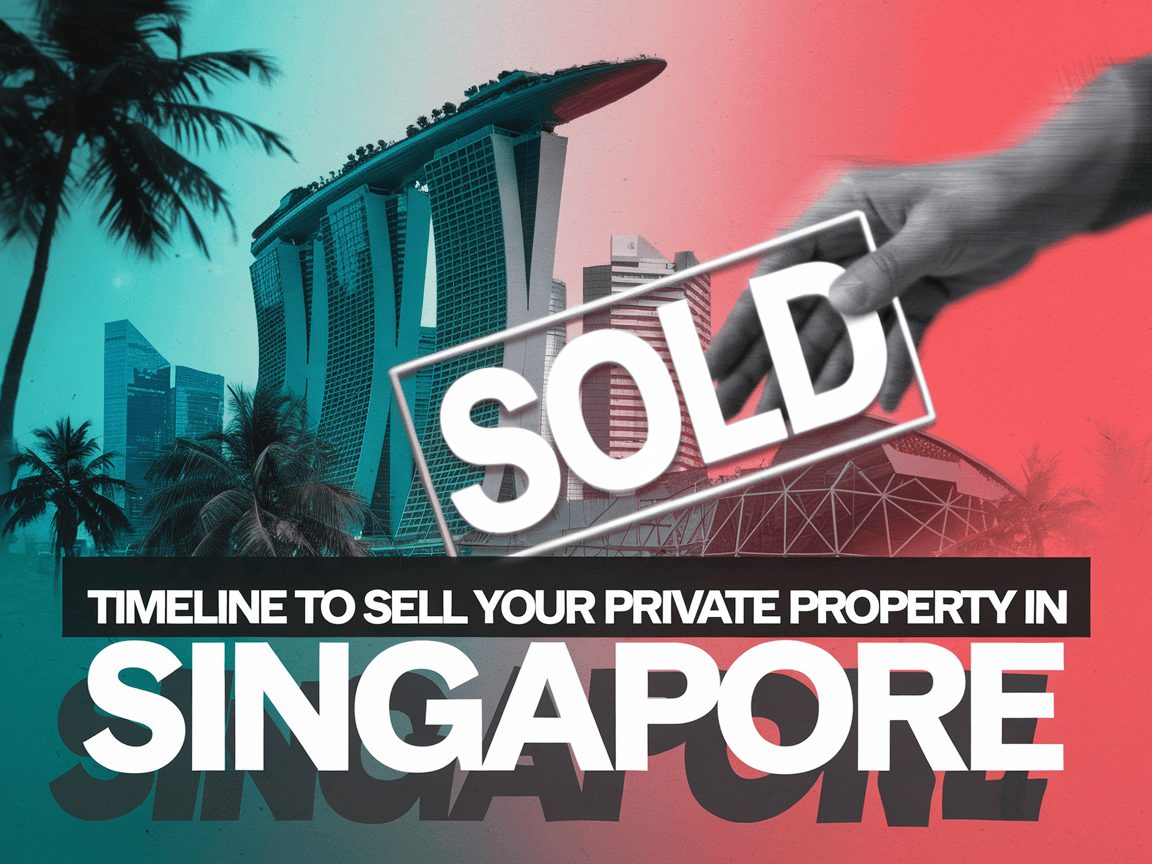
Selling your home in Singapore involves careful planning over several stages. Start 4-6 weeks before listing by consulting a property professional, setting a realistic price based on valuation, assessing outstanding mortgage and CPF refund, and preparing the property for viewings. List and market your property for 1-3+ months, responding quickly to offers and negotiating effectively. Once an offer is accepted, issue the Option to Purchase (OTP), giving the buyer exclusivity to buy within 14 days. The sale completes in 8-12 weeks after OTP exercise, involving legal paperwork, loan and CPF coordination, and payment of Seller’s Stamp Duty if applicable. Maintain the property until completion and move out before handover. Net sale proceeds are received after paying off mortgage, CPF refund, and fees. Seeking professional advice throughout can help navigate pricing, legalities, and marketing for a successful sale.
Selling your home for the first time can be a daunting experience, perhaps even more so than buying. From managing viewings to navigating the complexities of pricing and legal procedures, it’s a process that requires careful planning and execution. To help first-time sellers in Singapore, here’s a comprehensive timeline to follow:
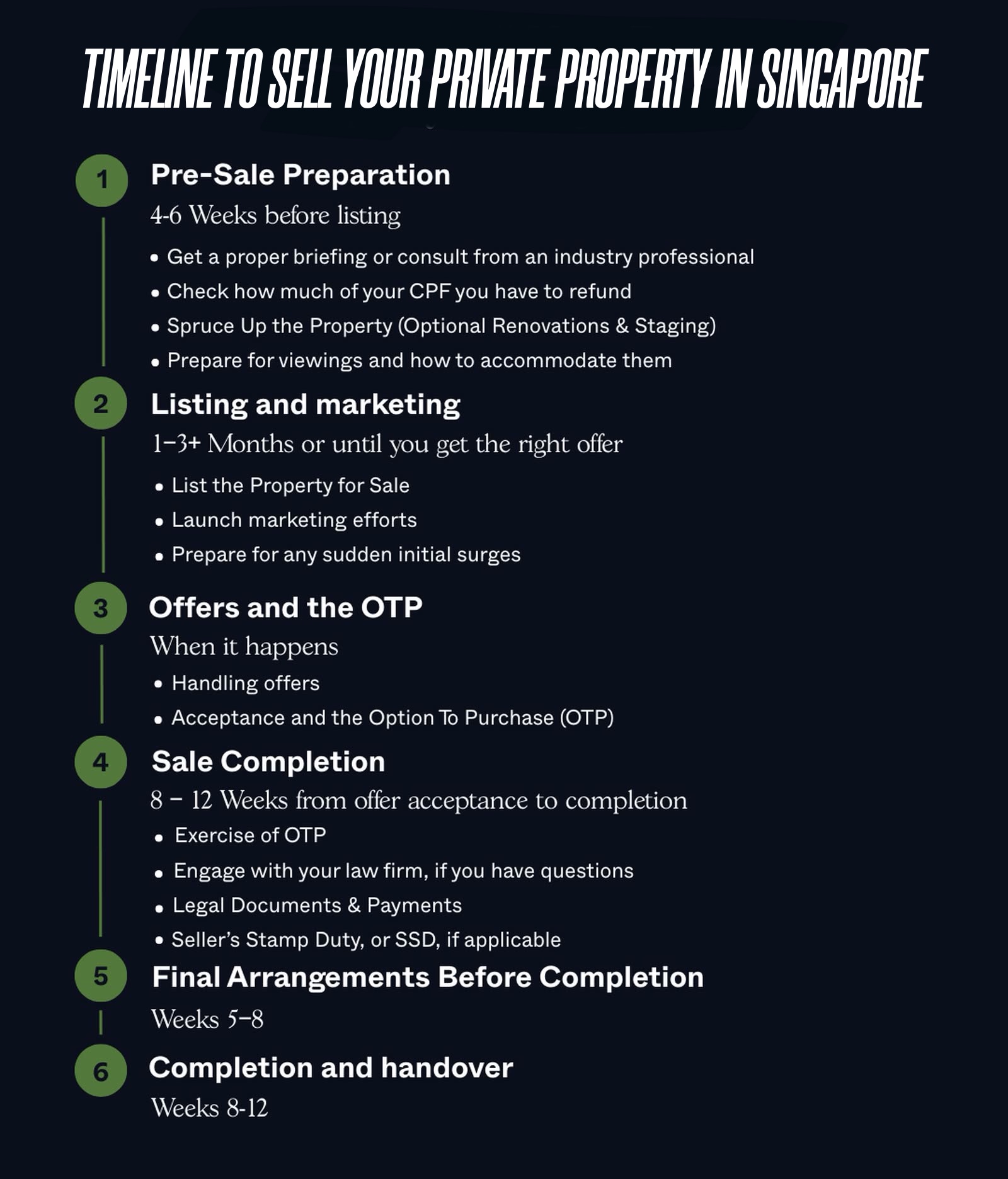
Pre-Sale Preparation (4-6 Weeks Before Listing)
- Seek Professional Guidance: Consult with a property professional (agent or consultant) regardless of whether you plan to sell independently. They can provide crucial insights on factors like the Sellers Stamp Duty (SSD) period (tax on sale proceeds within the first three years of purchase), selling a tenanted property, or selling in a down market. Discuss these factors to determine if selling is the right decision for you.
- Determine Property Valuation and Set Price: Obtain a property valuation to set a realistic asking price. Discuss your price expectations with your agent and be prepared to adjust them based on market conditions. Define your minimum acceptable price beforehand.
- Assess Outstanding Mortgage and CPF Refund: Check your outstanding mortgage amount and any penalties for early redemption. Calculate the amount of CPF used for the purchase, including accrued interest, that needs to be refunded. This impacts your net proceeds and budget for a replacement property. While you’re not required to top up any shortfall if sale proceeds don’t cover the full CPF refund, it means you’ll have no cash for your next purchase.
- Property Enhancement (Optional): Address minor repairs and cosmetic touch-ups to present your home in good condition. Avoid major renovations, as they may not translate to a higher selling price. You can also offer the property “as is,” but be prepared for lower offers and reduced appeal.
- Plan for Viewings: Coordinate with your agent on the listing date and viewing schedule. Ideally, you should vacate the property during viewings to allow buyers to explore freely and envision themselves in the space. If the property is tenanted, ensure your tenants are cooperative with viewings. Small touches like fresh air, pleasant scents, and soft music can enhance the viewing experience.
Listing and Marketing (1-3+ Months or Until Offer)
- List Your Property: Utilize major property portals (most require an agent license) or smaller portals for DIY sellers. Create a compelling listing with professional photos, highlighting key features and nearby amenities. Choose an agent who demonstrates competence in marketing strategies.
- Launch Marketing Efforts: Implement a proactive marketing strategy, including online ads and social media, if using a full-service agent. DIY sellers should also explore various marketing channels. Continuously tweak your marketing based on market response and competitor activity.
- Prepare for Initial Surge in Interest: Be ready to accommodate viewings immediately after listing. New listings often attract the most interest in the first two weeks. The highest offers may come early, so be prepared to accept a generous offer if it arises. Stay flexible and responsive to inquiries and viewing requests.
Offers and the Option to Purchase (OTP)
- Handling Offers: Respond to offers promptly. Be prepared to negotiate, but have a clear minimum price in mind. Consider other aspects of the offer beyond price, such as move-in dates or minor repair requests. A slow response can cost you a serious buyer.
- Acceptance and OTP: Once you agree on a price, issue the OTP to the buyer. This legal document grants the buyer the exclusive right to purchase the property within a set period (commonly 14 days for private properties). You cannot sell to another buyer during this period, even if they offer a higher price. If the buyer backs out, the Option fee is non-refundable. Ensure any agreements on extensions or other terms are in writing and signed.
Sale Completion (8-12 Weeks from Offer Acceptance)
- Exercise of OTP: The buyer exercises the OTP by signing it and paying the remaining down payment (usually 4% of the price). The OTP becomes a binding Sale & Purchase (S&P) Agreement. Engage a conveyancing lawyer to represent you. Note that the Option fee (1%) and Exercise fee (4%) are received separately.
- Liaise with Your Lawyer: Your lawyer will coordinate with the buyer’s lawyer, banks, CPF Board, and government agencies for title transfer. They will handle tasks like drafting the S&P Agreement, requesting loan redemption statements, coordinating CPF refunds, and ensuring legal charges are cleared.
- Legal Documents and Payments: Sign completion paperwork at your lawyer’s office, including the S&P Agreement, loan and CPF authorizations, and transfer documents. Pay your lawyer’s fees.
- Seller’s Stamp Duty (SSD): If applicable (selling within three years of buying), your lawyer will handle the filing and payment of SSD to IRAS within 14 days of the OTP being exercised.
Final Arrangements Before Completion (Weeks 5-8)
Maintain the property’s condition until the completion date (typically 8-10 weeks after OTP exercise). Be prepared for a final inspection by the buyer to verify the property’s condition and ensure it’s vacant. Move out a few days before completion to allow for cleaning.
Completion and Handover (Weeks 8-12)
On the completion day, ownership officially transfers to the buyer. Your lawyer will represent you at the meeting with the buyer’s lawyer. The buyer pays the remaining balance, and your lawyer hands over the keys and legal documents.
Receiving Sale Proceeds:
Your outstanding mortgage and CPF refund are disbursed first. Your lawyer’s commission and other fees are also paid. The remaining balance is your net sale proceeds, typically issued as a cashier’s order or transferred to your bank account. These proceeds are usually available on the completion date to facilitate your next property purchase.
Selling your home involves navigating various complexities. Understanding the timeline and potential challenges, like timing offers and the duration of the process, is crucial for a successful sale. Seeking professional guidance can provide valuable support throughout the journey.
Should You Buy, Sell or Wait?
If you’re reading this, you must be trying to figure out the best course of action right now: is it the right time to buy or sell?
It’s difficult to give an exact answer since everyone’s situation is unique and what works for one person may not necessarily work for you.
I can bring you a wealth of on-the-ground experience and a data-driven approach to provide clarity and direction. From beginners to experienced investors, our top-down, objective approach will help you on your real estate journey.
I can help you by:
- Offering Strategic Real Estate Advice – I can help create a comprehensive plan to guide you through your property journey.
- Connecting Your Home with the Perfect Buyers – Through stunning visuals, an effective communication strategy, and an in-depth knowledge of the market, we’ll ensure your home is presented in the best possible way to fulfill your goals.


You May Also Like …
Jayson Ang – January 2, 2025 – Share
Singapore, a thriving city-state in Southeast Asia, has become a magnet for foreign investors looking to capitalize on its booming...
Read More
Jayson Ang – June 8, 2026 – Share
TLDR Older first-time homebuyers face unique challenges including lease decay risks, stricter loan-to-value (LTV) limits, and shorter loan tenures leading...
Read More
Jayson Ang – August 9, 2024 – Share
Singapore, a thriving metropolis with a rich history and diverse cultural heritage, offers numerous opportunities for visitors and locals alike...
Read More
Jayson Ang – December 27, 2022 – Share
TLDR A comprehensive overview of the real estate market trends, emphasizing the importance of strategic property analysis and investment decisions....
Read More
Jayson Ang – July 19, 2023 – Share
TLDR Home buyers are advised to thoroughly research property values using online tools, secure an ideal home loan package early...
Read More
Jayson Ang – July 2, 2024 – Share
Singapore, a melting pot of cultures and culinary delights, is known for its mouth-watering food scene. From hawker centers to...
Read More
Jayson Ang – March 14, 2023 – Share
TLDR Understanding property valuations and their impact on mortgage loans is crucial in the Singapore real estate market. By considering...
Read More
Jayson Ang – August 29, 2024 – Share
TLDR The blog post delves into the complexities of market timing in property investment, highlighting the risks and challenges associated...
Read More
Jayson Ang – August 23, 2024 – Share
Investing in luxury properties has always been an attractive option for high-net-worth individuals seeking to diversify their investment portfolios. Singapore,...
Read More
Jayson Ang – February 13, 2023 – Share
TLDR Jayson Ang discusses the essential factors to consider when seeking a property for investment. By analyzing the safe entry...
Read More
Jayson Ang – February 14, 2026 – Share
TLDR Older leasehold condos in Singapore may face skepticism but offer key benefits such as affordability, location, and flexibility. Three...
Read More
Jayson Ang – May 17, 2023 – Share
The top 5 overlooked features that buyers are looking for in the Singapore real estate market. These are the overlooked...
Read More
Jayson Ang – February 25, 2024 – Share
Singapore's real estate market is a complex and dynamic market that can be difficult to navigate for new investors. With...
Read More
Jayson Ang – November 9, 2024 – Share
Singapore, a thriving city-state in Southeast Asia, is known for its stable political climate, strong economy, and strategic location. As...
Read More
Jayson Ang – August 17, 2024 – Share
TLDR The real estate market for HDB flats in Singapore has witnessed significant growth, with prices reaching new highs. The...
Read More
Jayson Ang – July 28, 2024 – Share
When it comes to increasing the value of your Singapore property investment, strategic renovations can make a significant difference. Here...
Read More
Jayson Ang – March 2, 2026 – Share
TLDR A case study comparing condos near light industrial areas in Yishun and Bishan found that proximity to these zones...
Read More
Jayson Ang – January 29, 2025 – Share
TLDR Selling your flat can be a daunting task, not because of the paperwork but due to challenges in marketing...
Read More
Jayson Ang – March 24, 2026 – Share
TLDR By 2025, Singapore families are increasingly choosing two-bedroom condos as practical long-term homes rather than temporary stepping stones. This...
Read More
Jayson Ang – December 24, 2022 – Share
TLDR In 2022, the real estate market saw significant interest rate hikes affecting home loan rates. Despite concerns, the market...
Read More