

First-Time Homeownership After 40 in Singapore: Navigating Unique Risks
TLDR Older first-time homebuyers face unique challenges including lease decay risks, stricter loan-to-value (LTV) limits, and shorter loan tenures leading...
Read More

TLDR
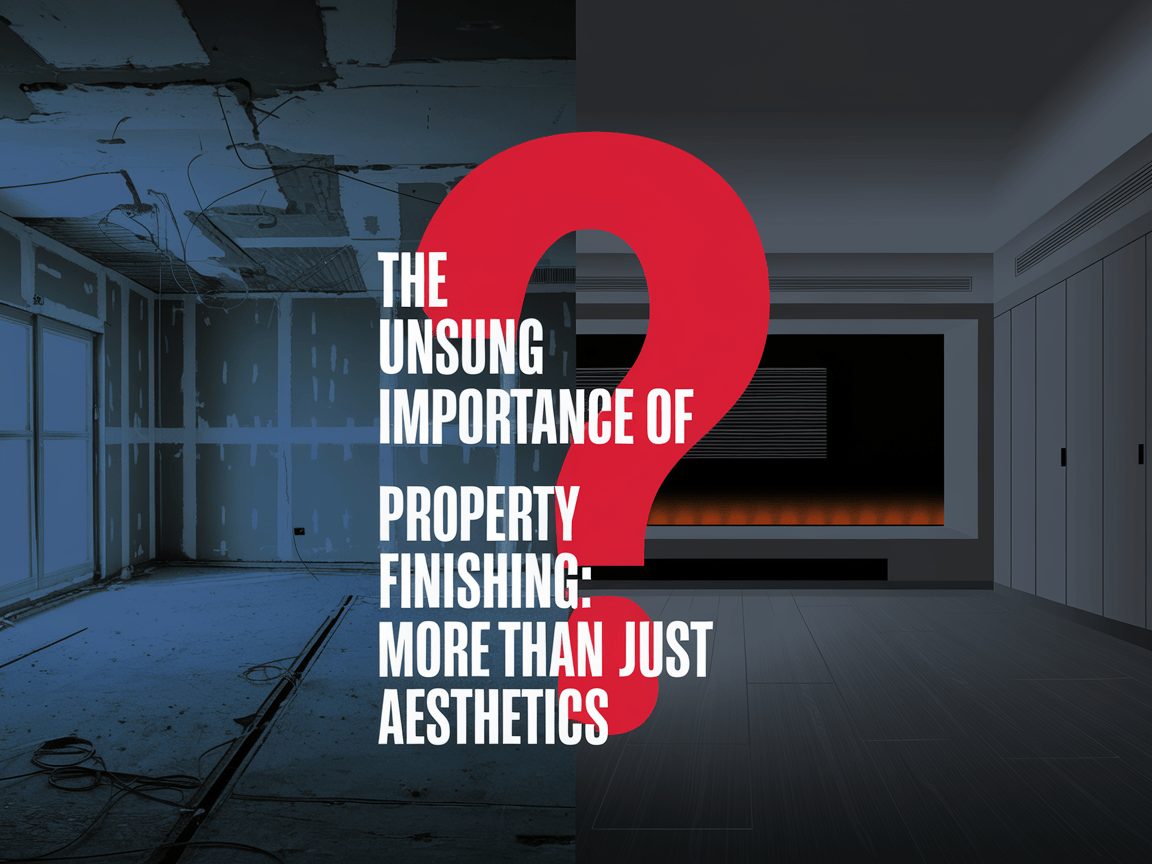
Many homebuyers overlook the importance of high-quality finishes in properties, assuming they will renovate later or that tenants won’t pay more for premium materials. However, poor finishes can lead to costly premature renovations, reduced rentability due to unattractive units, safety hazards like rust or broken tiles, pest infestations from water seepage and gaps, and poor noise insulation. New launch properties with inferior finishes can result in unexpected expenses soon after purchase. For landlords, good finishes improve tenant appeal and reduce vacancy risk. Buyers should consider these hidden costs and risks when deciding to buy or sell property. A strategic, data-driven approach with expert advice can help navigate these challenges effectively.
Homebuyers often prioritize practicality, sometimes leading to a dismissive attitude towards the finer details of a property’s finishing, such as tiling, countertops, or light fixtures. Many believe developers should stick to basics, assuming they’ll simply renovate everything to their taste, or, if they are landlords, that tenants won’t pay more for premium materials. However, the quality of a property’s finishing holds often-overlooked significance.
A common adage in interior design states, “buy cheap, buy twice.” This rings true for property finishes. In Singapore’s tropical climate, inexpensive laminate flooring can warp quickly, and cheap cabinetry or countertop laminates may peel as adhesives fail. Affordable plastic faucets, initially appealing, often show wear and tear within months. Similarly, low-quality floor tiles can loosen or crack, sometimes within the first five years of occupancy.
A key advantage of purchasing a new launch property is its “ready-to-move-in” condition, saving buyers from the renovation costs associated with older resale units. However, if a new unit features inferior finishing, buyers might face the double burden of a higher initial price and unexpected, costly renovations within a year or two.
While it’s debatable how much higher-quality finishes directly impact rental yield (the property’s cost versus rental income), their effect on rentability (ease of finding and retaining a tenant) is often undeniable.
A landlord might argue that a tenant won’t pay more for a golden tap. However, if a prospective tenant encounters patchy paint, peeling laminates, or a scuffed floor upon viewing, they might be immediately deterred. It’s generally easier to persuade someone to pay slightly more for an aesthetically pleasing unit than to convince them to settle for one they find unsightly. Moreover, in a competitive market, the quality of finishes can act as a crucial tie-breaker, swaying a tenant towards your unit over a similarly priced and located alternative. Vacancy, after all, is far more detrimental than a slightly lower yield.
Beyond aesthetics, poor quality finishes can pose tangible safety risks. The infamous “broken glass in the shower” is a well-known example in Singapore, but other hazards exist. Metal surfaces on towel holders, grab bars, or window frames can tarnish or rust, potentially causing cuts. Particle board or plywood splinters around cabinet or countertop edges can injure someone brushing past. Even fragmented floor tiles can lead to cuts or falls. While Singaporeans generally expect safe built environments, a relaxed attitude towards material quality can sometimes lead to preventable injuries.
Substandard finishes can inadvertently create environments conducive to pests. Poorly sealed tiles, improperly sloped floors that retain water, or inferior plumbing can lead to water seepage. Water accumulation, especially in a tropical climate, quickly attracts cockroaches, encourages mosquito breeding, and other vermin. This issue can be particularly surprising in new units, where occupants assume pest problems are confined to older, poorly maintained properties.
Gaps and cracks from inadequately installed fixtures (including ceiling lights) or doors with excessively wide gaps at the bottom provide easy access for rodents and other pests. Similarly, ill-fitting skirting boards, tiles, or cabinetry offer ideal hiding spots. Ground-floor units and larger properties, where it’s harder to inspect every nook, face an even higher risk, making meticulous finishing all the more critical for these types of units.
The acoustic properties of a unit are often imperceptible in a show flat. Inexpensive partitions, thin doors, or poorly constructed false ceilings can appear visually appealing and expensive. However, their true compromise lies in the unit’s acoustics. This makes it challenging to detect in new launches unless one has expertise in material science.
Upon moving into a finished unit, the lack of solid-core doors, textured finishes, or acoustic glass becomes immediately apparent. Road noise, for example, might be unexpectedly loud, even on higher floors. Similarly, sounds from neighbors, such as piano practice or tuition lessons, might be heard at disconcertingly high volumes. While these issues are often rectifiable by a competent contractor, incurring additional renovation costs so soon after moving in is rarely desirable. It’s important to note that such acoustic deficiencies are typically not considered “defects” by developers, as the construction might be perfectly executed, merely utilizing materials with poor soundproofing qualities.
If you’re reading this, you must be trying to figure out the best course of action right now: is it the right time to buy or sell?
It’s difficult to give an exact answer since everyone’s situation is unique and what works for one person may not necessarily work for you.
I can bring you a wealth of on-the-ground experience and a data-driven approach to provide clarity and direction. From beginners to experienced investors, our top-down, objective approach will help you on your real estate journey.
I can help you by:


You May Also Like …






















A password will be e-mailed to you