
Fraud Blocker
Your search results

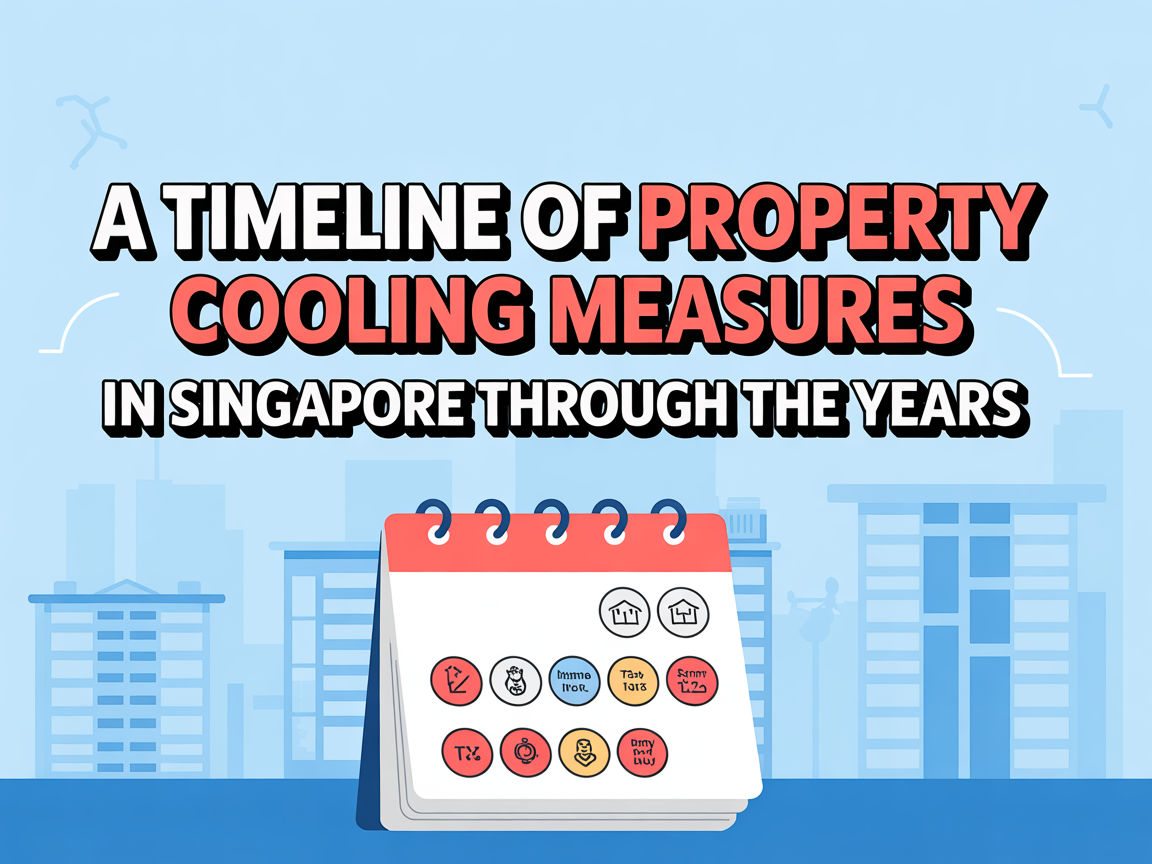
A Timeline of Property Cooling Measures in Singapore Through the Years

Posted by Jayson Ang on August 6, 2025
| 0

TLDR

Since 2009, Singapore has implemented over 15 rounds of property cooling measures to curb speculation and keep homes affordable. These include tightening loan-to-value (LTV) ratios, raising Additional Buyer’s Stamp Duty (ABSD), introducing the Total Debt Servicing Ratio (TDSR), shortening loan tenures, and imposing higher taxes on foreign buyers and those with multiple properties. Despite these steps, both HDB and private home prices have risen sharply—by about 88% and 106% respectively. The latest measures in August 2024 lowered the LTV for HDB loans to 75%, matching bank loans, and increased housing grants to support buyers. Whether to buy, sell, or wait depends on individual goals and market conditions. The key takeaway: cooling measures may slow price growth, but long-term price appreciation remains resilient in Singapore’s property market.

Since 2009, there have been at least 15 property cooling measures implemented in Singapore.

Throughout the years, the Government has rolled out multiple rounds of property cooling measures to ensure that homes remain affordable and to mitigate speculation in Singapore’s real estate market.

Nevertheless, both HDB flats and private properties have seen significant price increases since 2009. Resale HDB flats have risen approximately 87.9% since that year, while private property prices have surged by 106.1% over the same timeframe.

The most recent set of property cooling measures was announced during Prime Minister Lawrence Wong’s first National Day Rally speech in 2024, where he lowered the Loan-to-Value (LTV) ratio for HDB flats from 80% to 75%, while also increasing the Enhanced CPF Housing Grants (EHG) for homebuyers.

September 2009: Removal of Interest Absorption Scheme (IAS) and Interest-Only Scheme (IOS)

The primary aspects of Singapore’s property cooling measures, set against the backdrop of the Global Financial Crisis, included the elimination of the Interest Absorption Scheme (IAS) and the Interest-Only Scheme (IOS).

The Interest Absorption Scheme (IAS) permitted property purchasers to postpone loan instalments after making an initial downpayment until the completion of their units. Before this completion, only interest payments were required by the bank, which were covered by the developers.

In a similar vein, the Interest-Only Scheme (IOS) is a type of home loan that does not necessitate repayments on the principal amount.

For properties that were not yet completed, the interest-only period was generally provided until the properties received a Temporary Occupation Permit (TOP).

February 2010: Seller’s Stamp Duty Was Introduced; LTV Limits Lowered

A Seller’s Stamp Duty (SSD) was implemented on all residential properties and lands acquired on or after 20 February 2010, and resold within a year of purchase. The rates are as follows:

  •  1% on the first $180,000
  •  2% on the subsequent $180,000
  •  3% on the remaining amount

Additionally, the Loan-to-Value (LTV) limits were reduced from 90% to 80% for all bank home loans, encompassing private residential properties, Executive Condominiums (ECs), HUDC flats, and HDB flats, including DBSS flats.

August 2010: Increase Seller’s Stamp Duty From 1 Year To 3 Years; More Restrictions For Existing Property Owners

The Seller’s Stamp Duty (SSD) will now apply to properties sold within a period of 3 years rather than the previous 1 year.

Additionally, property purchasers with an existing home loan are required to make a minimum cash payment of 10%, up from the previous 5%, and their loan-to-value ratio (LTV) will be reduced from 80% to 70%.

January 2011: Holding Period For SSD Raised to 4 Years; SSD Rates Raised;

The duration for the Seller’s Stamp Duty (SSD) has been extended from 3 years to 4 years. The SSD rates have also been increased to:

  • 16% if sold during the first year
  • 12% if sold in the second year
  • 8% if sold in the third year
  • 4% if sold in the fourth year

December 2011: Additional Buyer’s Stamp Duty (ABSD) Introduced

One of the most costly property cooling measures was implemented in December 2011, targeting foreigners and non-individuals with a 10% tax; Singapore Permanent Residents acquiring their second residential property faced a 3% tax; and Singaporeans purchasing their third residential property were also subjected to a 3% tax.

October 2012: Maximum Loan Tenure Capped At 35 Years; Tighter LTV For Loans Exceeding 30 Years

A new maximum limit of 35 years has been established for all residential property loans, applicable to both individuals and non-individuals. For those refinancing, the total of the new loan duration and the years since the initial loan was issued cannot exceed 35 years.

Additionally, the Loan-to-Value (LTV) ratio has been decreased for individuals with a loan term exceeding 30 years or those who would be over 65 years old by the time their loans are repaid:

  • For borrowers without an existing property loan: 60% (down from 80% previously)
  • For borrowers with current home loans: 40% (down from 60% previously)
  • For non-individual borrowers, the LTV ratio has been reduced to 40% (down from 50% previously)

January 2013: ABSD Raised; LTV Limits Tightened

ABSD rates have been increased universally:

  • Singaporeans purchasing their second residential property: 7%
  • Singaporeans acquiring their third and any further residential property: 10%
  • PRs buying their first residential property: 5%
  • PRs purchasing their second and subsequent residential properties: 10%
  • Foreign buyers acquiring any residential property: 15%
  • Non-individual purchasers of any residential property: 15%

Additionally, LTV limits have also been tightened:

  • For borrowers obtaining a second housing loan: 50% (down from 60% previously); if the loan tenure exceeds 30 years or if the borrower is over 65, then the LTV will be 30%
  • For borrowers taking out a third or subsequent housing loan: 40% (reduced from 60% previously); if the loan tenure exceeds 30 years or if the borrower is over 65, then the LTV will be 20%
  • For non-individual borrowers: 20% (decreased from 40% previously)
  • Borrowers securing second or subsequent home loans are required to pay at least 25% in cash.

June 2013: Introduction of TDSR Framework

The Total Debt Servicing Ratio (TDSR) accounts for all debts when assessing the amount individuals are eligible to borrow for property purchases. This threshold is established at 60% of their gross monthly income.

March 2017: SSD Reduced to 3 Years Period

Due to a notable decline in property sales within the four-year timeframe, the Government has shortened the SSD period to three years, down from the previous four years. The updated SSD rates are as follows:

  • 12% if sold within the first year
  • 8% if sold in the second year
  • 4% if sold in the third year

July 2018: Raising ABSD; Tightening LTV Ratio

The ABSD rates have been raised as follows:

  • Singaporean citizens purchasing their second residential property: 12%
  • Singaporean citizens acquiring their third and any further residential properties: 15%
  • Permanent residents buying their second and any subsequent residential properties: 15%
  • Foreign buyers of any residential property: 20%
  • Non-individual entities purchasing residential properties: 25%
  • Developers acquiring properties for housing development: an additional 5% ABSD

LTV limits for bank loans have also been tightened:

  • Individuals securing their first home loan: 75% (down from 80% previously); 55% if the loan tenure exceeds 30 years or continues past the age of 65
  • Individuals obtaining a second home loan: 45% (down from 50% previously); 25% if the loan tenure exceeds 30 years or continues past the age of 65
  • Individuals taking out a third and any subsequent home loans: 35%; 15% if the loan tenure surpasses 30 years or extends past the age of 65
  • Non-individual borrowers: 15%

December 2021: Yet Higher ABSD; Borrowing Limit Was Tightened

The ABSD rate has been raised once more:

  • Singaporeans purchasing their second residential property: 17%
  • Singaporeans acquiring their third and any subsequent residential properties: 25%
  • Permanent Residents (PRs) buying their second residential property: 25%
  • PRs purchasing their third and further residential properties: 30%
  • Foreigners buying any residential property: 30%
  • Non-individuals acquiring residential property: 30%

Additionally, the TDSR has been tightened from 60% to 55%, and the LTV ratio for HDB loans has been decreased from 90% to 85%.

September 2022: Borrowing Limits Tightened; 15-Month Wait Out Period for Private Property Owners Who Want To Buy HDB Flats; Lower LTV Limit For HDB Flats

A higher interest rate was presumed for evaluating borrowers’ capacity to repay, which was used to calculate the TDSR and MSR:

  • For residential properties: 4% per annum.
  • For non-residential properties: 5% per annum.
  • Additionally, HDB established a minimum interest rate of 3% for determining qualifying loan amounts.

The LTV limit for HDB flats has also been reduced from 85% to 80%.

April 2023: ABSD Revised Upwards Again

The Additional Buyer’s Stamp Duty (ABSD) has been increased once more. Now, foreigners are required to pay a 60% ABSD.

  • Singaporean citizens purchasing their second residential property: 20%
  • Singaporean citizens acquiring their third and any subsequent residential properties: 30%
  • Permanent Residents (PRs) buying their second residential property: 30%
  • PRs purchasing their third and further residential properties: 35%
  • Foreign buyers of any residential property: 60%
  • Non-individual entities acquiring residential property: 65%

August 2024: LTV Limit For HDB Loan Lowered To Be Same As Bank Loan

In the most recent set of property cooling measures, the loan-to-value (LTV) limit for HDB loans has been reduced to 75%, aligning it with the current rates for bank loans.

As noted at the beginning of the article, this adjustment was made alongside an increase in the Enhanced Housing Grant (EHG) to help homebuyers manage their downpayment without overextending their finances.

Should You Buy, Sell or Wait?

If you’re reading this, you must be trying to figure out the best course of action right now: is it the right time to buy or sell?

It’s difficult to give an exact answer since everyone’s situation is unique and what works for one person may not necessarily work for you.

I can bring you a wealth of on-the-ground experience and a data-driven approach to provide clarity and direction. From beginners to experienced investors, our top-down, objective approach will help you on your real estate journey.

I can help you by:

  1. Offering Strategic Real Estate Advice – I can help create a comprehensive plan to guide you through your property journey.
  2. Connecting Your Home with the Perfect Buyers – Through stunning visuals, an effective communication strategy, and an in-depth knowledge of the market, we’ll ensure your home is presented in the best possible way to fulfill your goals.

You May Also Like …


Top 5 Scenic Drives in Singapore
Mandarin Top 5

Top 5 Scenic Drives in Singapore

Singapore, a small yet bustling city-state, is well-known for its impressive skyline, diverse culture, and delicious food. However, not many...
Read More
The Sneaky Role of Property Appraisals in Shaping Singapore’s Home Prices
All Buying Tips Opinion

The Sneaky Role of Property Appraisals in Shaping Singapore’s Home Prices

TLDR When it comes to the real estate market in Singapore, understanding property valuations and the impact on mortgage loans...
Read More
Uncovering Hidden Details: Key Questions to Ask at a New Launch Condo Show Flat
All Buying Tips

Uncovering Hidden Details: Key Questions to Ask at a New Launch Condo Show Flat

TLDR Show flats can be impressive but may hide important details. Buyers should ask about room sizes, furniture fit, balcony...
Read More
What Is The Best Location To Purchase A House To Ensure Your Child Has The Highest Probability Of Attending A Well-Renowned Primary School?
All Buying Tips Opinion

What Is The Best Location To Purchase A House To Ensure Your Child Has The Highest Probability Of Attending A Well-Renowned Primary School?

TLDR Parents often seek homes within 1km of desired primary schools to increase enrollment chances. Consider oversubscription rates and population...
Read More
5 Homeowners Share Their Biggest Regrets Delaying Their Property Purchase in Singapore
Mandarin Top 5

5 Homeowners Share Their Biggest Regrets Delaying Their Property Purchase in Singapore

In the fast-paced and ever-evolving property market of Singapore, making a timely decision to purchase a property can make all...
Read More
5 Most Iconic Landmarks In Singapore’s Landscape
Mandarin Top 5

5 Most Iconic Landmarks In Singapore’s Landscape

Singapore's landscapes is renowned for its innovative and dynamic approach to urban development, boasting some of the most iconic landmarks...
Read More
Top 5 Best Urban Hiking Trails in Singapore
Mandarin Top 5

Top 5 Best Urban Hiking Trails in Singapore

Singapore, known as the Garden City, is a bustling metropolis that offers a multitude of parks and nature reserves for...
Read More
Top 5 Thai Restaurants in Singapore
Mandarin Top 5

Top 5 Thai Restaurants in Singapore

Singapore, a melting pot of cultures and cuisines, is a food lover's paradise. Among the myriad of dining options available,...
Read More
Top 5 Places to Watch the Sunset in Singapore
Mandarin Top 5

Top 5 Places to Watch the Sunset in Singapore

Singapore, a bustling city-state known for its modern architecture and vibrant culture, is also home to some of the most...
Read More
Top 5 Places to Try Durian in Singapore
Mandarin Top 5

Top 5 Places to Try Durian in Singapore

Durian, often referred to as the "King of Fruits," is a unique and polarizing delicacy in Southeast Asia. With its...
Read More
Beware! Spot These Warning Signs Before Making a Home Purchase!
All Blog Posts Buying Tips

Beware! Spot These Warning Signs Before Making a Home Purchase!

TLDR When purchasing a property in Singapore, it is crucial to thoroughly assess various aspects of the home to avoid...
Read More
Why Older Freehold Condominiums Are Losing Their Edge in En‑Bloc Deals (2025)
All Buying Tips Opinion Selling Tips

Why Older Freehold Condominiums Are Losing Their Edge in En‑Bloc Deals (2025)

TLDR Older freehold condominiums in Singapore are losing their edge in en‑bloc deals due to several structural shifts. Developers increasingly...
Read More
Beyond the Premium: Why Some Singaporean Homebuyers Steer Clear of Top-Floor Properties
All Buying Tips Opinion

Beyond the Premium: Why Some Singaporean Homebuyers Steer Clear of Top-Floor Properties

TLDR Top-floor condominium units in Singapore often come at a premium price and are associated with luxury, but they have...
Read More
Why Chinese Investors Should Not Be Deterred by ABSD: 5 Reasons
Buying Tips Mandarin Top 5

Why Chinese Investors Should Not Be Deterred by ABSD: 5 Reasons

Why Chinese Investors Should Not Be Deterred by ABSD: 5 Reasons Here are the top 5 reasons why Chinese investors...
Read More
5 Factors : The Benefits Of Investing In A Property With Good Access To Green Spaces In Singapore
Mandarin Top 5

5 Factors : The Benefits Of Investing In A Property With Good Access To Green Spaces In Singapore

Real estate investment has always been considered a sound investment decision, as it offers long-term growth potential and a reliable...
Read More
Great Reasons for Condo Owners to Sell upon Reaching TOP – A Guide to Sub-Sale Transactions
All Opinion Selling Tips

Great Reasons for Condo Owners to Sell upon Reaching TOP – A Guide to Sub-Sale Transactions

TLDR A recent sub-sale transaction in Midtown Modern set a new record with a 2-bedroom home selling at $3,150 psf....
Read More
5 Things to do When You Go For A Property Viewing In Singapore Part 2
Buying Tips Mandarin Top 5

5 Things to do When You Go For A Property Viewing In Singapore Part 2

5 Things to do When You Go For A Property Viewing In Singapore Part 2 Here are 5 more things...
Read More
Maximize Your Property Investment: 5 Questions to Ask Your Real Estate Agent in Singapore
Mandarin Top 5

Maximize Your Property Investment: 5 Questions to Ask Your Real Estate Agent in Singapore

Buying a property in Singapore can be a daunting task, especially for first-time buyers. It is important to have a...
Read More
Top 5 : Common Characteristics Of Singapore Condos That Make Them An Attractive Investment Opportunity For Foreign Buyers
Mandarin Top 5

Top 5 : Common Characteristics Of Singapore Condos That Make Them An Attractive Investment Opportunity For Foreign Buyers

Singapore, a thriving hub of business and commerce in Southeast Asia, has become an attractive destination for foreign investors looking...
Read More
The Secret Strategies of Singapore’s Property Tycoons: Lessons You Can Learn
Mandarin Top 5

The Secret Strategies of Singapore’s Property Tycoons: Lessons You Can Learn

The Singapore property market has always been a hot topic for both locals and foreign investors. With its stable economy,...
Read More
1 17 18 19 20 21 35

Compare Listings