

Why There’s No Perfect Time to Enter the Market
TLDR When it comes to property transactions, understanding the factors influencing rising prices is crucial. The pandemic has driven up...
Read More

TLDR
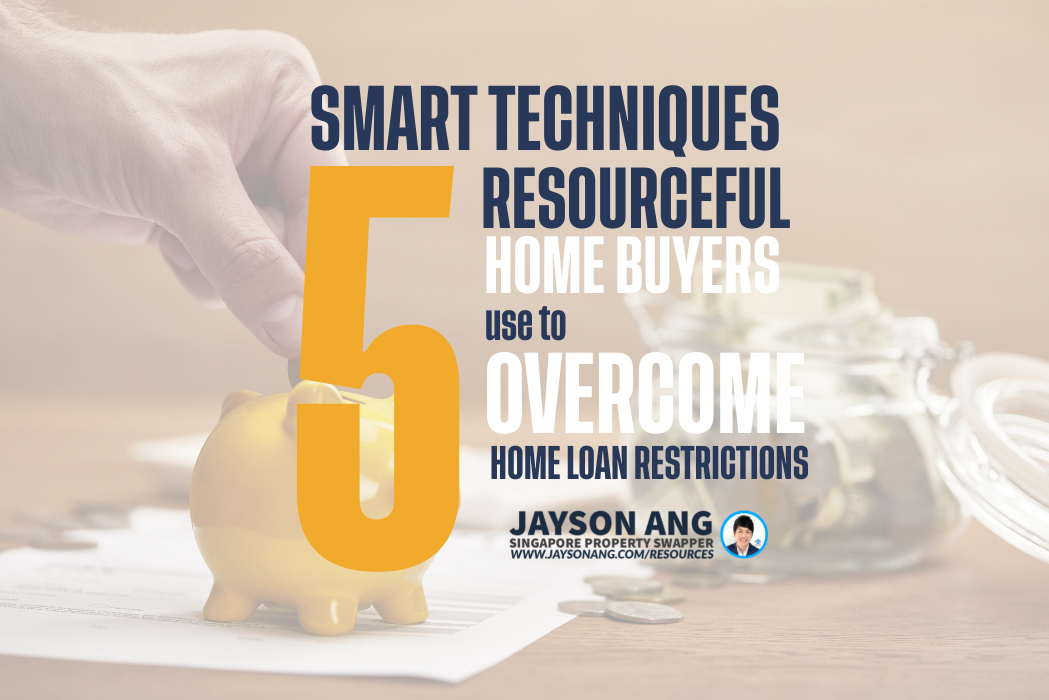
When it comes to navigating the complex world of home loans and property acquisition, it’s crucial to be aware of the potential risks and drawbacks associated with unconventional methods. Some tactics, such as using cash-out refinancing for indirect property purchases, artificially boosting property valuations, temporarily showing funds to increase assessed income, altering variable income sources, and seeking alternative financial institutions for down payment funds, may seem tempting but come with their own set of challenges.
These approaches could involve legal gray areas, financial risks, and potential consequences if not executed carefully. It’s always advisable to proceed cautiously and seek professional advice to ensure compliance with regulations and safeguard your financial well-being in the long run.
We are not experts in conveyancing law, so we cannot provide definitive information on the legality of bank loans. However, as home prices continue to rise, some homebuyers have started using unconventional methods.
Some of these methods may exist in a gray area or are common knowledge within the industry, while others may be outright illegal. If someone advises you to employ any of these tactics, it is important to exercise caution as there is always a drawback involved.
While you may be able to secure the loan you desire, it could come at a higher cost to you in the long run.
Cash-out refinancing represents a unique loan opportunity that is strictly limited to private assets. Generally, it permits one to acquire funds equivalent to a certain proportion of the property’s worth, often limited to 75%, excluding the amount utilized from your CPF.
For instance, owning a property valued at $1.5 million and utilizing $500,000 from CPF might enable you to obtain $625,000 through cash-out refinancing.
The precise terms and interest rates are subject to variability among different banks. This method essentially allows you to monetize your property without having to relinquish ownership. However, it’s crucial to remember that failure to repay the loan could lead to foreclosure as your property serves as collateral.
One fundamental rule associated with cash-out refinancing prohibits the utilization of these funds to procure another property. Yet, some have found a way around this by investing the loan amount into other forms of assets such as stocks or bonds.
Subsequently, selling these assets provides them with the funds necessary to purchase another property. Technically, they haven’t violated the rules since the original loan wasn’t directly used for the property acquisition.
However, this practice of sidestepping limitations could potentially be construed as fraudulent, depending on whether the lender takes note and decides to pursue legal action.
Financial experts have warned us about an inherent risk involved in this process. The intermediary assets bought with the loan could plummet in value before they’re sold, leading to potential losses.
Also, it’s essential to understand that cash-out refinancing is still governed by TDSR restrictions.
Presently, the limit for a home loan stands at 75% of the property’s price or its estimated value – whichever is greater. However, this does not account for other factors like age, loan tenure, lease decay, and so forth, which could potentially lower the maximum limit.
Some potential homeowners face a hurdle when it comes to making the initial cash payment. This is particularly challenging when there’s a significant disparity between the seller’s quoted price and the property’s actual evaluation. For instance, if a seller demands $1.8 million for a property valued at $1.7 million, this would necessitate an additional $100,000 in cash.
To circumvent this issue, some buyers attempt to secure a higher valuation. This typically involves leveraging a mortgage broker, or possibly several, to scour various banks until they discover one that will agree to the highest possible valuation.
Although this strategy can boost their loan quantum, it often results in a heftier interest package. The bank that consents to the highest valuation might not offer the best rates at that moment; therefore, over a long duration, the buyer may end up shouldering a substantial financial burden.
Despite this, some buyers perceive it as a worthy risk. We’ve encountered instances where they argue that with a loftier valuation, they could potentially secure a larger loan against the property in the future (as mentioned earlier), or expect a better return upon resale. However, these outcomes are not guaranteed, considering that future refinancing efforts might necessitate a fresh valuation.
This is kind of an inside tip that’s been floating around in the housing market for quite some time. When you’re thinking about getting a home loan, there’s this thing called the Total Debt Servicing Ratio (TDSR) that you have to consider. Basically, it means that all your debt payments per month, including your home loan, can’t be more than 55% of what you earn monthly.
Let’s say you go over this limit, then you’ve got to cut back on the amount you borrow, probably by making a larger initial payment until your monthly dues fall within the limit. However, not everyone has got that kind of cash just lying around.
Here’s where some banks come in handy. They might be willing to look at your income as a bit more if you can prove to them that you’ve got the dough. The terms and conditions are different with each bank, but let’s say you put $100,000 into the bank, they might see your income as having an extra $1,000 per month. Keep in mind though, you’ll need to show them the money twice: once before securing the OTP and once before everything is finalized.
The funny thing is, nobody really investigates where this money comes from. Some banks allegedly don’t even mind if you take out the money right after. So, it’s possible for someone to borrow the money from a trusted source like their parents, park it in the bank temporarily to get past the TDSR, then once the loan gets the green light and the house is purchased, they take the money out and give it back.
For those with fluctuating earnings, such as rental income or sales commissions, banks typically shave off 30 per cent from the income they evaluate. This usually means reducing your latest IRAS tax form-stated income by 30 per cent.
This can pose a challenge in meeting TDSR thresholds, prompting some folks to inflate their evident earnings. Some tactics are straightforward, like upping their reported income (therefore paying more taxes) the year prior to the loan application; but there are craftier ways too. Some borrowers might even alter their variable income sources, like tweaking their portfolio assets to hold more fixed-income items.
The success of these tactics depends on the particular bank, so it’s always a good idea to consult a mortgage broker first. For instance, some banks disregard stock dividends and bond coupons when calculating TDSR, rendering any reallocation pointless.
In more extreme cases, people might get family members or friends to pretend to rent their property at inflated rates, or establish bogus companies that allegedly pay them chunky fixed wages. We’re no legal whizzes, but we reckon most of these tactics would rattle your lawyer, and we strongly discourage such practices.
According to the MAS Notice 632 ruling, banks are restricted from offering loans meant to cover the minimal initial payment for a home loan.
To break it down, the first payment on a property is typically around 25% of the overall cost. This includes an upfront cash payment of five percent, followed by the remaining 20% that can be shelled out through a combo of cash or CPF.
Now here’s where it gets tricky. The initial payment seems to be the stumbling block for most buyers. For instance, if you find yourself giving back all your sales proceeds to CPF (we’re talking about a negative cash sale here), you might struggle to cough up the five percent in cold hard cash.
So what do people do? Well, as a last-ditch effort, some turn to non-bank financial institutions. Yes, they might be willing to offer the loan, but beware – their interest rates can be sky-high compared to regular banks.
Then there are those who try to pull a fast one, like applying for two loans nearly simultaneously. They’re hoping that when the home loan is being checked out, the other loan application won’t show up in credit reports just yet. But let’s be clear, this is a gamble at best.
And even if someone manages to play this game and win, it’s worth taking a step back and thinking hard. If you’re that strapped for cash, it might be smarter to save up a bit longer before diving into homeownership.
If you’re reading this, you must be trying to figure out the best course of action right now: is it the right time to buy or sell?
It’s difficult to give an exact answer since everyone’s situation is unique and what works for one person may not necessarily work for you.
I can bring you a wealth of on-the-ground experience and a data-driven approach to provide clarity and direction. From beginners to experienced investors, our top-down, objective approach will help you on your real estate journey.
I can help you by:


You May Also Like …






















A password will be e-mailed to you