
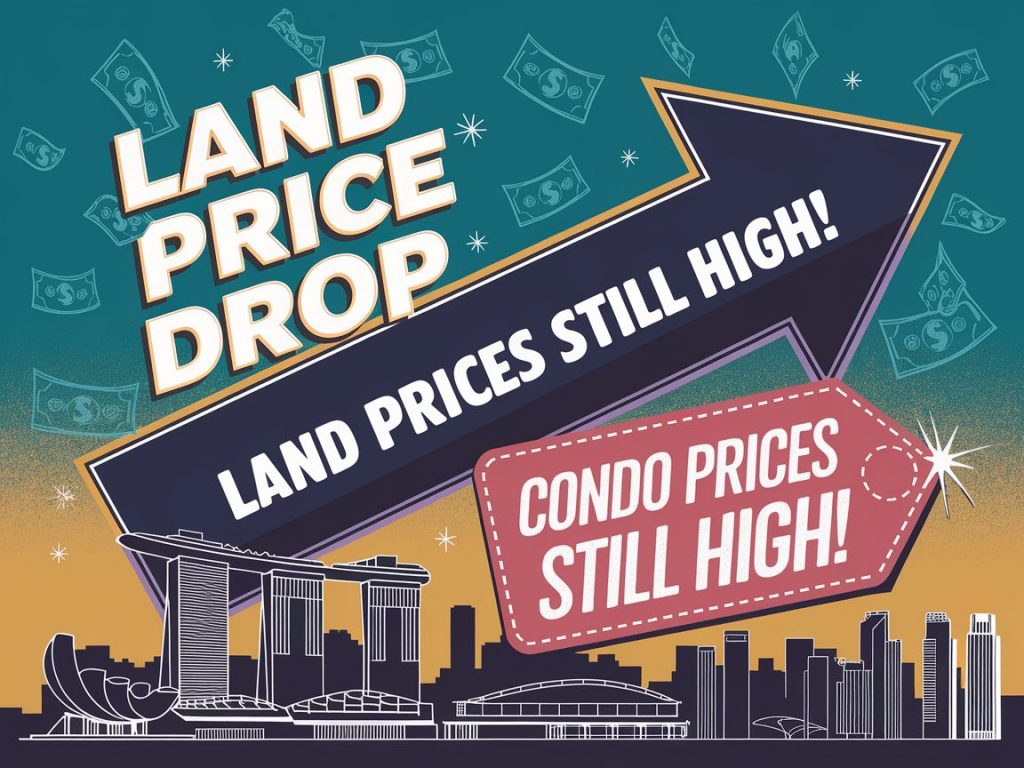
The Myth of Cheaper New Condos from Lower Land Prices in Singapore
TLDR Lower Government Land Sales (GLS) prices do not automatically lead to cheaper new launch condos in Singapore. Developers base...
Read More


TLDR
The pandemic-induced recession has surprisingly boosted property prices in Singapore, defying conventional economic trends. Factors like cost-push inflation, limited housing supply, and excess liquidity in the market are driving prices up. Despite predictions of a looming recession, property prices are expected to continue rising due to these intertwined factors.
Recent news paints a grim picture of the current state of the global economy; Covid-19 is still rampant, monkeypox has entered the picture, a war is waging between Russia and Ukraine, energy crisis is looming, and food and oil prices have been rising. To make matters worse, predictions about an upcoming recession in the U.S. have been circulating, with the potential to have far-reaching implications that extend beyond the US borders and onto other countries, similar to the Covid-19 pandemic. It’s clear that the global economy is far from healthy.
The US Consumer Price Index (CPI) soared to an astonishing 9.1% in June 2022 – the biggest jump since November 1981 – indicative of the rampant inflation that is ravaging the country. The US Federal Reserve has adopted an aggressive policy to combat the situation by increasing interest rates, but if it’s not managed properly, it could lead to a sharp decline in economic activity and a possible recession.
Bank of America economists are predicting that a mild recession may occur during the remainder of 2022, leaving Singapore in a situation of uncertainty as to whether it too shall experience the same economic darkness.
The Global Financial Crisis of 2008, a result of a plunge in housing prices and a financial crisis in the U.S, triggered the Great Recession, which had a rippling effect on economies worldwide. In Singapore, the Urban Redevelopment Authority (URA) Housing Index recorded a 8 percent drop in housing prices over a period of six months – a clear indication of a recession, which is defined as a sustained reduction in a country’s Gross Domestic Product (GDP).
Considering the close correlation between the housing market and the economy, it is foreseeable that a recession will have a significant influence on the real estate sector.
The 2020 pandemic recession brought an interesting turn of events – instead of property prices plummeting, as would typically occur during an economic downturn, prices instead rose! Financial instability, job losses, and a higher rate of unemployment were all hallmarks of the recession, yet people seemed more willing to purchase a house than before, creating a higher demand and consequently, a rise in value.
The COVID-19 pandemic has resulted in an unexpected boom in the property markets across the globe – with Singapore experiencing a dip in private home prices but quickly recovering, even growing 2.2 percent last year! Demonstrating remarkable resilience in the face of the recession, this boom has been observed in stark contrast to the Global Financial Crisis of 2008, where the housing market was one of the main variables causing the downfall.
It is evident that each recession is distinct in terms of its nature and variables, thus resulting in varying impacts on the property market.
According to the Straits Times and CNA, private home prices rose 3.5 percent in the second quarter of 2022, which was an impressive five times more than the 0.7 percent increase from the previous quarter. Despite the looming recession, property prices are likely to keep going up – but why? Let’s take a closer look at the current circumstances and variables.
Have you observed that prices for goods and services have gone up in recent years? Remember when chicken rice became more expensive due to the increase in chicken prices? That is cost-push inflation at work! Production costs – such as raw materials, transportation and wages – can rise, causing prices to increase for the same goods and services. So, if the cost of labour and/or raw materials soar, you as a consumer have to pay more for the same items.
The ever-increasing cost of oil due to the Russian-Ukraine war has had a trickle-down effect, resulting in an increase in petrol prices. This cost-push inflation, which is driven by higher production costs, is something the world has seen become more and more prevalent, including in the property market. The pandemic has only exacerbated the situation, with supply chain disruptions driving up the price of essential raw materials for building, particularly steel, which skyrocketed in 2021, consequently raising construction costs.
Singapore’s already pricey land costs due to scarcity, paired with increased production costs, spell even more trouble for developers who, in order to maintain their margins, will inevitably pass on the costs to those hoping to buy a home – a direct cause of skyrocketing property prices, despite an impending recession.
The property market’s current demand-pull inflation has come as a surprise, as nobody could have predicted the immense demand for flats during the COVID-19 pandemic. With supply struggling to keep up with the relentless demand, prices have soared due to this cost-push inflation. In response, cooling measures such as the higher Additional Buyer’s Stamp Duty (ABSD) rate have been implemented to dissuade foreigners and developers from buying properties; yet the demand persists.
The ever-increasing demand for housing due to the influx of first-time buyers and those looking to upgrade their HDBs has been met with an alarmingly low supply, pushing property prices to an all-time high.
The Government Land Sales (GLS) Programme had brought a sense of moderation to the land supply over the two years preceding the Covid-19 pandemic, which, combined with the surging demand for housing, caused a notable dip in land availability. Though ChannelNewsAsia reported the HDB’s plans of introducing up to 23,000 new Build-to-Order (BTO) flats annually for the next two years, it is important to remember that the effects of this increase in supply will not be seen immediately.
The Covid-19 pandemic has disrupted the supply chain of housing projects and caused delays in construction progress. This has resulted in a major decrease in the housing supply which, in turn, has caused property prices to skyrocket.
To combat the adverse effects of the pandemic and the resulting monetary inflation, the U.S. implemented a dual approach of both monetary and fiscal policies, injecting a whopping $5 trillion into the economy to increase the money supply and help offset the imbalance between production and circulation of funds.
If the money supply in an economy is increased from $500 to $1000, while the amount of apples stays the same at 500, the value of money has decreased, meaning you now need double the amount of money to purchase the same amount of apples as before: two apples previously could have been bought for $2, but now you can only purchase one.
With the money supply raised during the pandemic, the United States is feeling the pinch of inflation just like many other countries across the world. Despite the Monetary Authority Singapore’s attempt to strengthen the Singaporean currency, the forex markets remain turbulent and it remains to be seen if our currency will appreciate or depreciate in the near future.
In addition, the vast wealth of the market has attracted a huge influx of high-net-worth individuals to Singapore. This is evident in the remarkable growth of local family offices – in fact, 2020 saw the establishment of a staggering 400 family offices in Singapore.
As Hong Kong is experiencing uncertainty by the global community, savvy businesspeople, investors and expats are turning their attention to Singapore, recognising its unique position as an Asian-Pacific gateway and financial hub. These investors are bringing funds and investments to Singapore, creating an influx of money and demand – driving up property prices despite the recent rise in interest rates.
In today’s economy, it’s obvious that the relationship between cost-push inflation, Singapore’s scarce housing inventory, and the oversupply of money in the market is highly intertwined. This means that a reduction in property prices in the near future is highly improbable.


You May Also Like …















A password will be e-mailed to you