Fraud Blocker
Your search results

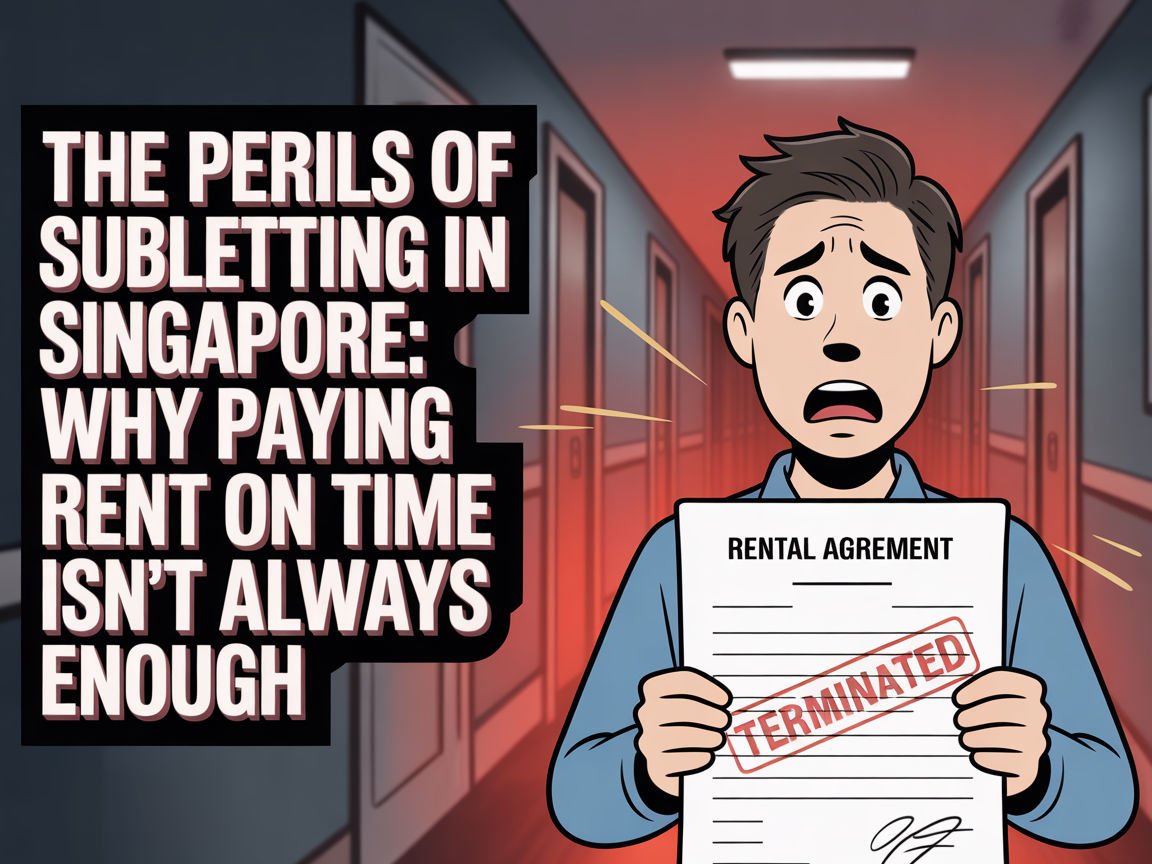
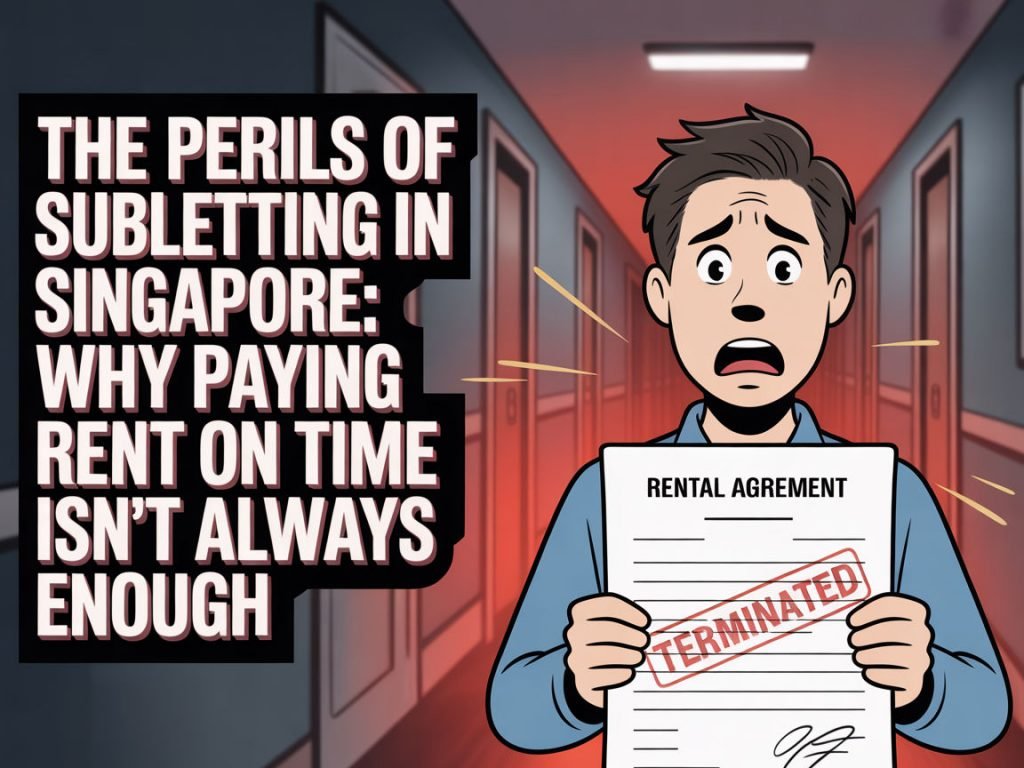
The Perils of Subletting in Singapore: Why Paying Rent On Time Isn’t Always Enough

Posted by Jayson Ang on May 3, 2026
| 0

TLDR

Subtenants often mistakenly believe that paying rent consistently guarantees security. However, their rights are limited since the main tenant holds the primary lease with the landlord. The Maxi Coffee Bar case illustrates the risks: despite paying rent, the subtenant was abruptly evicted when the main tenant broke the lease and failed to pay the landlord. Similar risks exist in residential subtenancies, especially when main tenants sublet without landlord permission or disappear, leaving subtenants vulnerable to eviction without compensation and minimal notice. Singapore law prioritizes landlords’ rights, making legal recourse difficult for subtenants. While subletting is common, due diligence is critical—subtenants should verify the main tenant’s relationship with the landlord and review tenancy agreements carefully. Whenever possible, securing a direct lease with the property owner is safer.

A common misconception among subtenants (individuals who rent from a main tenant rather than directly from the landlord) is that consistent rent payments guarantee security. However, the dynamics between the main tenant and the landlord are often opaque to the subtenant, and any breakdown in that relationship can have severe repercussions. Understanding these risks is crucial before entering a subtenancy agreement.

A Commercial Subtenancy Nightmare: The Maxi Coffee Bar Case

Maxi Coffee Bar, a well-known cafe on Ann Siang Hill since 2020, operated as a subtenant. This arrangement is not uncommon for certain businesses, particularly in the F&B sector. However, on May 31st, the main tenant abruptly broke their lease.

Despite Maxi Coffee Bar meticulously paying rent to the main tenant, they were informed they had to vacate. A cafe spokesperson revealed, “We submitted transaction evidence that we had been paying our rent. But we realised that this rent was not forwarded to the landlord by our main tenant.” The landlord’s subsequent actions involved a tumultuous series of revoked and shortened extensions, culminating in a mere two-day notice to vacate, delivered mid-service on June 17th.

The cafe acknowledged the landlord’s actions, while harsh, were likely legal, stating they were “simply and tragically collateral damage.” By the time news outlets reported Maxi’s impending closure, the cafe was already packing up, highlighting the vulnerability of subtenants.

Residential Subtenancies Face Similar Risks:

The most common issue in residential subletting arises when main tenants lack the landlord’s explicit permission to sublet. Discussions on platforms like Reddit frequently feature such scenarios. It’s crucial to note that HDB flats cannot be sublet by tenants, so any such offers for non-private properties should be viewed with extreme caution.

Beyond unauthorized subletting, situations mirroring the Maxi Coffee Bar incident can occur when a main tenant defaults or disappears. The author recounts a personal experience:

Between 2014 and 2017, the author rented out a condo unit. Initially, the tenant, a foreign student, actively found reliable flatmates from her school. Upon graduation, she sought to remain, with an agreement to become the main tenant and sublet to others. However, a breakdown in trust occurred. The main tenant ghosted the author and vanished, having collected rent from two subtenants but failing to forward it. It was later discovered she was at risk of overstaying her visa after losing her job.

This incident left the two subtenants in a precarious position. One was a student facing exams, the other had just started a new job. While the author managed to work out a compromise (accepting a financial loss), the subtenants faced the immediate threat of homelessness and disruption.

Key Risks for Subtenants:

When a subtenancy goes awry, several critical issues emerge:

  • Limited Rights: Under Singapore law, landlords (and HDB/URA) hold primary authority. Subtenants are often viewed as third-party occupants, with rights largely confined to the specific terms of their contract with the main tenant. These terms cannot contradict the original lease. Beyond the contract, subtenants typically have very limited legal recourse.
  • No Compensation for Eviction: If the main tenant lacked authorization to sublet, or breached the original lease in any way, subtenants can be evicted without compensation, even if they have diligently paid rent to the main tenant.
  • Minimal Notice Period: As demonstrated by the Maxi Coffee Bar case, subtenants might face eviction with little to no notice. This can lead to immediate housing crises, requiring expensive temporary accommodation (e.g., hotels) and posing challenges for storage of belongings.

Even if a subtenant were to pursue costly legal action, the immediate financial and emotional distress of being unhoused would remain.

Should You Avoid Subletting Entirely?

Not necessarily. Subletting is a common practice in Singapore’s private property market. Many landlords rent units to co-living companies that then sublet rooms, often with positive outcomes for all parties.

However, if you choose to be a subtenant, due diligence is paramount. Thoroughly vet the main tenant, inquire about their relationship with the landlord, and meticulously review all tenancy terms. While these actions have limitations, they are essential. Whenever possible, it is always safer to enter into a direct tenancy agreement with the property owner.

Should You Buy, Sell or Wait?

If you’re reading this, you must be trying to figure out the best course of action right now: is it the right time to buy or sell?

It’s difficult to give an exact answer since everyone’s situation is unique and what works for one person may not necessarily work for you.

I can bring you a wealth of on-the-ground experience and a data-driven approach to provide clarity and direction. From beginners to experienced investors, our top-down, objective approach will help you on your real estate journey.

I can help you by:

  1. Offering Strategic Real Estate Advice – I can help create a comprehensive plan to guide you through your property journey.
  2. Connecting Your Home with the Perfect Buyers – Through stunning visuals, an effective communication strategy, and an in-depth knowledge of the market, we’ll ensure your home is presented in the best possible way to fulfill your goals.

You May Also Like …

The Ultimate Checklist for Work-From-Home Homebuyers in Singapore: Beyond the Basics
All Buying Tips

The Ultimate Checklist for Work-From-Home Homebuyers in Singapore: Beyond the Basics

TLDR Remote work has changed what makes an ideal home—buyers now need to prioritize productivity and well-being alongside location and...
Read More
Dual-Key Condo: Analysing The Pros And Cons
All Buying Tips Opinion

Dual-Key Condo: Analysing The Pros And Cons

TLDR for "Dual-Key Condo: Analysing The Pros And Cons" When considering dual-key condo units, it's important to weigh the advantages...
Read More
Neighbourhood Estate Guide: Is Holland Village the Most Charming and Relaxed of HDB Estates?
All Buying Tips Opinion

Neighbourhood Estate Guide: Is Holland Village the Most Charming and Relaxed of HDB Estates?

According to the 2014 master plan, Holland Village was given the prestigious title of an "identity node," confirming its status...
Read More
Don’t Get Scammed: The Top 5 Red Flags To Watch Out For In Singapore’s Property Market
Buying Tips Mandarin Top 5

Don’t Get Scammed: The Top 5 Red Flags To Watch Out For In Singapore’s Property Market

Don't Get Scammed: The Top 5 Red Flags To Watch Out For In Singapore's Property Market When it comes to...
Read More
Top 5 : Key Reasons to Invest in Industrial Property in Singapore
Mandarin Top 5

Top 5 : Key Reasons to Invest in Industrial Property in Singapore

Singapore, a small yet densely populated country, has emerged as a significant player in the global industrial property market. Its...
Read More
Property Unpacked: Is GLS Impacting Property Values?
All Buying Tips Opinion

Property Unpacked: Is GLS Impacting Property Values?

TLDR The Government Land Sales (GLS) program in Singapore is critical for developers to obtain development land, with sites released...
Read More
Here Are 6 Interesting Facts About The Minimum Occupation Period (MOP) That Not Many People Know About In Singapore
All Buying Tips Opinion

Here Are 6 Interesting Facts About The Minimum Occupation Period (MOP) That Not Many People Know About In Singapore

TLDR When it comes to understanding the Minimum Occupation Period (MOP) set by the Housing Development Board (HDB) in Singapore,...
Read More
6 Hot Property Market Trends in Singapore 2024: What Buyers Should Anticipate
All Buying Tips Opinion

6 Hot Property Market Trends in Singapore 2024: What Buyers Should Anticipate

TLDR When diving into Singapore's property market, expect a rollercoaster ride as trends shift drastically in 2024. Landlords and tenants...
Read More
What is a Tenancy Agreement (TA)
All Blog Posts Buying Tips

What is a Tenancy Agreement (TA)

TLDR When it comes to understanding property jargon, it's crucial to familiarize yourself with the specifics of a Tenancy Agreement...
Read More
Identifying a Good Investment Property: A Guide
All Blog Posts Buying Tips

Identifying a Good Investment Property: A Guide

TLDR When it comes to navigating the real estate market in Singapore, understanding key factors can make a significant difference...
Read More
Don’t Miss Out: Take Control of Your Life in Your 30s and 40s
All Blog Posts Opinion

Don’t Miss Out: Take Control of Your Life in Your 30s and 40s

TLDR The stages of wealth management vary from ages 30 to 80, with different focuses and considerations at each stage:...
Read More
Unveiling the Secrets: How Foreigners Can Buy Property in Singapore – 6 Essential Steps to Follow
All Blog Posts Buying Tips

Unveiling the Secrets: How Foreigners Can Buy Property in Singapore – 6 Essential Steps to Follow

TLDR Foreign investors find Singapore attractive due to its stable governance and transparent business practices. Foreigners, including Permanent Residents (PRs),...
Read More
Should You Keep Your Resale HDB Flat When Buying a Private Property? 5 Key Factors to Consider
All Blog Posts Buying Tips Opinion Selling Tips

Should You Keep Your Resale HDB Flat When Buying a Private Property? 5 Key Factors to Consider

TLDR In Singapore, owning both an HDB flat and a private property has become complicated due to factors like Additional...
Read More
Top 5 Questions to Ask : Is Singapore Property Investment for Me?
Mandarin Top 5

Top 5 Questions to Ask : Is Singapore Property Investment for Me?

Singapore has long been a popular destination for property investors, both local and international. The city-state's stable economy, strong infrastructure,...
Read More
Integrated Developments and Condo Values: A Look at Sengkang Grand Residences
All Buying Tips Opinion Selling Tips

Integrated Developments and Condo Values: A Look at Sengkang Grand Residences

TLDR The impact of the new integrated development, Sengkang Grand Residences, on nearby condo prices was studied by comparing it...
Read More
Breaking the New Launch Conflict: Leasehold or Freehold?
All Buying Tips Reports Selling Tips

Breaking the New Launch Conflict: Leasehold or Freehold?

TLDR Freehold properties in Singapore offer indefinite ownership but come with a 15–25% premium over 99-year leasehold units. Despite common...
Read More
What Might Occur If We Ease Property Cooling Measures?
All Opinion

What Might Occur If We Ease Property Cooling Measures?

TLDR To assess if Singapore’s property cooling measures are working, compare our actions with China, which is applying the opposite...
Read More
Investing in Singapore Real Estate as a Foreigner
All Blog Posts Buying Tips

Investing in Singapore Real Estate as a Foreigner

TLDR The blog post discusses the rules and regulations for foreign investors looking to purchase real estate in Singapore. It...
Read More
Discovering the Response of Private Property Owners towards the 15-Month Wait-Out Phase
All Buying Tips Selling Tips

Discovering the Response of Private Property Owners towards the 15-Month Wait-Out Phase

TLDR The blog post discusses the impact of the 15-month wait-out period cooling measure on private property owners in Singapore....
Read More
Is Your Condo Management a “Hidden Authoritarian” in Singapore? Understanding Governance in Strata Living
All Opinion

Is Your Condo Management a “Hidden Authoritarian” in Singapore? Understanding Governance in Strata Living

TLDR Condominium living in Singapore can sometimes feel authoritarian due to the management committee's control, especially when a few owners...
Read More
1 26 27 28 29 30 35

Compare Listings