


Discover Singapore: 5 Must-See Attractions for a Culture Lovers’ Paradise
Singapore, a bustling metropolis in Southeast Asia, is a melting pot of cultures and traditions that offers a unique blend...
Read More

TLDR
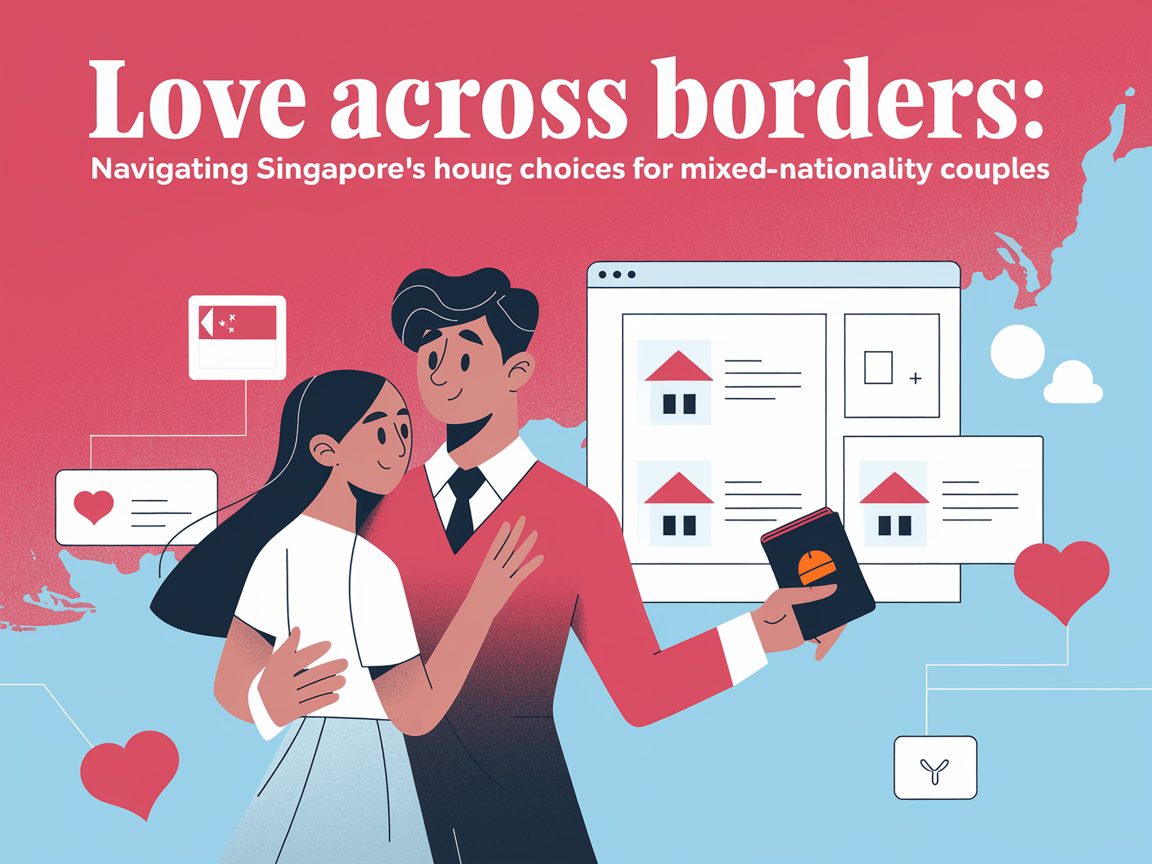
Marriages between Singaporeans and foreigners now make up about 20% of all marriages, but housing options for these couples remain limited. Mixed-nationality couples face challenges owning HDB flats, as only the Singaporean spouse can officially own resale flats, with the foreign spouse as an “Essential Occupant.” Rising resale prices and uncertain Permanent Resident status complicate matters. Alternatives like 2-Room Flexi BTO flats have size and eligibility constraints, while Executive Condominiums are often too expensive. Renting offers flexibility but can be costly and involves complex visa requirements. Many couples consider buying property overseas due to lower costs and fewer restrictions. Those committed to buying in Singapore should consider marital status, foreign spouse’s employment, and loan conditions carefully. It is critical to consult authorities before purchasing to avoid legal issues. Flexibility in exploring options beyond traditional HDB homeownership is advised.
As Singapore becomes increasingly cosmopolitan, marriages between Singaporeans and foreigners are more common, now accounting for approximately 20% of all marriages annually. Despite this growing demographic, housing options for these couples in Singapore remain surprisingly limited. For many, the reality of marrying a foreign national often means navigating a complex landscape of property ownership restrictions, particularly concerning HDB flats, which generally cannot be jointly owned by a Singaporean and a non-citizen spouse. This article explores the housing considerations faced by such couples and the alternative paths they may take.
The journey to homeownership for mixed-nationality couples in Singapore often presents unique hurdles:
Historically, acquiring a resale HDB flat has been the most common route for Singaporean-Foreigner couples. While less restrictive than BTOs, only the Singaporean spouse can officially own the flat, with the foreign spouse listed as an “Essential Occupant” (requiring a Long-Term Visit Pass or Work Visa of at least six months).
However, the significant surge in resale HDB prices post-COVID-19 has made this option increasingly unaffordable for many. For instance, the average resale flat price jumped from around $417 psf in April 2020 to approximately $649 psf by April 2025. This rapid escalation has effectively priced many couples out of the market, making it financially unsustainable without compromising long-term financial goals.
Furthermore, the uncertainty surrounding Permanent Resident (PR) status—which would allow the foreign spouse to co-own the flat—adds another layer of complexity. Relying on an unpredictable PR application outcome can lead to feelings of inequitable ownership and potential strain on the relationship.
Another option for some mixed-nationality couples is to wait until the Singaporean spouse reaches 35 years old to apply for a 2-Room Flexi BTO flat. This, however, is often far from ideal for couples planning to start a family, as a 2-Room Flexi unit may be too small. It also entails a substantial waiting period, forcing couples to rely on renting or living with parents in the interim.
Moreover, these flats come with an income ceiling of $7,000, which can be easily exceeded. Even if eligible, applications with a non-citizen spouse are typically restricted to non-mature estates, potentially meaning less developed areas with limited family-friendly amenities. Such restrictions can make Singapore’s public housing requirements feel overly burdensome.
Executive Condominiums (ECs) become fully privatized after 10 years, allowing mixed-nationality couples to jointly own them. However, if resale HDB prices are already a challenge, ECs, being even pricier, are often financially out of reach. Fully private properties generally remain an unfeasible option for many.
Renting offers flexibility and the ability to choose locations near work or desired amenities. In 2025, with high property prices, renting can be a pragmatic choice for couples still establishing their finances. For mixed-nationality couples with limited public housing access, renting can also serve as a “test drive” for different neighborhoods.
However, renting comes with its own set of challenges. The absence of rent control means rental rates are subject to market fluctuations, and landlords can significantly increase prices, forcing tenants to move or accept higher costs. Additionally, securing a Long Term Visit Pass (LTVP) for a foreign spouse—a prerequisite for renting together—involves considerable paperwork and hassle, only to potentially face high rental payments.
For mixed-nationality couples, a significant advantage is the option to consider living overseas. This opens up avenues for homeownership outside Singapore, which can be particularly appealing if finances are not yet robust enough for a local property.
Many couples find that purchasing property overseas offers a lower barrier to entry, with more affordable options even in regions like Europe, and often fewer restrictions on foreign ownership. While property appreciation may not be as rapid as in Singapore, the reduced debt burden and financial stress can be highly appealing, especially in an uncertain economic climate. For some, acquiring a more manageable property abroad provides a foundation for building financial security without the pressure of a long-term Singaporean housing mortgage.
If a mixed-nationality couple is committed to finding a home in Singapore, several factors become crucial:
Given the complex and often restrictive nature of Singapore’s housing regulations, especially for HDB properties, it is paramount to:
If you’re reading this, you must be trying to figure out the best course of action right now: is it the right time to buy or sell?
It’s difficult to give an exact answer since everyone’s situation is unique and what works for one person may not necessarily work for you.
I can bring you a wealth of on-the-ground experience and a data-driven approach to provide clarity and direction. From beginners to experienced investors, our top-down, objective approach will help you on your real estate journey.
I can help you by:


You May Also Like …