TLDR
Owning multiple properties in Singapore in 2025 is tougher due to higher Additional Buyer’s Stamp Duty (ABSD), stricter Loan-to-Value (LTV) limits, and Total Debt Servicing Ratio (TDSR) rules. ABSD can reach up to 30-35% for second and later properties, increasing costs greatly. Tighter LTV limits and TDSR reduce borrowing capacity. Higher taxes and maintenance fees also affect cash flow. While strategies like dual-key units or joint ownership can help, multi-property ownership now demands careful planning and may be less practical than focusing on a single property.
Owning multiple properties in Singapore has become significantly more challenging compared to the market dynamics of the early 2000s. The current regulatory environment, shaped by various cooling measures, has made it both more difficult and potentially less lucrative for investors to acquire more than one property. For those considering multi-property ownership in 2025, understanding the key changes is crucial.
Key Obstacles to Multiple Property Ownership:
- Impact of Additional Buyer’s Stamp Duty (ABSD): The ABSD significantly increases the cost of acquiring a second or subsequent property. As of 2025, it stands at 20% for the second property and 30% for the third and subsequent properties for Singapore Citizens. For Permanent Residents (PRs), the rates are 30% and 35% respectively.
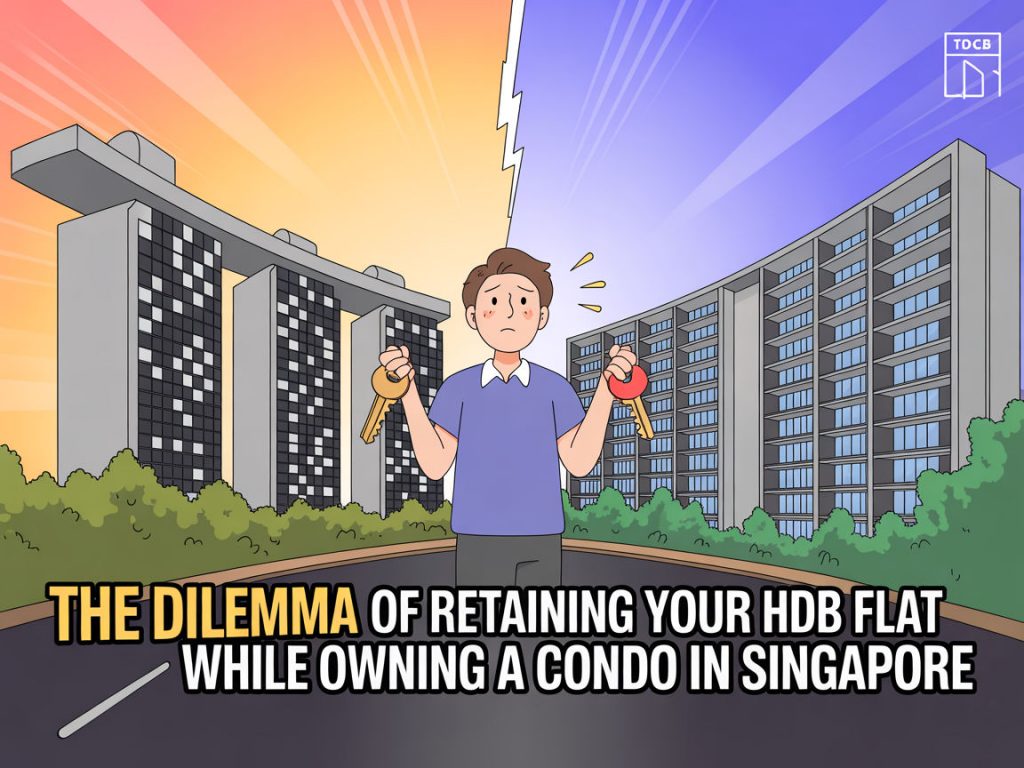
- While strategies like “sell one, buy two” can help avoid ABSD by ensuring each spouse owns only one property, the high rates make it considerably less attractive to retain an existing property (like an HDB flat) while purchasing another (like a condo) for investment or other purposes. The ABSD alone can amount to several years’ worth of rental income, making the investment less viable.
- One potential way to bypass ABSD is purchasing a dual-key unit, which is considered a single property. However, dual-key units tend to be larger and more expensive, potentially offsetting the ABSD savings.
- The higher ABSD rates also indirectly impact resale supply, as owners who purchased before the increases may be reluctant to sell and incur the higher ABSD on a replacement property. This can also affect en-bloc sales, as proceeds may not adequately cover the ABSD for a replacement investment property.
- Impact of Loan-to-Value (LTV) Ratio Limits: LTV limits have tightened over the years, capped at 75% even for the first property. For the second and subsequent properties with outstanding loans, the LTV is further reduced to 45% and 35% respectively. Additionally, the minimum cash down payment increases to 25% if you have outstanding home loans.
- This makes it considerably more challenging to finance a second property, especially if the first is not fully paid off. This is why some families strategically place the entire mortgage of the first property under one spouse, allowing the other spouse to potentially qualify for a higher LTV on a second property.
- Impact of Total Debt Servicing Ratio (TDSR): Introduced in 2013, the TDSR is a significant constraint. It limits total monthly loan repayments (including all debts) to 55% of monthly income.
- TDSR calculations use a floor rate of 4% per annum, regardless of the actual interest rate. Variable income sources, such as rental income, are also subject to a 30% haircut for TDSR assessment. This makes it more challenging for individuals who rely heavily on rental income to secure financing for additional properties.
- For instance, a landlord with $8,000 in monthly rental income would have their income adjusted to $5,600 for TDSR calculation, limiting their total monthly debt repayments to $3,080. This significantly restricts their maximum loan quantum, making it difficult to purchase additional properties, especially considering current property prices and the added cost of ABSD.
- Real Cash Flow Considerations: Non-owner occupied properties incur higher property tax rates based on their Annual Valuation (AV). This, coupled with condo maintenance fees and the costs of maintaining the unit, can significantly impact cash flow.
- Assuming a property with an AV equivalent to $4,500 in monthly rent, the annual property tax could be substantial. When factoring in maintenance fees and potential repair costs, the net cash flow may not be positive, especially if there are still mortgage repayments.
Conclusion: A More Challenging Path
Owning multiple properties in Singapore in 2025 is undoubtedly more challenging. While not impossible, it requires careful planning and a realistic assessment of financial capabilities. Starting early, strategizing on the manner of holding properties with a spouse, and being realistic about the feasibility of multi-property ownership are crucial. In some cases, focusing on upgrading to a single larger home may be a more practical approach than pursuing multiple properties.
Should You Buy, Sell or Wait?
If you’re reading this, you must be trying to figure out the best course of action right now: is it the right time to buy or sell?
It’s difficult to give an exact answer since everyone’s situation is unique and what works for one person may not necessarily work for you.
I can bring you a wealth of on-the-ground experience and a data-driven approach to provide clarity and direction. From beginners to experienced investors, our top-down, objective approach will help you on your real estate journey.
I can help you by:
- Offering Strategic Real Estate Advice – I can help create a comprehensive plan to guide you through your property journey.
- Connecting Your Home with the Perfect Buyers – Through stunning visuals, an effective communication strategy, and an in-depth knowledge of the market, we’ll ensure your home is presented in the best possible way to fulfill your goals.


You May Also Like …
Jayson Ang – December 9, 2022 – Share
TLDR The pandemic-induced recession has surprisingly boosted property prices in Singapore, defying conventional economic trends. Factors like cost-push inflation, limited...
Read More
Jayson Ang – November 11, 2024 – Share
Singapore, a thriving city-state known for its impressive skyline and robust economy, has always been an attractive destination for property...
Read More
Jayson Ang – June 20, 2024 – Share
Singapore, a bustling city-state known for its impressive skyline and modern architecture, is also home to a plethora of natural...
Read More
Jayson Ang – August 5, 2023 – Share
TLDR When aiming to purchase a home, it is crucial to gain knowledge about the buying process and track your...
Read More
Jayson Ang – July 10, 2023 – Share
Investment 101: The Top 5 Best Long-Term Values In Singapore's Property Market When it comes to purchasing property in Singapore,...
Read More
Jayson Ang – September 10, 2024 – Share
Inflation is an economic phenomenon that can have a significant impact on an individual's financial well-being. As the cost of...
Read More
Jayson Ang – April 11, 2024 – Share
TLDR The Singapore housing market is a rollercoaster of unpredictable changes. Three homebuyers share their experiences: Tristan waited too long...
Read More
Jayson Ang – April 2, 2024 – Share
Investing is an important aspect of personal finance and can be a valuable way to grow wealth over time. However,...
Read More
Jayson Ang – May 6, 2024 – Share
Singapore, a melting pot of cultures and flavors, is well-known for its diverse culinary scene. Among the many gastronomic delights...
Read More
Jayson Ang – December 3, 2024 – Share
TLDR Selling a property can be challenging without the right price strategy. Adjust your asking price to attract more buyers...
Read More
Jayson Ang – March 13, 2025 – Share
Singapore, a city-state in Southeast Asia, is known for its rich cultural heritage, diverse population, and vibrant food scene. This...
Read More
Jayson Ang – March 26, 2025 – Share
The Singapore property market has always been a hotbed for investors looking to make substantial returns on their investments. As...
Read More
Jayson Ang – November 27, 2024 – Share
TLDR From 2022 to 2024, Singapore's housing market underwent significant changes, with a shift from scarcity to a boom in...
Read More
Jayson Ang – June 9, 2025 – Share
TLDR Singapore’s property market stands out for long-term investment due to its strong economy, stable government policies, high rental demand,...
Read More
Jayson Ang – September 28, 2024 – Share
Singapore, a bustling city-state known for its modern architecture and vibrant culture, is also a haven for runners seeking scenic...
Read More
Jayson Ang – May 14, 2023 – Share
The 5 most expensive neighborhoods in the city, and are home to some of the most exclusive and opulent properties...
Read More
Jayson Ang – May 11, 2025 – Share
The Singapore property market has always been a hotbed for investors looking to make substantial returns on their investments. As...
Read More
Jayson Ang – January 14, 2026 – Share
TLDR Recent strong condo sales in Singapore, including Emerald of Katong’s 99% take-up during launch, challenge perceptions of unaffordability. Key...
Read More
Jayson Ang – July 2, 2024 – Share
Singapore, a melting pot of cultures and culinary delights, is known for its mouth-watering food scene. From hawker centers to...
Read More
Jayson Ang – November 16, 2023 – Share
TLDR for "Dual-Key Condo: Analysing The Pros And Cons" When considering dual-key condo units, it's important to weigh the advantages...
Read More