


Property Market: Buyer’s Paradise or Seller’s Dreamland?
TLDR The property market in Singapore post-Covid has seen a surge in HDB and private property prices, with a noticeable...
Read More

TLDR
Recent challenges in China’s real estate sector reveal valuable lessons for Singaporeans, emphasizing the importance of understanding governmental interventions in property markets. While China’s cultural preference for home ownership and speculative investments mirrors Singapore’s, policy changes in both countries highlight potential risks for homeowners. Singapore’s history of significant policy shifts, such as the Built-To-Order system and en-bloc sales facilitation, showcases the delicate balance between supply and demand. With rising property prices and government interventions, the real estate market remains complex, urging buyers and sellers to consider strategic decisions carefully. Understanding these dynamics is crucial for navigating Singapore’s real estate landscape effectively.
Recent challenges in China’s real estate sector have highlighted the ways in which governments can and do intervene in property markets. The Chinese government’s efforts to assist its ailing property industry have unfortunately come at the expense of investors and homeowners, with previous policies being abruptly overturned. Although such drastic measures are uncommon in Singapore, similar interventions have occurred, and property owners frequently neglect to consider these actions as potential risks.
Beyond the most apparent reason—namely, that numerous prominent Chinese developers are actively engaged in projects in Singapore—there are significant parallels between the two markets.
In China, there exists a deep cultural preference for home ownership, which the government actively promotes over renting. Chinese property buyers tend to favor real estate over more abstract investments like stocks, often with a focus on potential resale profits. Conversations with Chinese investors, whether in their home country or in Singapore, reveal a common perception of real estate as a safety net: homeowners believe they can always sell and downsize if necessary. This mindset closely resembles that of Singaporeans regarding home ownership.
Furthermore, the actions of Chinese policymakers echo those familiar to Singaporeans. For instance, in Chengdu, a lottery system is implemented to allocate new flats, while some cities enforce a mandatory holding period of 3.5 years for property purchases. During periods of rapid growth in China’s real estate market, these measures were intended to curb speculation; however, following the collapse of major players like Evergrande and a decline in market confidence, most of these restrictions have now been lifted.
A prominent example of this can be observed in post-independence Singapore, where significant efforts were made to provide housing for the majority of the population. To rapidly increase the housing supply, the government acquired land at prices that would alarm any real estate investor today. Prior to 2007, when land was compulsorily acquired, compensation was based on market prices from several years prior (for instance, acquisitions from 1987 were compensated according to prices from 1973). This approach was taken with little remorse, as it was deemed essential for the nation’s reconstruction following the war.
Conversely, the government has also implemented drastic measures during periods of oversupply. A notable example is the Built To Order (BTO) system, which arose after the Housing and Development Board (HDB) faced a significant supply excess beginning in 1989. Under the BTO system, construction would only commence once there was adequate interest expressed in a site, and this method proved effective for a time.
However, this illustrates the fragile nature of supply and demand dynamics: in the aftermath of COVID-19, HDB encountered a housing deficit, which we attribute to the same BTO system. Had HDB been allowed to construct more swiftly in anticipation of demand, without such restrictions, the housing shortage might have been resolved more quickly.
Nevertheless, this could ultimately serve as merely a temporary solution in the long term. We have previously discussed the potential for future oversupply, particularly given trends such as smaller household sizes, declining birth rates, and the passing of the older generation.
Another instance worth mentioning is our approach to en-bloc sales. Through discussions within the community, it has become clear that not many individuals are aware that it is the government that facilitated en-bloc sales.
The Land Titles (Strata) (Amendment) Bill 1999 enabled collective sales to proceed with just 80 percent consensus (based on share value and strata area). Without this government intervention, en-bloc sales would require unanimous approval, which is nearly unattainable except for very small boutique projects.
But why would the government engage in a private free-market process? The rationale lies in maintaining a balance of supply and demand: en-bloc sales ultimately enhance the available housing stock, as redevelopment is justified by improved land usage. This also helps rejuvenate the built environment and prevents urban decline.
Two recent instances illustrate how an increase in supply can influence buyer interest:
The first example is the Lentor area, which has remained relatively quiet for the past decade. Recently, however, five condominium projects have emerged here in just two years. While there was previously pent-up demand, potential buyers may now be questioning whether the balance has shifted too far in favor of supply.
Another example is the intense competition among Tembusu Grand, Grand Dunman, and The Continuum, all located in close proximity from Katong to the boundary of Paya Lebar. As discussed in this article, such competition typically affects sales dynamics.
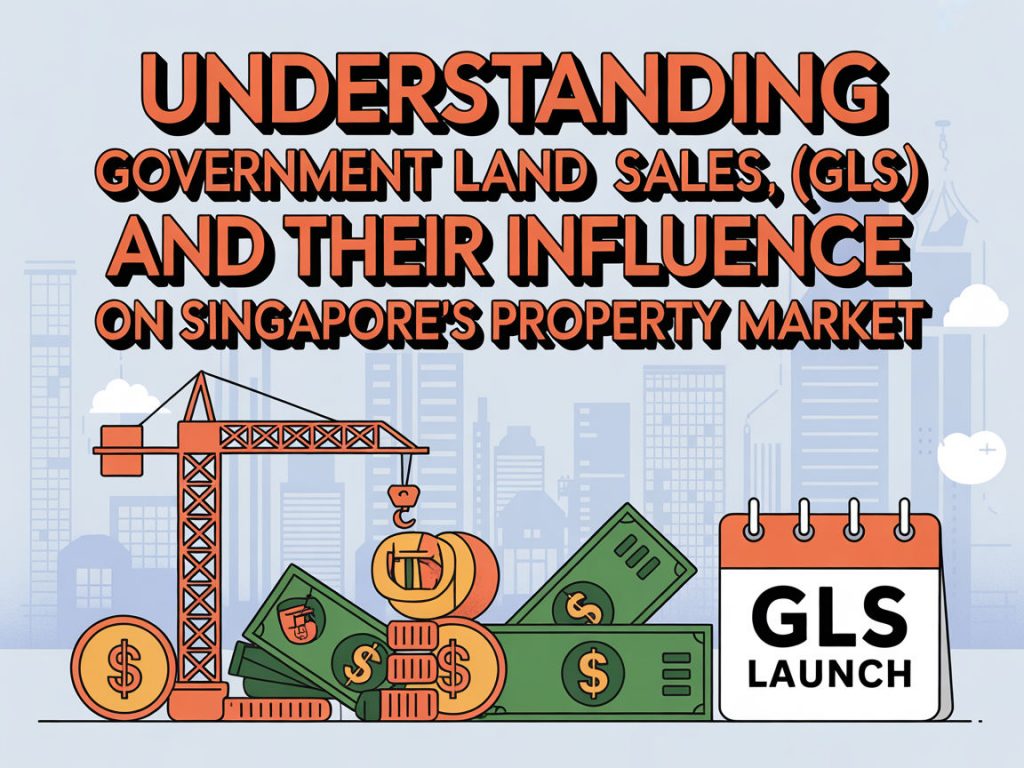
This situation unfolds against the backdrop of rising government supply, with the inventory of unsold homes currently hovering around 20%. This figure may increase further by the end of 2024 due to a combination of high prices for new launches and additional project completions.
Despite this, many buyers still find the property prices in 2024 to be prohibitive, as new launches are averaging over $2,100 per square foot and resale condos are exceeding $1,600 per square foot. This leads to the complex question of whether it’s time to set limits: is supply adequate when prices remain so high?
Conversely, at what point does supply become “excessive” enough to cause a significant drop in home prices? This remains a matter of speculation with no straightforward answer.
It’s worth noting that HDB flats are also affected by this dynamic. As we’ve frequently mentioned, HDB flats are particularly susceptible to oversupply due to their inherent restrictions. For instance, foreigners are not permitted to purchase HDB flats, while permanent residents may face longer waiting times; additionally, Singaporeans are limited to owning only one HDB property. If the government were to overbuild, correcting the supply imbalance would be much more challenging compared to private homes, where foreigners or PRs can help absorb some of the demand.
Historically, a prevalent sales argument for prime location properties was their immunity to oversupply. The notion was that, regardless of how many condos are constructed in areas like Bedok, Orchard, or Upper Bukit Timah, the value of condos in places like Orchard would remain unaffected due to the unique nature of the property’s location.
While this theory seems plausible, data indicates that prime freehold properties often perform less favorably, though this is not necessarily tied to issues of supply or scarcity.
One of the primary motivations for owning a freehold landed property, such as a Good Class Bungalow (GCB), stems from the adage that “they don’t make them anymore.” It appears that perhaps only the wealthiest individuals, who can afford such properties, are insulated from the fluctuations of supply and demand and the ongoing policy adjustments designed to regulate them.
The relationship between supply and demand in the real estate market is a complex interaction that necessitates careful oversight. An excess of supply can result in a surplus, leading to reduced prices and potentially creating financial hardships for both homeowners and developers. On the other hand, insufficient supply can elevate prices to levels that are out of reach for many, thereby increasing inequality and excluding numerous individuals from the housing market.
In Singapore, the government has historically played a crucial role in maintaining this equilibrium. Initiatives like the Built-To-Order (BTO) system and modifications to en-bloc sales demonstrate a continuous effort to adjust supply according to demand. Yet, as recent events have illustrated, these interventions are not always perfectly timed or effectively implemented.
However, there’s an interesting paradox. While many desire lower property prices, this sentiment often shifts once they secure their own property, at which point they may find themselves wanting prices to rise.
If you’re reading this, you must be trying to figure out the best course of action right now: is it the right time to buy or sell?
It’s difficult to give an exact answer since everyone’s situation is unique and what works for one person may not necessarily work for you.
I can bring you a wealth of on-the-ground experience and a data-driven approach to provide clarity and direction. From beginners to experienced investors, our top-down, objective approach will help you on your real estate journey.
I can help you by:


You May Also Like …