






Fraud Blocker
Your search results

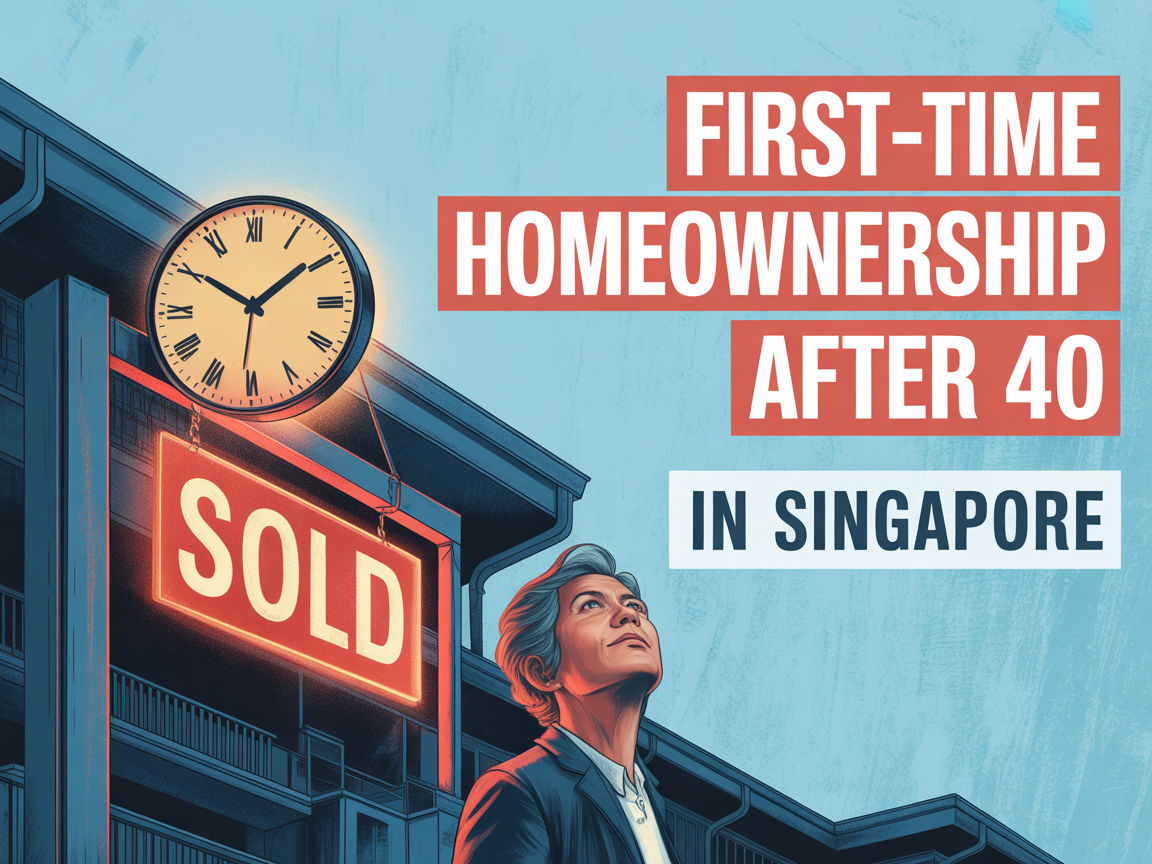
First-Time Homeownership After 40 in Singapore: Navigating Unique Risks

Posted by Jayson Ang on June 8, 2026
| 0

TLDR

Older first-time homebuyers face unique challenges including lease decay risks, stricter loan-to-value (LTV) limits, and shorter loan tenures leading to higher monthly repayments. Properties with advanced lease decay may be harder to sell during emergencies due to reduced financing options. Age affects financing terms, often requiring shorter loans and larger down payments. Physical practicality is crucial as mobility issues may arise, so property layouts and proximity to amenities must be carefully considered, with “walking distance” redefined for comfort and safety. En bloc sales can pose difficulties for older owners, who may need interim loans or face multiple moves. Despite these challenges, buying later in life can offer benefits like financial stability and less concern about schools or job relocations. Success depends on detailed planning, understanding constraints, and seeking expert advice tailored to individual circumstances.

Not everyone is in a position to purchase their first home early in life. For various reasons, some individuals embark on their homeownership journey later, perhaps in their 40s or beyond. While there are benefits to this (e.g., greater financial stability), these buyers may encounter distinct challenges beyond simply ensuring the lease extends to age 95. These include financing complexities and considerations related to a shorter holding period. Here are some potential issues that older first-time homebuyers should be aware of:

1. The Underestimated Risk of Lease Decay

Older buyers sometimes underestimate the impact of lease decay, assuming it’s less relevant given their age. It’s true that for CPF usage, the remaining lease only needs to cover the youngest buyer until age 95 (with a minimum of 20 years remaining). This seemingly flexible rule, combined with the lower prices often associated with properties nearing significant lease decay, can make “vintage” homes attractive.

However, unexpected life events can necessitate a sale and move. A sudden medical emergency might require relocation closer to children, or a change in financial circumstances might prompt a move from a private condo back to an HDB flat. In such unpredictable situations, a property with advanced lease decay becomes significantly harder to sell, especially under time constraints. Banks may drastically reduce financing options (e.g., LTV of 55% for properties with 40-50 years remaining, or no loan for 30 years or less). This can leave owners “stuck” with a property, facing substantial losses if they need to offload it.

Therefore, lease decay remains a critical consideration, not just for potential capital gains or inheritance, but as a safety buffer for unforeseen circumstances. Life events are unpredictable, regardless of age.

2. Impact on Loan-To-Value (LTV) Ratio and Loan Tenure

Age directly influences financing terms. If your age plus the loan tenure exceeds 65 years, the LTV ratio for your home loan drops significantly from the standard 75% to 55%. For example, a 45-year-old opting for a 25-year loan tenure would face a 55% LTV, requiring a much larger cash outlay (e.g., $720,000 down payment for a $1.6 million property).

To avoid the reduced LTV, older buyers often opt for shorter loan tenures. While this leads to less overall interest paid (a silver lining), it also results in substantially higher monthly loan repayments. For instance, a $1.2 million loan (75% LTV on a $1.6 million property) at 3% interest over 25 years would be about $5,691 monthly. However, for a 45-year-old, the tenure would need to be shortened to 20 years, increasing monthly repayments to approximately $6,655. This necessitates a larger savings buffer or higher income streams for older first-time buyers.

3. Practical Constraints on Layouts and Property Types

Younger buyers generally have more flexibility regarding property types and layouts. They can manage walk-up apartments, maisonettes, or features like high ceilings or large balconies that are challenging to clean, knowing they have decades to save for a more practical home.

However, for buyers in their 40s, 50s, or older, physical demands will become a factor much sooner. A home that is manageable in one’s 40s might become impractical or even unsafe within a decade. It’s crucial to consider long-term mobility needs; a spacious master bathroom, for example, can be invaluable if mobility issues arise later, accommodating aids like walkers. While personal health and access to assistance play a role, older buyers typically face more practical restrictions on property choices.

4. Redefining “Walking Distance” to Amenities

Descriptions of properties being “within walking distance” of amenities like malls, MRT stations, or supermarkets are often based on a younger person’s capabilities. For older buyers, what appears to be a “short walk” on paper might involve exhausting uphill treks or navigating busy roads.

It’s vital to critically assess the actual physical demands of the commute. A walk that is merely tiring in one’s 40s could become intolerable in a decade. Older buyers should increase their standards for convenience, prioritizing sheltered walkways, flat terrain, minimal road crossings, and perhaps redefining “walking distance” to a comfortable five minutes rather than ten.

5. Unforeseen En Bloc Sales Can Become Problematic

Even for freehold properties, the prospect of an en bloc sale, while a potential windfall for younger buyers, can be a significant headache for those in their 50s or 60s.

En bloc sale proceeds are not immediately available, potentially necessitating interim loans for a replacement property. Securing such loans becomes considerably more challenging with age. Furthermore, an ill-timed en bloc could force an older homeowner to move twice: first to a temporary rental unit, then to the replacement property. While manageable for a younger individual, this can be a severe strain on older homeowners.

Therefore, older buyers might consider avoiding properties with a high likelihood of an en bloc sale (e.g., those that recently had a near-successful attempt).

A Balanced Perspective

Despite these considerations, buying a first home later in life also has its advantages, especially if it stems from a deliberate, financially prudent approach. Older buyers may have fewer concerns about proximity to primary schools or job-related relocations. The key is to be more discerning about specific details and engage in proactive long-term planning.

Should You Buy, Sell or Wait?

If you’re reading this, you must be trying to figure out the best course of action right now: is it the right time to buy or sell?

It’s difficult to give an exact answer since everyone’s situation is unique and what works for one person may not necessarily work for you.

I can bring you a wealth of on-the-ground experience and a data-driven approach to provide clarity and direction. From beginners to experienced investors, our top-down, objective approach will help you on your real estate journey.

I can help you by:

  1. Offering Strategic Real Estate Advice – I can help create a comprehensive plan to guide you through your property journey.
  2. Connecting Your Home with the Perfect Buyers – Through stunning visuals, an effective communication strategy, and an in-depth knowledge of the market, we’ll ensure your home is presented in the best possible way to fulfill your goals.

You May Also Like …


Discover 7 Reasons to Sell and Right-Size Your Property
All Blog Posts Opinion

Discover 7 Reasons to Sell and Right-Size Your Property

TLDR The increasing trend of right-sizing properties in Singapore is driven by various factors such as lifestyle changes, financial gains,...
Read More
Singapore’s Property Jungle: A Guide to Every Development Type
All Buying Tips Opinion Selling Tips

Singapore’s Property Jungle: A Guide to Every Development Type

TLDR Singapore’s real estate market features a diverse mix of property types—public HDB flats, executive condominiums, private condos, landed homes...
Read More
How Can Real Estate Investment Help You to Combat Inflation?
All Blog Posts Opinion

How Can Real Estate Investment Help You to Combat Inflation?

TLDR When it comes to real estate investments in Singapore amidst rising inflation rates, consider strategies such as capitalizing on...
Read More
Timing the Singapore Property Market: A Data-Driven Analysis
All Buying Tips Opinion Selling Tips

Timing the Singapore Property Market: A Data-Driven Analysis

TLDR Historical data of Singapore’s property market shows seasonal trends: Q1 (January to March) often has price dips, making it...
Read More
Should Buying A Low Lease Project Be A Viable Option?
All Blog Posts Opinion

Should Buying A Low Lease Project Be A Viable Option?

TLDR When considering low lease projects in Singapore, it's crucial to evaluate your individual needs, financial standing, and future plans....
Read More
What’s The Difference Between An Offer To Purchase And An Option To Purchase?
All Blog Posts Buying Tips

What’s The Difference Between An Offer To Purchase And An Option To Purchase?

TLDR Understanding the crucial difference between an Offer to Purchase and an Option to Purchase (OTP) is vital when buying...
Read More
Why Can’t More People Own Private Property?
All Opinion

Why Can’t More People Own Private Property?

TLDR The blog post discusses the aspirations of individuals like Siti and Mr. Tan regarding property ownership in Singapore. Siti...
Read More
Rise In Private Home Ownership Among Those Under 35
All Buying Tips Opinion Reports Selling Tips

Rise In Private Home Ownership Among Those Under 35

TLDR Youth homeownership in Singapore’s private housing sector is rising, with residents under 35 living in private properties hitting 380,459...
Read More
How to Identify an “Undervalued Property” in Singapore in 2025: 6 Easy Tips
All Buying Tips Opinion Selling Tips

How to Identify an “Undervalued Property” in Singapore in 2025: 6 Easy Tips

TLDR Undervalued properties are harder to find in Singapore due to market transparency, but deals still exist. Target areas with...
Read More
Top 5 : Key Reasons to Invest in Industrial Property in Singapore
Mandarin Top 5

Top 5 : Key Reasons to Invest in Industrial Property in Singapore

Singapore, a small yet densely populated country, has emerged as a significant player in the global industrial property market. Its...
Read More
6 Unexpected Property Warning Signs That Can Be Negative for Some, But Beneficial for Others
All Buying Tips Opinion

6 Unexpected Property Warning Signs That Can Be Negative for Some, But Beneficial for Others

TLDR When considering property preferences, what may appear as a disadvantage to some buyers could be a unique opportunity for...
Read More
Top 5 : Places to Learn About Singapore’s History
Mandarin Top 5

Top 5 : Places to Learn About Singapore’s History

Singapore, a bustling metropolis known for its modernity and multiculturalism, is also a treasure trove of rich history and heritage....
Read More
Should You Make A Partial Prepayment On Your Home Loan In 2025?
All Buying Tips

Should You Make A Partial Prepayment On Your Home Loan In 2025?

TLDR Partial prepayments on home loans can lower your monthly payments and reduce long-term interest, but the decision isn’t always...
Read More
Homeownership, Desire To Upgrade Still Strong Among Youths
All Buying Tips Reports

Homeownership, Desire To Upgrade Still Strong Among Youths

TLDR Young Singaporeans are redefining the "Singapore Dream" with homeownership and property upgrading at its core. Most Gen Zs (85%)...
Read More
The Best Time to Invest in Singapore’s Property Market: Timing is Everything
Mandarin Top 5

The Best Time to Invest in Singapore’s Property Market: Timing is Everything

Investing in the property market is a significant decision that requires careful consideration and analysis. One crucial factor that determines...
Read More
Powering The Lion City: The Top 5 Industries Driving Singapore’s Economy
Mandarin Top 5

Powering The Lion City: The Top 5 Industries Driving Singapore’s Economy

Powering The Lion City: The Top 5 Industries Driving Singapore's Economy Singapore is widely recognized as one of the most...
Read More
Top 5 Tips : How Does One Choose Good Property In Singapore?
Mandarin Top 5

Top 5 Tips : How Does One Choose Good Property In Singapore?

Singapore, a thriving city-state known for its impressive skyline and robust economy, has always been an attractive destination for property...
Read More
Why Some New Condo Releases Outperform Others
All Buying Tips Opinion

Why Some New Condo Releases Outperform Others

TLDR When it comes to the real estate market, familiarity plays a crucial role in the success of larger condo...
Read More
Where to Find the Most Affordable New Launches in 2023 – Starting at $1.31 Million
All Blog Posts Opinion

Where to Find the Most Affordable New Launches in 2023 – Starting at $1.31 Million

TLDR When looking for an affordable new launch condo in Singapore as of January 2023, consider projects like 10 Evelyn,...
Read More
$1.5 Million HDB Flats: Their Locations and Reasons Behind Being Singapore’s Priciest Public Housing
All Buying Tips Opinion Selling Tips

$1.5 Million HDB Flats: Their Locations and Reasons Behind Being Singapore’s Priciest Public Housing

TLDR Singapore’s HDB resale market has entered a new phase, with at least 13 flats sold for $1.5 million or...
Read More
1 16 17 18 19 20 34

Compare Listings